Department of Geriatrics, Shanghai East Hospital, Tongji University School of Medicine, Shanghai, China.
APMIS. 2020 May;128(5):353-366. doi: 10.1111/apm.13038. Epub 2020 Mar 30.
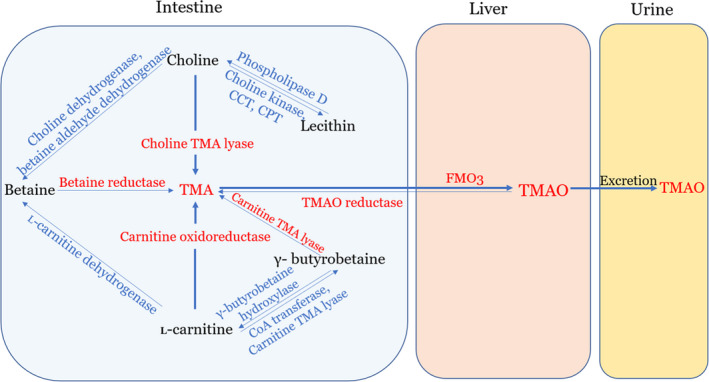
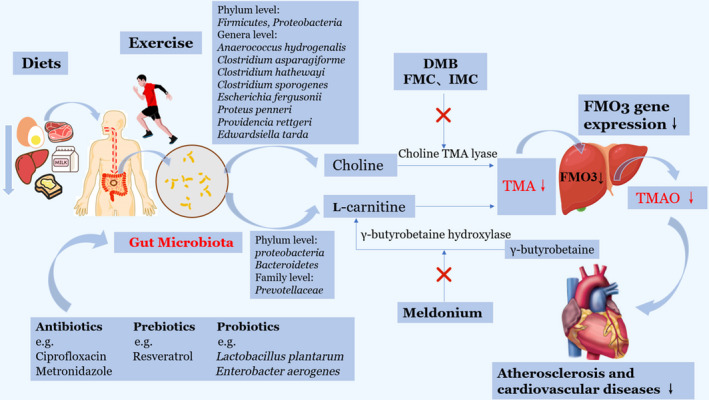
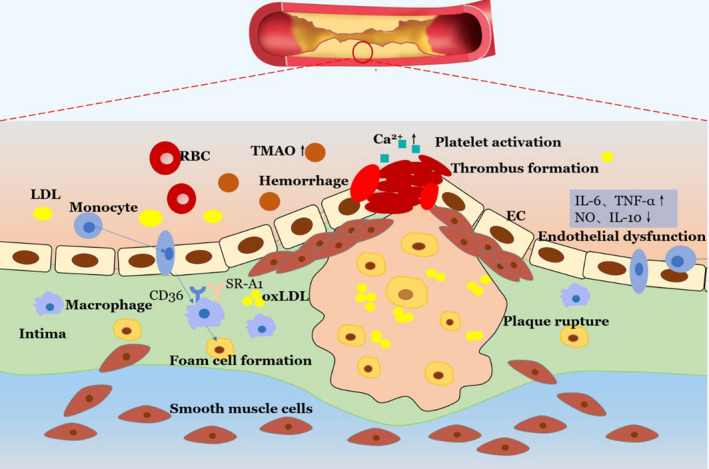
The increasing prevalence of cardiovascular diseases cannot adequately be explained by traditional risk factors. Recently, accumulating evidence has suggested that gut microbiota-derived numerous metabolites are contributors to atherosclerotic events. Among them, the role of trimethylamine N-oxide (TMAO) in promoting atherosclerosis has gained attention. TMAO is reported to exert the proatherogenic effects by impacting on the traditional risk factors of atherosclerosis and is associated with high risk of cardiovascular events. Besides that, TMAO is involved in the complex pathological processes of atherosclerotic lesion formation, such as endothelial dysfunction, platelet activation and thrombus generation. In light of these promising findings, TMAO may serve as a potential target for atherosclerosis prevention and treatment, which is conceptually novel, when compared with existing traditional treatments. It is likely that regulating TMAO production and associated gut microbiota may become a promising strategy for the anti-atherosclerosis therapy.
心血管疾病的发病率不断上升,不能仅用传统的危险因素来解释。最近,越来越多的证据表明,肠道微生物群衍生的多种代谢物是动脉粥样硬化事件的促成因素。其中,氧化三甲胺(trimethylamine N-oxide,TMAO)在促进动脉粥样硬化方面的作用引起了关注。据报道,TMAO 通过影响动脉粥样硬化的传统危险因素发挥促动脉粥样硬化作用,并且与心血管事件的高风险相关。此外,TMAO 还参与动脉粥样硬化病变形成的复杂病理过程,如内皮功能障碍、血小板激活和血栓形成。鉴于这些有前景的发现,TMAO 可能成为预防和治疗动脉粥样硬化的潜在靶点,与现有的传统治疗方法相比,这是一个新概念。调节 TMAO 的产生和相关的肠道微生物群可能成为抗动脉粥样硬化治疗的一种有前途的策略。