Fisher Aron B
Institute for Environmental Medicine of the Department of Physiology, University of Pennsylvania, 3620 Hamilton Walk, 1 John Morgan Building, Philadelphia, PA, United States.
Arch Biochem Biophys. 2017 Mar 1;617:68-83. doi: 10.1016/j.abb.2016.12.003. Epub 2016 Dec 6.
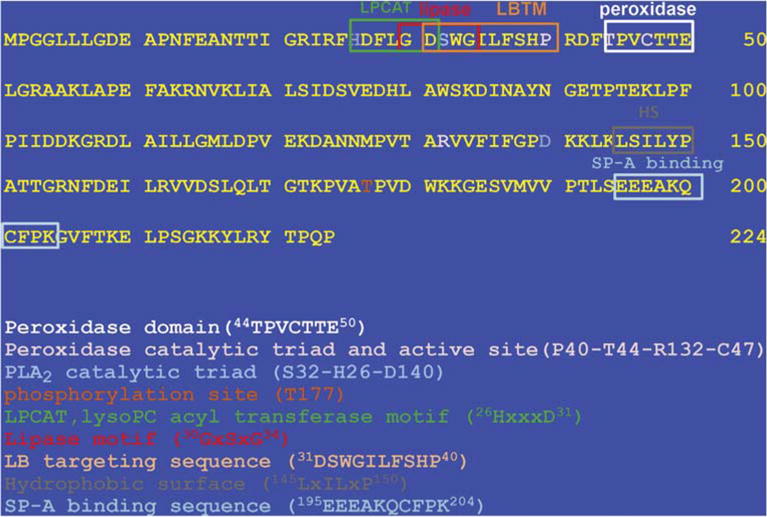
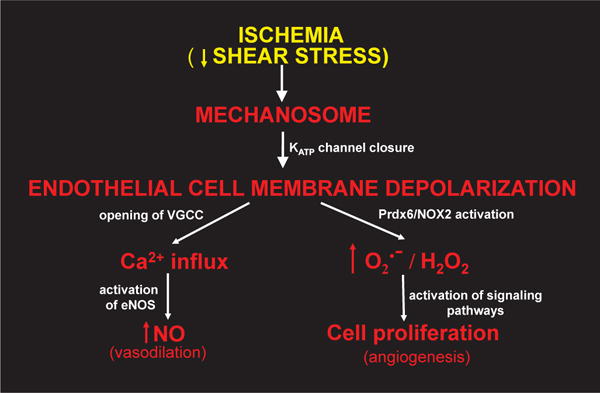
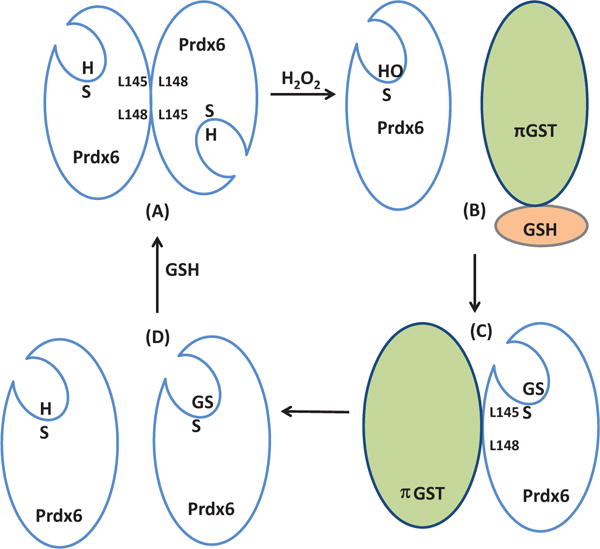
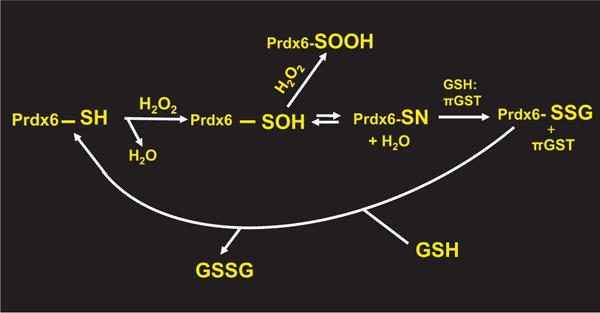
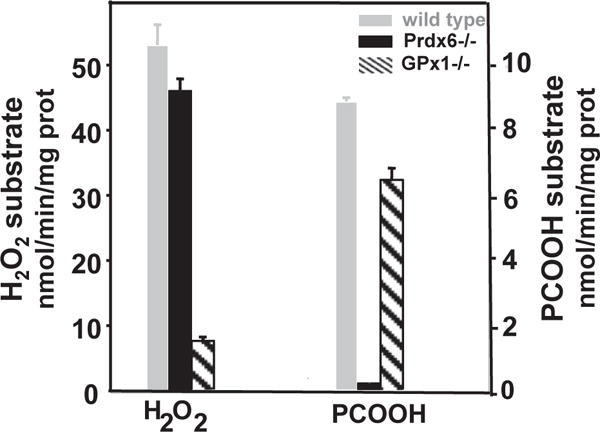
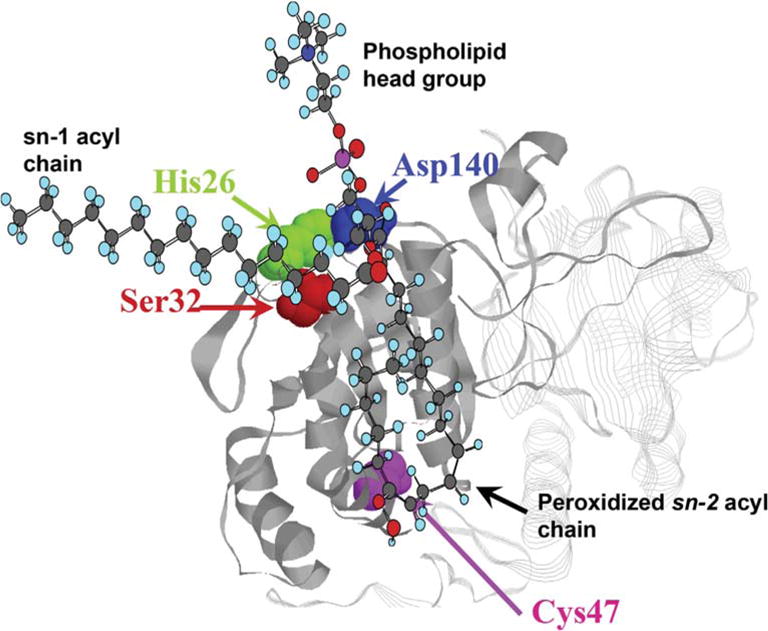
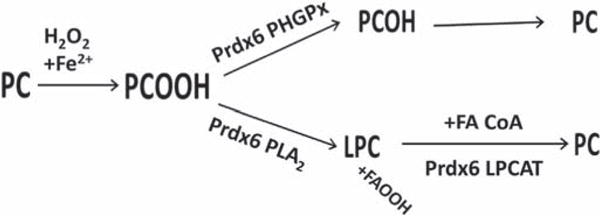
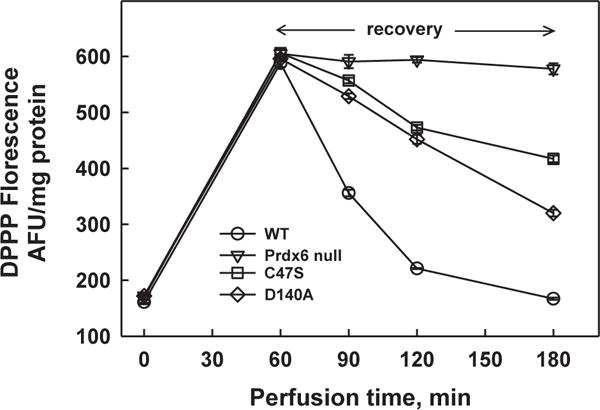
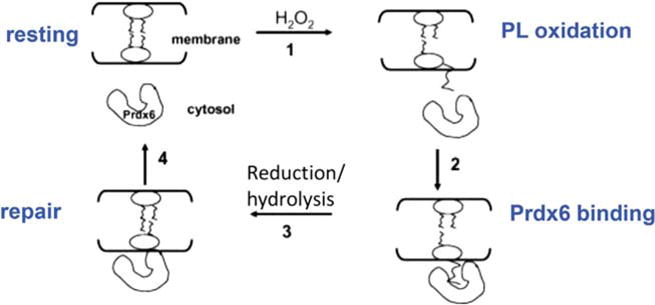
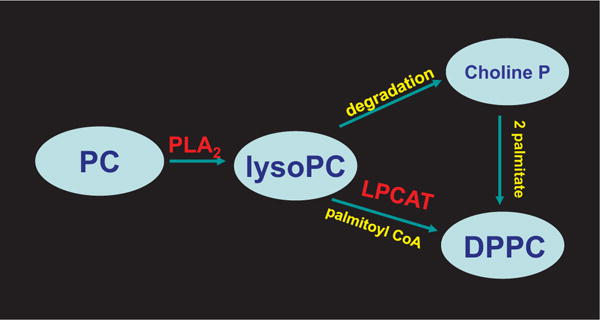
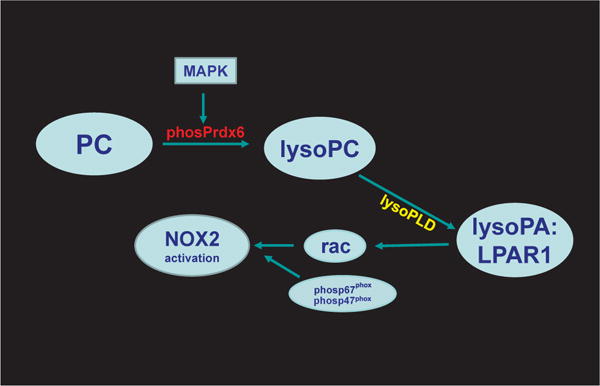
Peroxiredoxin 6 represents a widely distributed group of peroxiredoxins that contain a single conserved cysteine in the protein monomer (1-cys Prdx). The cys when oxidized to the sulfenic form is reduced with glutathione (GSH) catalyzed by the π isoform of GSH-S-transferase. Three enzymatic activities of the protein have been described:1) peroxidase with HO, short chain hydroperoxides, and phospholipid hydroperoxides as substrates; 2) phospholipase A (PLA); and 3) lysophosphatidylcholine acyl transferase (LPCAT). These activities have important physiological roles in antioxidant defense, turnover of cellular phospholipids, and the generation of superoxide anion via initiation of the signaling cascade for activation of NADPH oxidase (type 2). The ability of Prdx6 to reduce peroxidized cell membrane phospholipids (peroxidase activity) and also to replace the oxidized sn-2 fatty acyl group through hydrolysis/reacylation (PLA and LPCAT activities) provides a complete system for the repair of peroxidized cell membranes.
过氧化物酶体增殖物激活受体6代表了一类广泛分布的过氧化物酶体增殖物激活受体,其蛋白质单体中含有一个保守的半胱氨酸(1-半胱氨酸过氧化物酶体增殖物激活受体)。当半胱氨酸氧化为亚磺酸形式时,在谷胱甘肽-S-转移酶的π同工型催化下,可被谷胱甘肽(GSH)还原。该蛋白质具有三种酶活性:1)以过氧化氢、短链氢过氧化物和磷脂氢过氧化物为底物的过氧化物酶;2)磷脂酶A(PLA);3)溶血磷脂酰胆碱酰基转移酶(LPCAT)。这些活性在抗氧化防御、细胞磷脂周转以及通过启动NADPH氧化酶(2型)信号级联反应产生超氧阴离子方面具有重要的生理作用。过氧化物酶体增殖物激活受体6还原过氧化细胞膜磷脂的能力(过氧化物酶活性)以及通过水解/再酰化作用(PLA和LPCAT活性)替代氧化的sn-2脂肪酰基的能力,为过氧化细胞膜的修复提供了一个完整的系统。