Wu Y, Chen K, Terkeltaub R
Department of Rheumatology , VAMC/UCSD , San Diego, California , USA.
Department of Radiology , VAMC/UCSD , San Diego, California , USA.
RMD Open. 2016 Nov 3;2(2):e000339. doi: 10.1136/rmdopen-2016-000339. eCollection 2016.
Calcium pyrophosphate crystal deposition disease (CPPD) is common, yet prevalence and overall clinical impact remain unclear. Sensitivity and specificity of CPPD reference standards (conventional crystal analysis (CCA) and radiography (CR)) were meta-analysed by EULAR (published 2011). Since then, new diagnostic modalities are emerging. Hence, we updated 2009-2016 literature findings by systematic review and evidence grading, and assessed unmet needs.
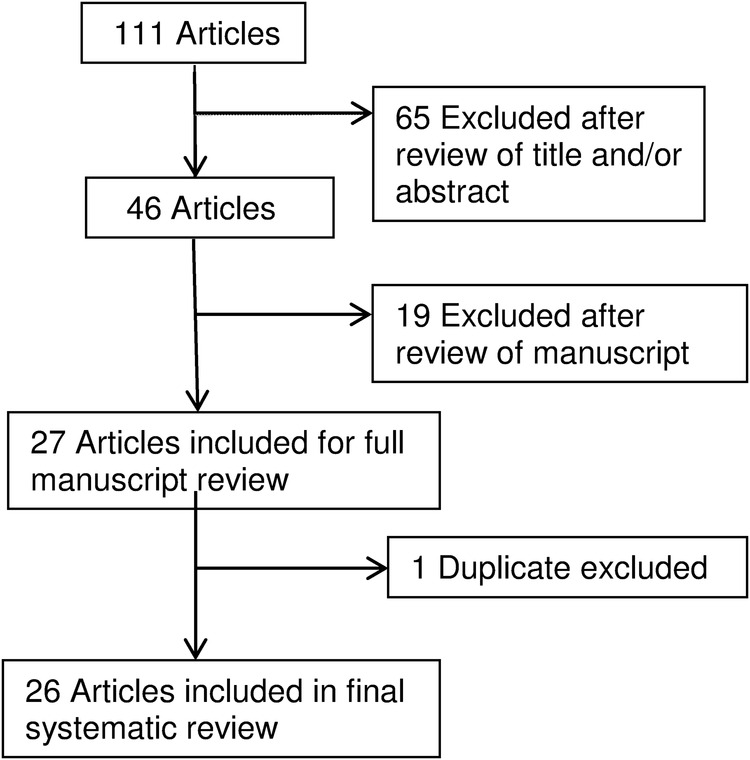
We performed systematic search of full papers (PubMed, Scopus/EMBASE, Cochrane 2009-2016 databases). Search terms included CPPD, chondrocalcinosis, pseudogout, ultrasound, MRI, dual energy CT (DECT). Paper selection, data abstraction, EULAR evidence level, and Quality Assessment of Diagnostic Accuracy Studies (QUADAS)-2 bias and applicability grading were performed independently by 3 authors.
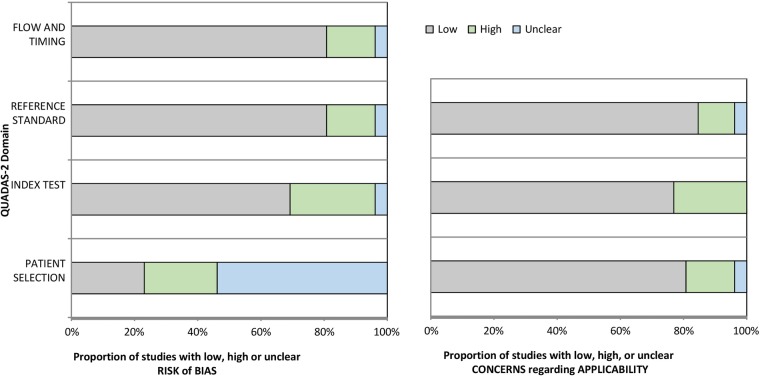
We included 26 of 111 eligible papers, which showed emergence in CPPD diagnosis of ultrasound (U/S), and to lesser degree, DECT and Raman spectroscopy. U/S detected CPPD crystals in peripheral joints with sensitivity >80%, superior to CR. However, most study designs, though analytical, yielded low EULAR evidence level. DECT was marginally explored for CPPD, compared with 35 published DECT studies in gout. QUADAS-2 grading indicated strong applicability of U/S, DECT and Raman spectroscopy, but high study bias risk (in ∼30% of papers) due to non-controlled designs, and non-randomised subject selection.
Though CCA and CR remain reference standards for CPPD diagnosis, U/S, DECT and Raman spectroscopy are emerging U/S sensitivity appears to be superior to CR. We identified major unmet needs, including for randomised, blinded, controlled studies of CPPD diagnostic performance and rigorous analyses of 4 T MRI and other emerging modalities.
焦磷酸钙晶体沉积病(CPPD)很常见,但其患病率和总体临床影响仍不明确。EULAR(2011年发表)对CPPD参考标准(传统晶体分析(CCA)和放射ography(CR))的敏感性和特异性进行了荟萃分析。从那时起,新的诊断方法不断涌现。因此,我们通过系统评价和证据分级更新了2009 - 2016年的文献研究结果,并评估了未满足的需求。
我们对全文进行了系统检索(PubMed、Scopus/EMBASE、Cochrane 2009 - 2016数据库)。检索词包括CPPD、软骨钙质沉着症、假痛风、超声、MRI、双能CT(DECT)。论文筛选、数据提取、EULAR证据水平以及诊断准确性研究的质量评估(QUADAS)-2偏倚和适用性分级由3位作者独立进行。
我们纳入了111篇合格论文中的26篇,这些论文显示超声(U/S)在CPPD诊断中崭露头角,双能CT和拉曼光谱的应用程度较低。超声在外周关节中检测CPPD晶体的敏感性>80%,优于放射ography。然而,大多数研究设计虽然是分析性的,但EULAR证据水平较低。与35篇已发表的关于痛风的双能CT研究相比,双能CT在CPPD方面的探索较少。QUADAS-2分级表明超声、双能CT和拉曼光谱具有较强的适用性,但由于设计未控制和受试者选择非随机,研究偏倚风险较高(约30%的论文)。
虽然CCA和CR仍然是CPPD诊断的参考标准,但超声、双能CT和拉曼光谱正在兴起,超声的敏感性似乎优于放射ography。我们确定了主要的未满足需求,包括对CPPD诊断性能的随机、盲法、对照研究,以及对4T MRI和其他新兴方法的严格分析。