Cokolic Miro, Lalic Nebojsa M, Micic Dragan, Mirosevic Gorana, Klobucar Majanovic Sanja, Lefterov Ivaylo N, Graur Mariana
Department for Endocrinology and Diabetes, University Medical Center Maribor, Ljubljanska ulica 5, 2000, Maribor, Slovenia.
Clinic for Endocrinology, Diabetes and Metabolic Diseases, Clinical Center of Serbia, Belgrade, Serbia.
Wien Klin Wochenschr. 2017 Mar;129(5-6):192-200. doi: 10.1007/s00508-016-1143-1. Epub 2016 Dec 8.
National guidelines for treating type 2 diabetes in the Balkans generally follow European guidelines. The current study was undertaken to estimate the rate of glycated hemoglobin (HbA1c) measurements and level of HbA1c control in diabetic patients treated in regular clinical practice settings in the Balkans and to evaluate if providing HbA1c measurements improves adherence to treatment guidelines.
This cross-sectional study enrolled type 2 diabetic patients treated by 79 primary care physicians and 102 specialists. The participants were provided with HbA1c measuring devices to measure HbA1c during regular office visits and a physician survey evaluated HbA1c the results feedback. Relevant clinical, demographic, drug treatment and specialist referral data were extracted from patient charts. Descriptive statistics and stepwise multivariate regression analysis were used.
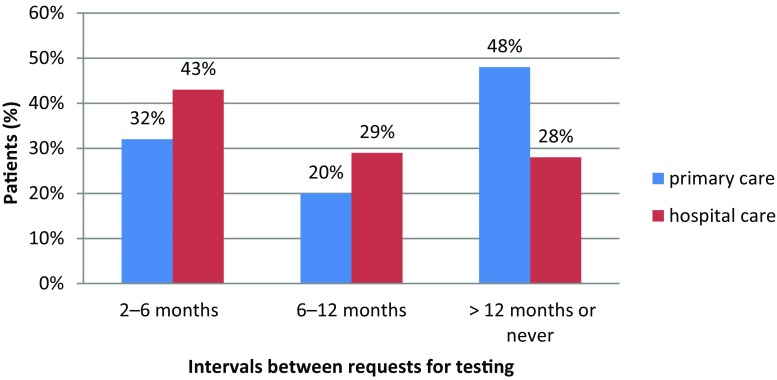
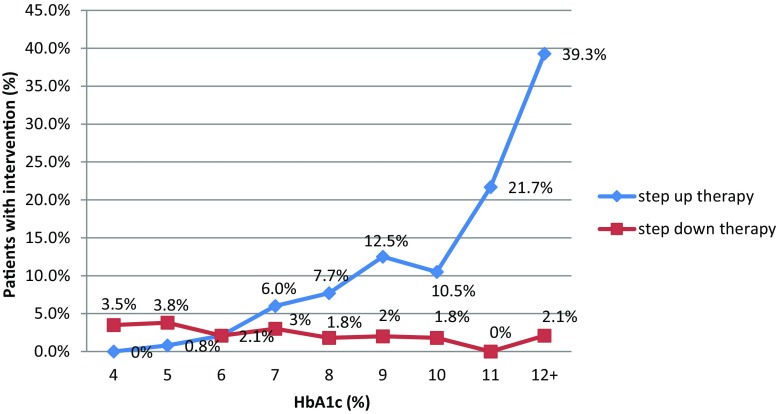
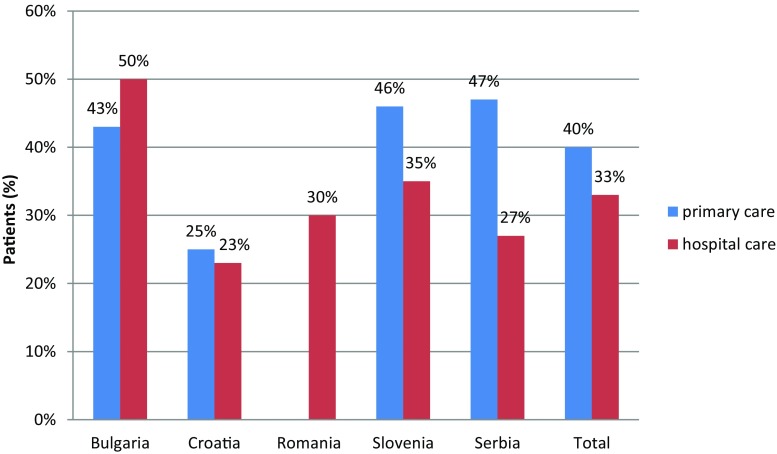
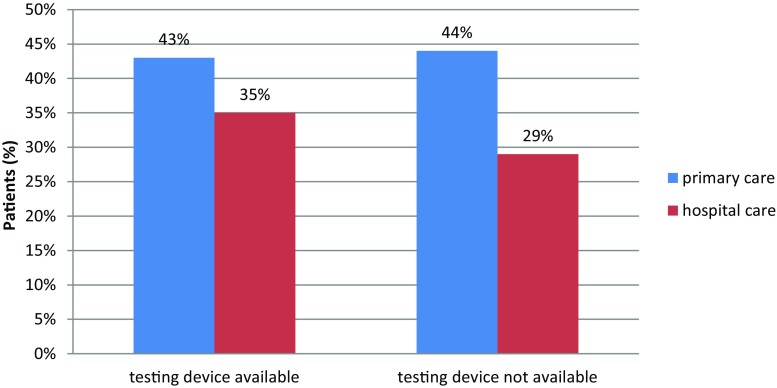
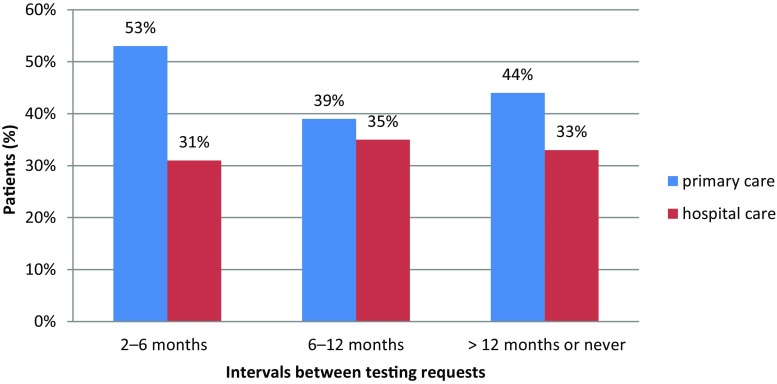
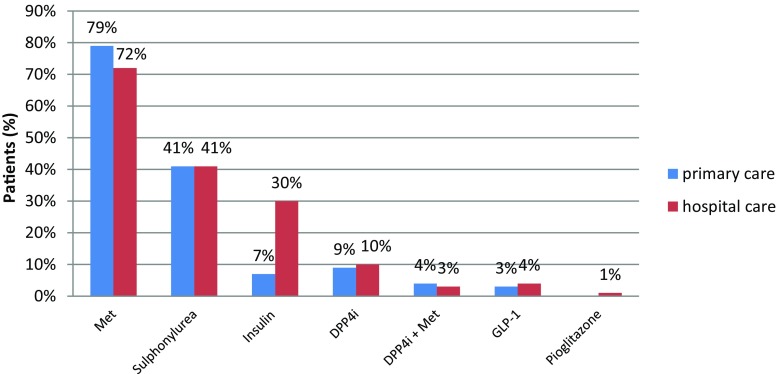
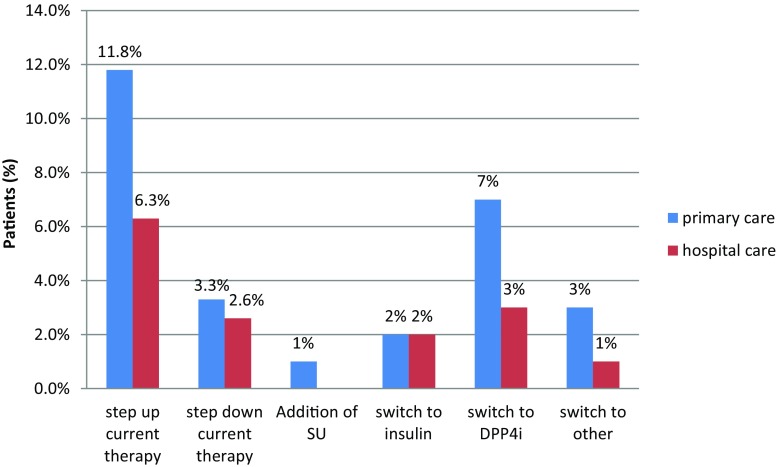
Among 1853 patients included (average age 63.5 ± 10.7 years, 51% male) the average diabetes duration was 8.9 ± 7.1 years, 40% of patients had HbA1c measured every 6 months and 34% every 12 months (or less frequently). The rate of 6‑month measurement was higher among specialists (43%) vs. primary care physicians (32%, p < 0.01). The average HbA1c was 7.3 ± 1.5 and 35% of patients achieved the target HbA1c level of < 6.5%. Metformin monotherapy was prescribed to 28% of patients and metformin + sulphonylurea to 23%, 55% of patients on metformin monotherapy and 32% of patients on dual therapy metformin + sulphonylurea achieved the target HbA1c < 6.5%. Treatment remained unchanged in 91% and was stepped up in only 7.2% of patients. Physicians were not surprised (in 79% of patients) or were pleasantly surprised (in 11%) by the HbA1c results at the time of visit. Average diabetes duration and patient use of home glucometers were associated with the level of disease control.
The rates of HbA1c measurements remain low in the Balkans, although higher among specialists. Over 60% of patients, mostly treated with traditional oral antidiabetics did not achieve disease control. Providing convenient HbA1c measurement devices was not associated with a marked change in diabetes management. Future research is needed to evaluate the impact of these treatment patterns on long-term outcomes and costs to society.
巴尔干地区2型糖尿病的国家治疗指南通常遵循欧洲指南。本研究旨在估计巴尔干地区常规临床实践中糖尿病患者糖化血红蛋白(HbA1c)的检测率和HbA1c控制水平,并评估提供HbA1c检测是否能提高对治疗指南的依从性。
这项横断面研究纳入了由79名初级保健医生和102名专科医生治疗的2型糖尿病患者。为参与者提供HbA1c检测设备,以便在常规门诊就诊时检测HbA1c,并通过医生调查评估HbA1c检测结果的反馈。从患者病历中提取相关的临床、人口统计学、药物治疗和专科转诊数据。采用描述性统计和逐步多元回归分析。
在纳入的1853例患者中(平均年龄63.5±10.7岁,51%为男性),平均糖尿病病程为8.9±7.1年,40%的患者每6个月检测一次HbA1c,34%的患者每12个月检测一次(或更不频繁)。专科医生中每6个月检测一次的比例(43%)高于初级保健医生(32%,p<0.01)。平均HbA1c为7.3±1.5,35%的患者达到了HbA1c目标水平<6.5%。28%的患者采用二甲双胍单药治疗,23%的患者采用二甲双胍+磺脲类药物治疗,55%的二甲双胍单药治疗患者和32%的二甲双胍+磺脲类药物联合治疗患者达到了HbA1c目标<6.5%。91%的患者治疗方案未改变,仅7.2%的患者治疗方案升级。医生对就诊时的HbA1c结果并不感到惊讶(79%的患者)或感到惊喜(11%的患者)。平均糖尿病病程和患者使用家用血糖仪与疾病控制水平相关。
巴尔干地区HbA1c检测率仍然较低,尽管专科医生中的检测率较高。超过60%的患者,大多采用传统口服降糖药治疗,未实现疾病控制。提供方便的HbA1c检测设备与糖尿病管理的显著变化无关。需要进一步研究来评估这些治疗模式对长期结局和社会成本的影响。