Dipnall Joanna F, Pasco Julie A, Berk Michael, Williams Lana J, Dodd Seetal, Jacka Felice N, Meyer Denny
IMPACT Strategic Research Centre, School of Medicine, Deakin University, Geelong, VIC, Australia.
Department of Statistics, Data Science and Epidemiology, Swinburne University of Technology, Melbourne, Victoria, Australia.
PLoS One. 2016 Dec 9;11(12):e0167055. doi: 10.1371/journal.pone.0167055. eCollection 2016.
Depression is commonly comorbid with many other somatic diseases and symptoms. Identification of individuals in clusters with comorbid symptoms may reveal new pathophysiological mechanisms and treatment targets. The aim of this research was to combine machine-learning (ML) algorithms with traditional regression techniques by utilising self-reported medical symptoms to identify and describe clusters of individuals with increased rates of depression from a large cross-sectional community based population epidemiological study.
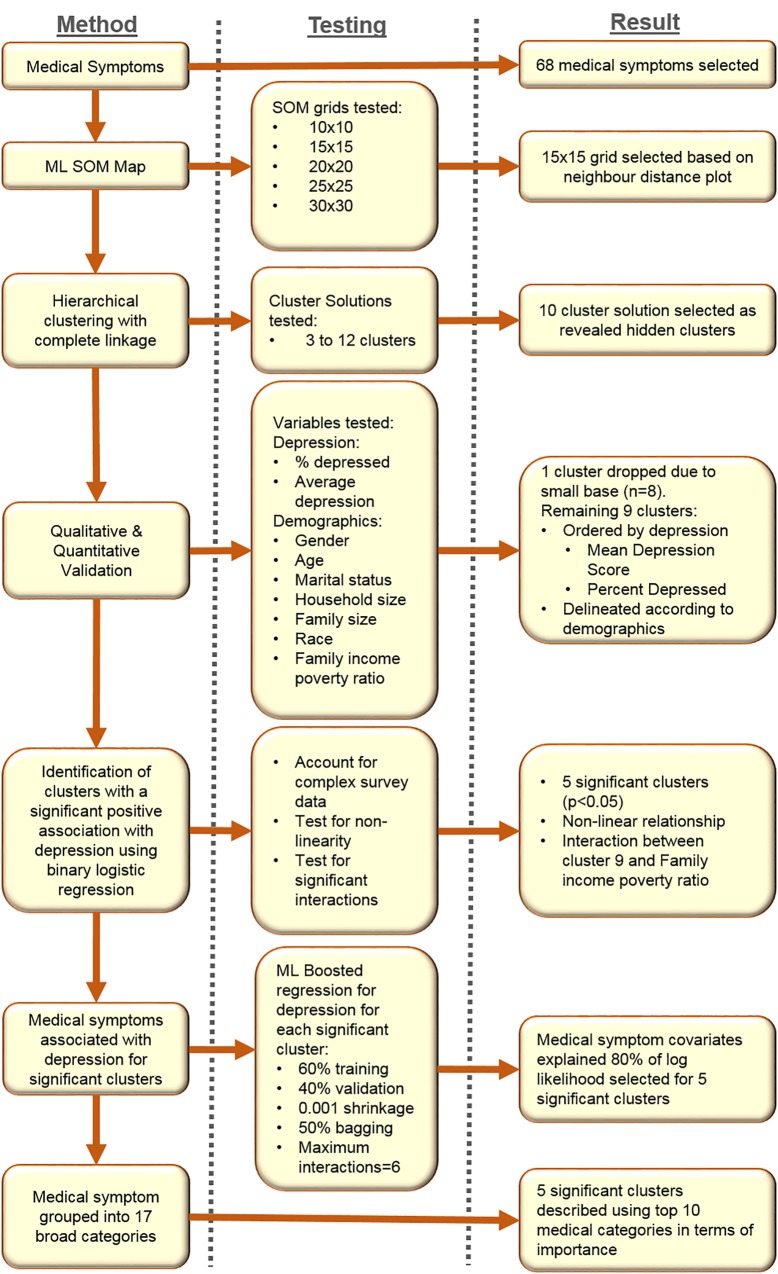
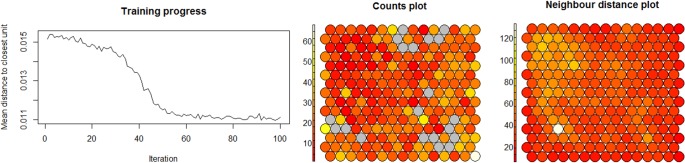
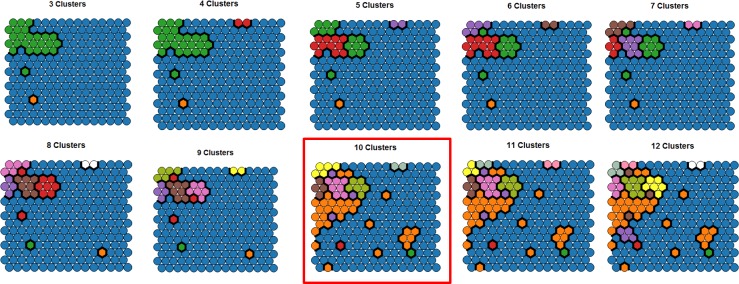
A multi-staged methodology utilising ML and traditional statistical techniques was performed using the community based population National Health and Nutrition Examination Study (2009-2010) (N = 3,922). A Self-organised Mapping (SOM) ML algorithm, combined with hierarchical clustering, was performed to create participant clusters based on 68 medical symptoms. Binary logistic regression, controlling for sociodemographic confounders, was used to then identify the key clusters of participants with higher levels of depression (PHQ-9≥10, n = 377). Finally, a Multiple Additive Regression Tree boosted ML algorithm was run to identify the important medical symptoms for each key cluster within 17 broad categories: heart, liver, thyroid, respiratory, diabetes, arthritis, fractures and osteoporosis, skeletal pain, blood pressure, blood transfusion, cholesterol, vision, hearing, psoriasis, weight, bowels and urinary.
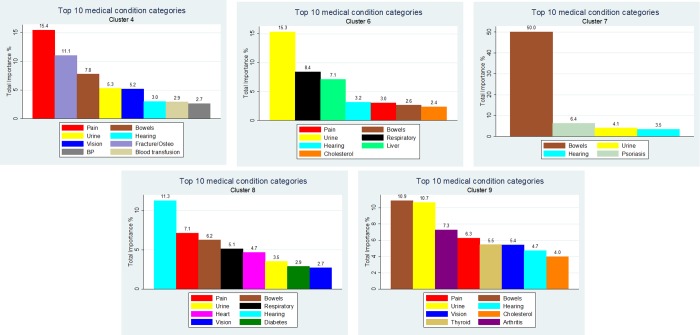
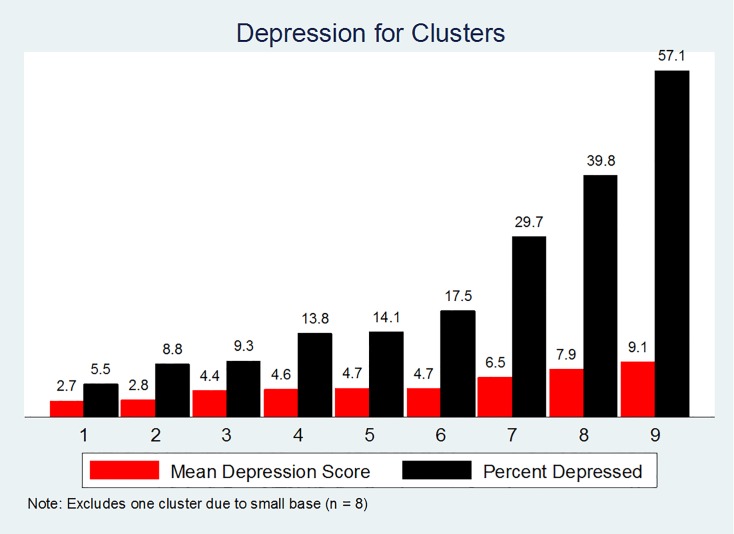
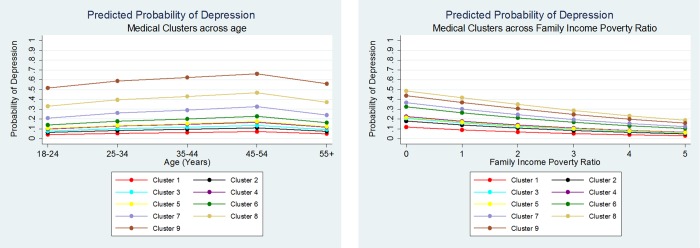
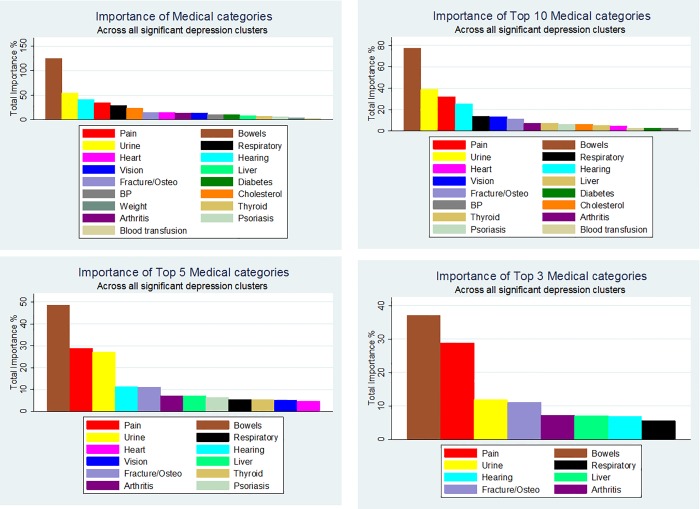
Five clusters of participants, based on medical symptoms, were identified to have significantly increased rates of depression compared to the cluster with the lowest rate: odds ratios ranged from 2.24 (95% CI 1.56, 3.24) to 6.33 (95% CI 1.67, 24.02). The ML boosted regression algorithm identified three key medical condition categories as being significantly more common in these clusters: bowel, pain and urinary symptoms. Bowel-related symptoms was found to dominate the relative importance of symptoms within the five key clusters.
This methodology shows promise for the identification of conditions in general populations and supports the current focus on the potential importance of bowel symptoms and the gut in mental health research.
抑郁症常与许多其他躯体疾病及症状合并存在。识别具有合并症状的人群集群可能揭示新的病理生理机制和治疗靶点。本研究的目的是通过利用自我报告的医学症状,将机器学习(ML)算法与传统回归技术相结合,从一项基于社区的大型横断面人群流行病学研究中识别并描述抑郁症发病率升高的个体集群。
采用基于社区人群的国家健康与营养检查研究(2009 - 2010年)(N = 3922),运用多阶段方法,结合ML和传统统计技术。执行自组织映射(SOM)ML算法,并结合层次聚类,根据68种医学症状创建参与者集群。然后使用二元逻辑回归,控制社会人口学混杂因素,以识别抑郁症水平较高(PHQ - 9≥10,n = 377)的关键参与者集群。最后,运行多重加法回归树增强ML算法,以识别17个广泛类别中的每个关键集群的重要医学症状:心脏、肝脏、甲状腺、呼吸系统、糖尿病、关节炎、骨折与骨质疏松症、骨骼疼痛、血压、输血、胆固醇、视力、听力、银屑病、体重、肠道和泌尿系统。
根据医学症状确定了五组参与者,与抑郁症发病率最低的组相比,其抑郁症发病率显著升高:优势比范围为2.24(95%CI 1.56,3.24)至6.33(95%CI 1.67,24.02)。ML增强回归算法确定了三个关键医学状况类别在这些集群中显著更常见:肠道、疼痛和泌尿系统症状。发现肠道相关症状在五个关键集群中症状的相对重要性方面占主导地位。
该方法在识别普通人群中的疾病状况方面显示出前景,并支持当前对肠道症状及肠道在心理健康研究中的潜在重要性的关注。