Loforese Giulio, Malinka Thomas, Keogh Adrian, Baier Felix, Simillion Cedric, Montani Matteo, Halazonetis Thanos D, Candinas Daniel, Stroka Deborah
Department of Clinical Research, Visceral Surgery and Medicine, University of Bern, Bern, Switzerland.
Interfaculty Bioinformatics Unit and Swiss Institute of Bioinformatics, University of Bern, Bern, Switzerland.
EMBO Mol Med. 2017 Jan;9(1):46-60. doi: 10.15252/emmm.201506089.
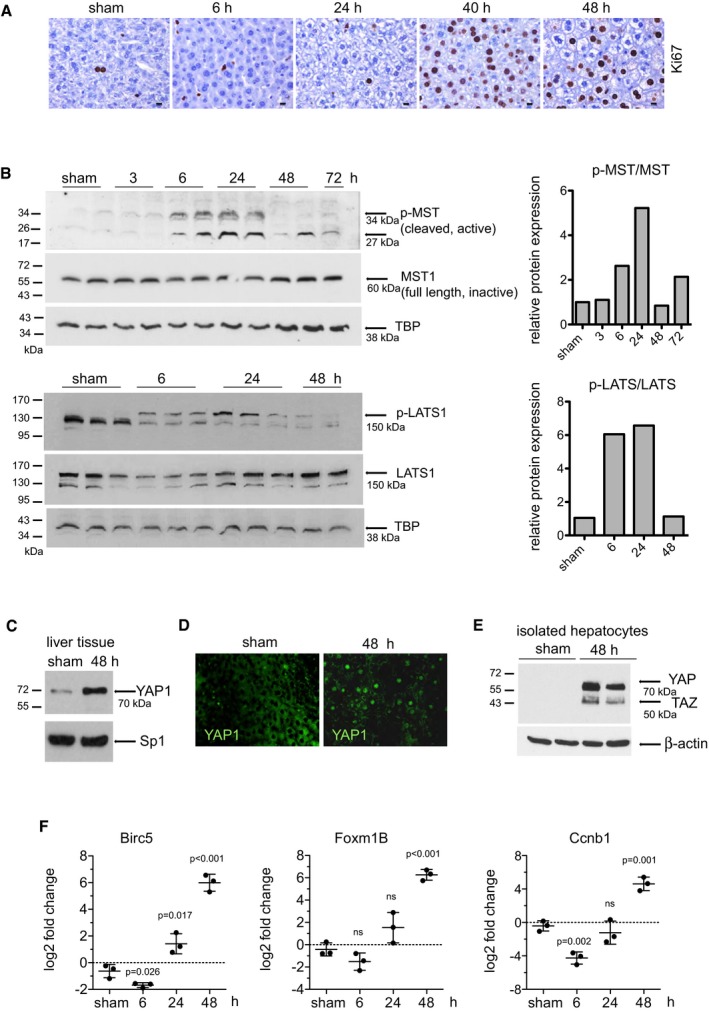
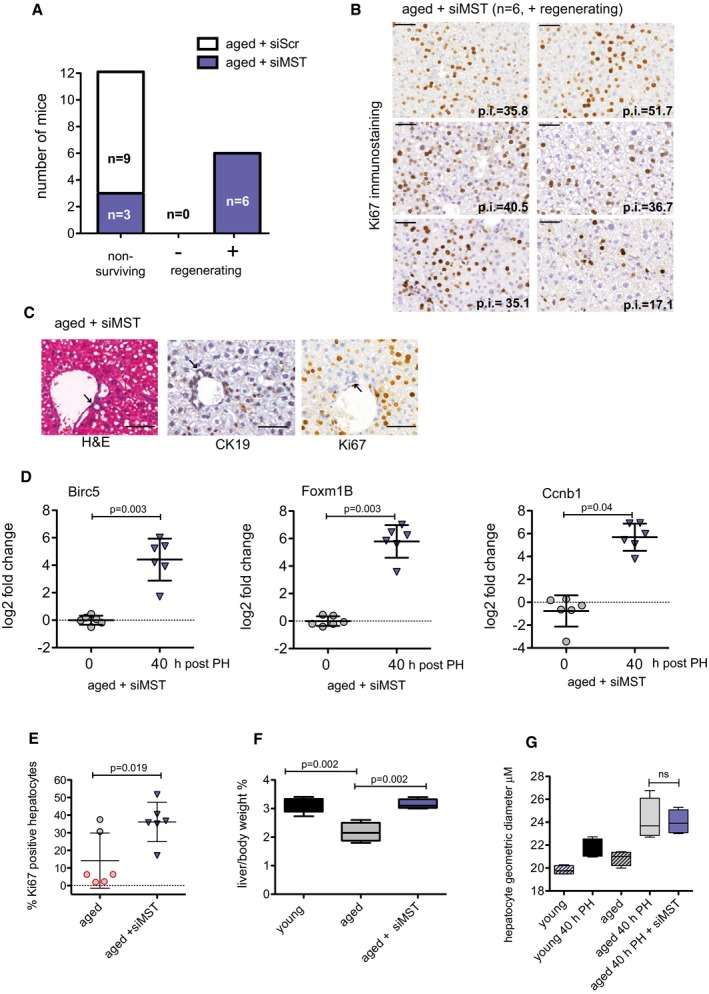
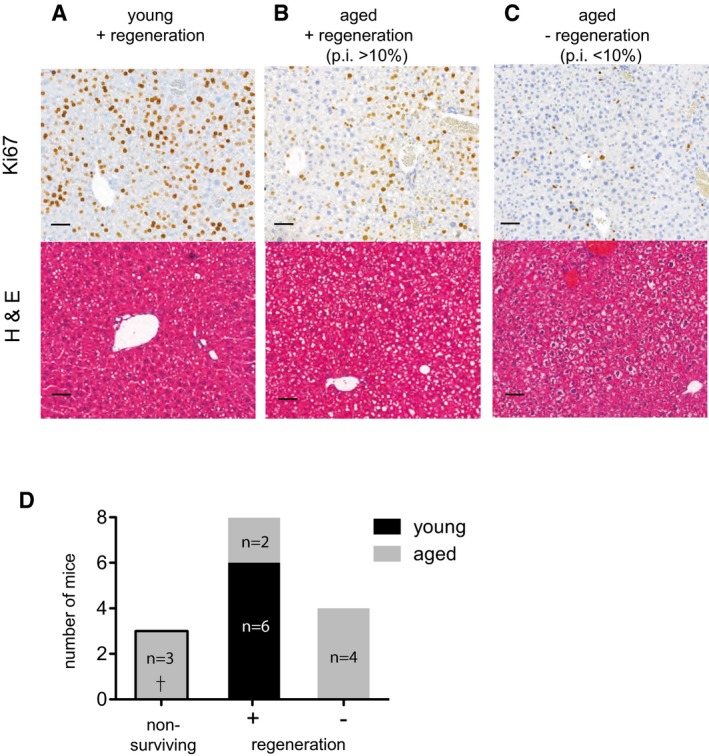
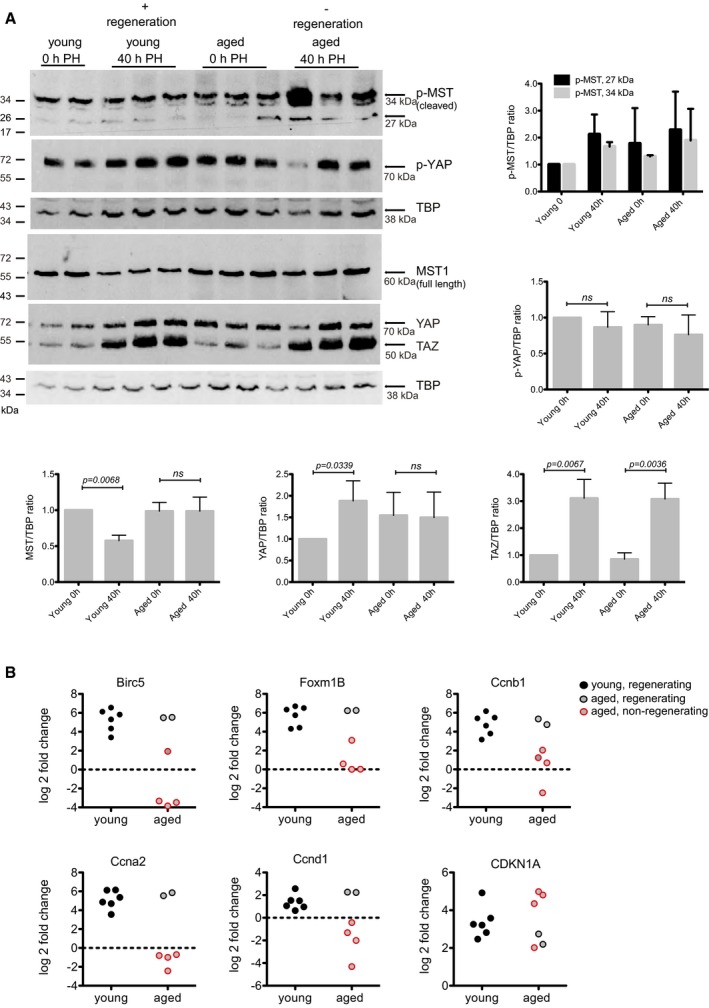
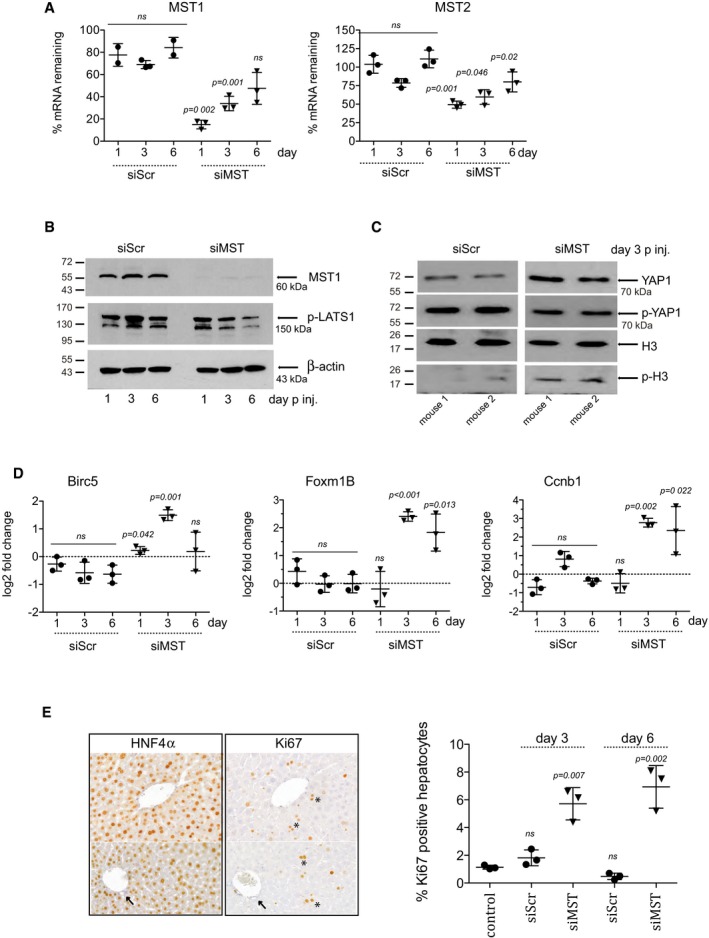
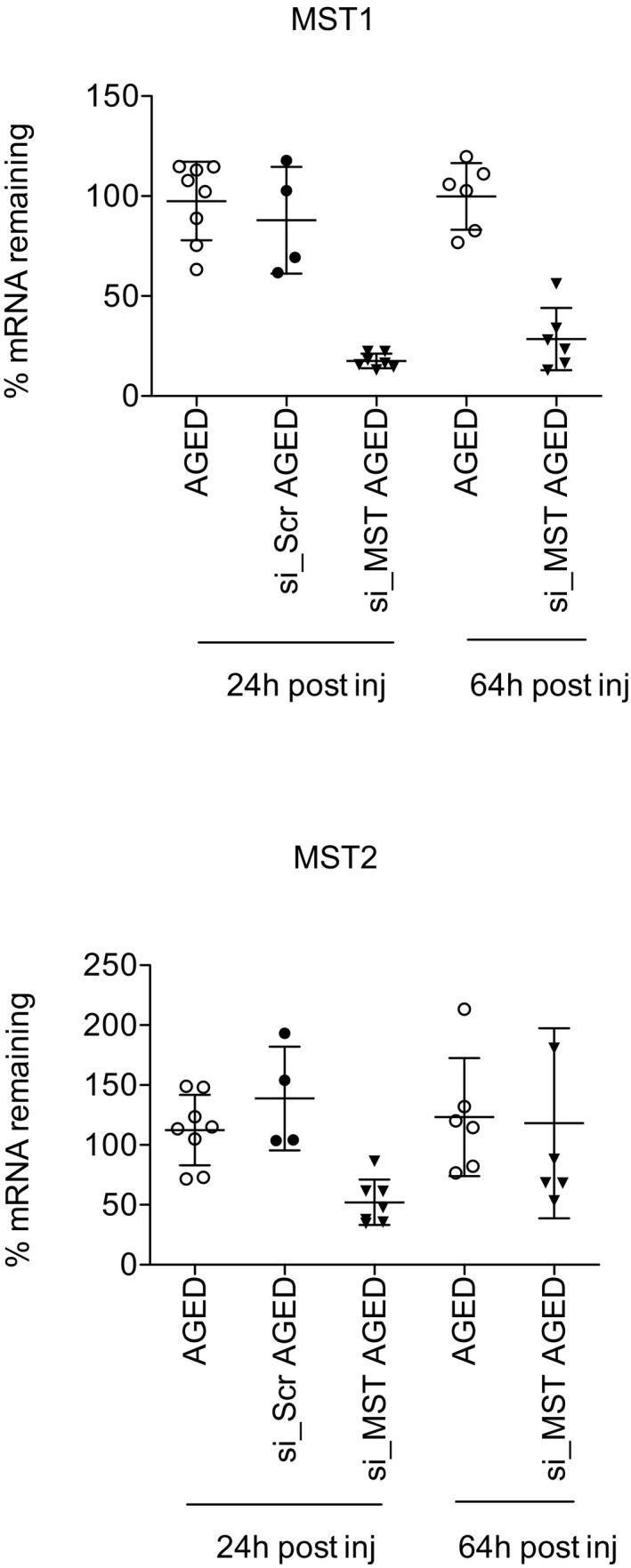
The liver has an intrinsic capacity to regenerate in response to injury or surgical resection. Nevertheless, circumstances in which hepatocytes are unresponsive to proliferative signals result in impaired regeneration and hepatic failure. As the Hippo pathway has a canonical role in the maintenance of liver size, we investigated whether it could serve as a therapeutic target to support regeneration. Using a standard two-thirds partial hepatectomy (PH) model in young and aged mice, we demonstrate that the Hippo pathway is modulated across the phases of liver regeneration. The activity of the core kinases MST1 and LATS1 increased during the early hypertrophic phase and returned to steady state levels in the proliferative phase, coinciding with activation of YAP1 target genes and hepatocyte proliferation. Moreover, following PH in aged mice, we demonstrate that Hippo signaling is anomalous in non-regenerating livers. We provide pre-clinical evidence that silencing the Hippo core kinases MST1 and MST2 with siRNA provokes hepatocyte proliferation in quiescent livers and rescues liver regeneration in aged mice following PH. Our data suggest that targeting the Hippo core kinases MST1/2 has therapeutic potential to improve regeneration in non-regenerative disorders.
肝脏具有因应损伤或手术切除而再生的内在能力。然而,肝细胞对增殖信号无反应的情况会导致再生受损和肝衰竭。由于Hippo信号通路在维持肝脏大小方面具有典型作用,我们研究了它是否可作为支持再生的治疗靶点。使用年轻和老年小鼠的标准三分之二部分肝切除术(PH)模型,我们证明Hippo信号通路在肝脏再生的各个阶段均受到调节。核心激酶MST1和LATS1的活性在早期肥大阶段增加,并在增殖阶段恢复到稳态水平,这与YAP1靶基因的激活和肝细胞增殖相一致。此外,在老年小鼠进行PH后,我们证明Hippo信号在未再生的肝脏中是异常的。我们提供临床前证据表明,用小干扰RNA(siRNA)沉默Hippo核心激酶MST1和MST2可激发静止肝脏中的肝细胞增殖,并挽救老年小鼠PH后的肝脏再生。我们的数据表明,靶向Hippo核心激酶MST1/2具有改善非再生性疾病中再生的治疗潜力。