Liu Feili, Wang Baocheng, Wang Jiajia, Ling Xiaozheng, Li Qifeng, Meng Wei, Ma Jie
Department of Pediatric Neurosurgery, Xinhua Hospital, School of Medicine, Shanghai Jiao Tong University, Shanghai 200092, China.
Biomed Res Int. 2016;2016:1784161. doi: 10.1155/2016/1784161. Epub 2016 Nov 13.
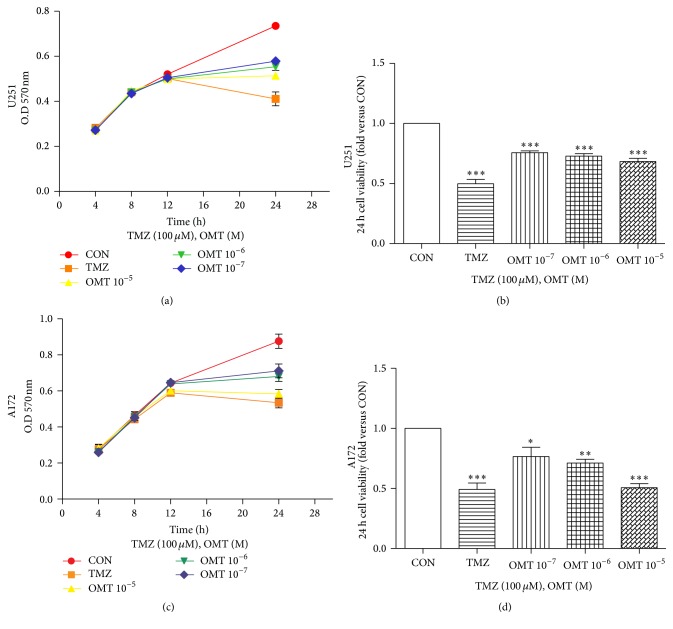
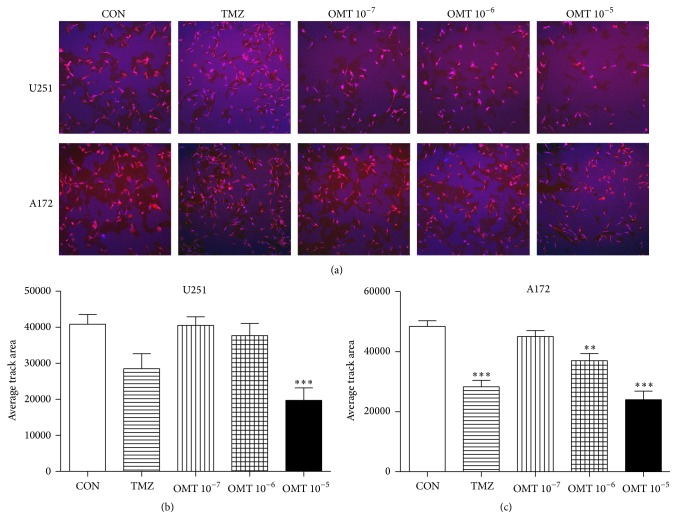
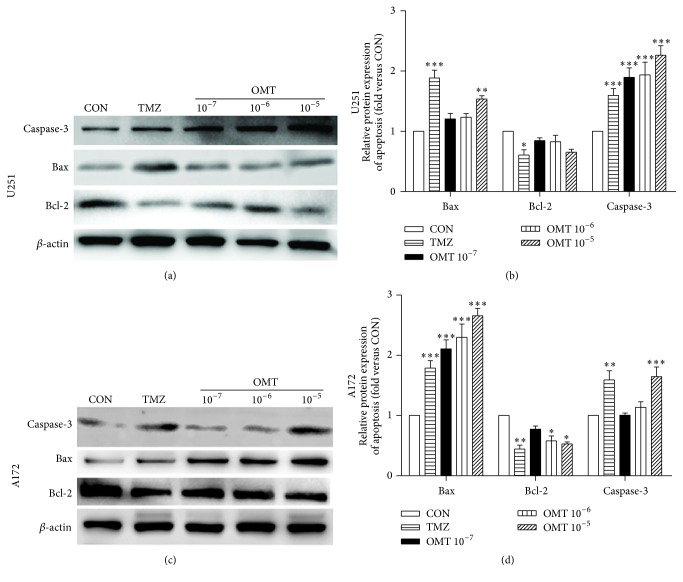
Oxymatrine (OMT), an alkaloid derived from the traditional Chinese medicine herb Sophora flavescens Aiton, has been shown to exhibit anticancer properties on various types of cancer cells. In this study, we investigate the anticancer properties of OMT on human glioblastoma (GBM) cells and evaluate their underlying mechanisms. MTT assays were performed and demonstrated that OMT significantly inhibits the proliferation of GBM cells. Flow cytometry suggested that OMT at a concentration of 10 M may induce apoptosis in U251 and A172 cells. Western blot analyses demonstrated a significant increase in the expression of Bax and caspase-3 and a significant decrease in expression of Bcl-2 in both U251 and A172 cells. Additionally, OMT was found by transwell and high-content screening assays to decrease the migratory ability of the evaluated GBM cells. These findings suggest that the antitumor effects of OMT may be the result of inhibition of cell proliferation and migration and the induction of apoptosis by regulating the expression of apoptosis-associated proteins. OMT may represent a novel anticancer therapy for the treatment of GBM.
氧化苦参碱(OMT)是一种从传统中药苦参中提取的生物碱,已被证明对多种癌细胞具有抗癌特性。在本研究中,我们研究了OMT对人胶质母细胞瘤(GBM)细胞的抗癌特性,并评估其潜在机制。进行了MTT试验,结果表明OMT显著抑制GBM细胞的增殖。流式细胞术表明,浓度为10μM的OMT可能诱导U251和A172细胞凋亡。蛋白质印迹分析表明,U251和A172细胞中Bax和caspase-3的表达显著增加,而Bcl-2的表达显著降低。此外,通过Transwell和高内涵筛选试验发现,OMT可降低所评估的GBM细胞的迁移能力。这些发现表明,OMT的抗肿瘤作用可能是通过调节凋亡相关蛋白的表达来抑制细胞增殖和迁移以及诱导凋亡的结果。OMT可能代表一种治疗GBM的新型抗癌疗法。