Auer Michael M, Griffiths Mark D
neccton LtdLienz, Austria; Psychology, Nottingham Trent UniversityNottingham, UK.
Front Psychol. 2016 Nov 28;7:1875. doi: 10.3389/fpsyg.2016.01875. eCollection 2016.
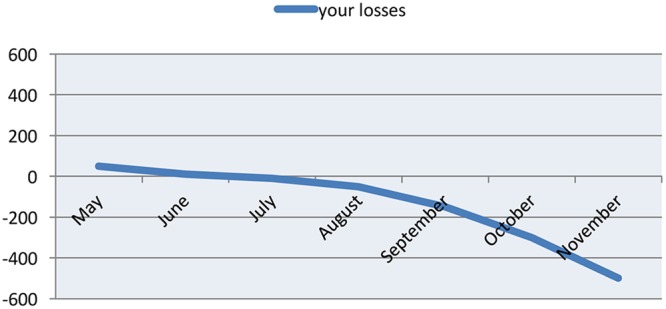
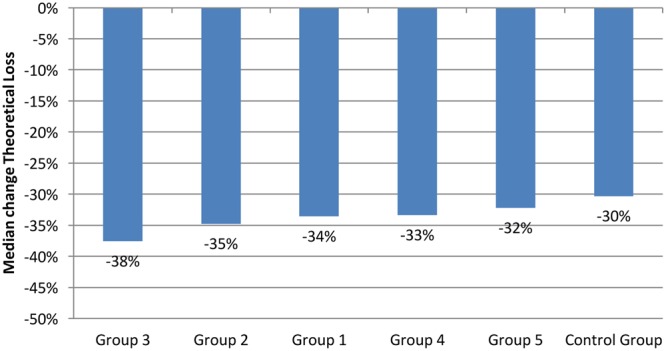
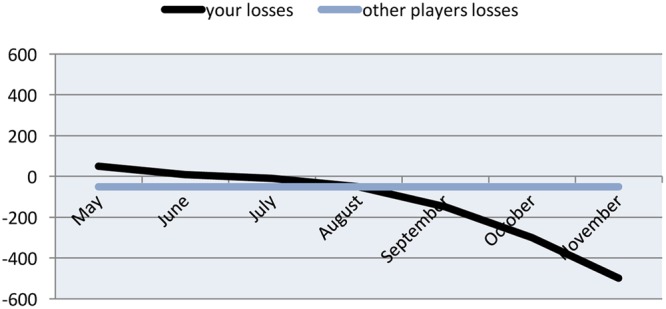
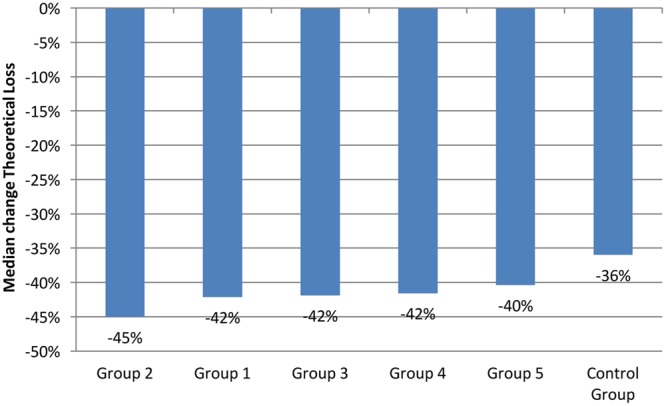
Responsible gambling tools (e.g., limit-setting tools, pop-up messages, and personalized feedback) have become increasingly popular as a way of facilitating players to gamble in a more responsible manner. However, relatively few studies have evaluated whether such tools actually work. The present study examined whether the use of three types of information (i.e., personalized feedback, normative feedback, and/or a recommendation) could enable players to gamble more responsibly as assessed using three measures of gambling behavior, i.e., theoretical loss (TL), amount of money wagered, and gross gaming revenue (GGR) (i.e., net win/loss). By manipulating the three forms of information, data from six different groups of players were analyzed. The participant sample drawn from the population were those that had played at least one game for money on the online platform () during April 2015. A total of 17,452 players were randomly selected from 69,631 players that fulfilled the selection criteria. Of these, 5,528 players participated in the experiment. Gambling activity among the control group (who received no personalized feedback, normative feedback or no recommendation) was also compared with the other five groups that received information of some kind (personalized feedback, normative feedback and/or a recommendation). Compared to the control group, all groups that received some kind of messaging significantly reduced their gambling behavior as assessed by TL, amount of money wagered, and GGR. The results support the hypothesis that personalized behavioral feedback can enable behavioral change in gambling but that normative feedback does not appear change behavior significantly more than personalized feedback.
负责任赌博工具(如限额设定工具、弹出式消息和个性化反馈)作为一种促使玩家以更负责任的方式赌博的手段,越来越受欢迎。然而,相对较少的研究评估了这些工具是否真的有效。本研究考察了使用三种类型的信息(即个性化反馈、规范反馈和/或建议)是否能使玩家在使用赌博行为的三项指标进行评估时更负责任地赌博,这三项指标分别是理论损失(TL)、下注金额和博彩总收入(GGR)(即净赢/输)。通过操控这三种信息形式,对来自六个不同玩家组的数据进行了分析。从总体中抽取的参与者样本是那些在2015年4月期间在在线平台上至少玩过一局用钱赌博游戏的人。从符合选择标准的69631名玩家中随机选取了17452名玩家。其中,5528名玩家参与了实验。还将对照组(未收到个性化反馈、规范反馈或建议)的赌博活动与其他五个收到某种信息(个性化反馈、规范反馈和/或建议)的组进行了比较。与对照组相比,所有收到某种信息的组在通过理论损失、下注金额和博彩总收入评估时,其赌博行为都显著减少。结果支持了以下假设:个性化行为反馈能够促使赌博行为发生改变,但规范反馈在改变行为方面似乎并不比个性化反馈更显著。