Williams Nefyn H, Hawkes Claire, Din Nafees Ud, Roberts Jessica L, Charles Joanna M, Morrison Val L, Hoare Zoe, Edwards Rhiannon T, Andrew Glynne, Alexander Swapna, Lemmey Andrew B, Woods Bob, Sackley Catherine, Logan Pip, Hunnisett David, Mawdesley Kevin, Wilkinson Clare
Schools of Medical and Healthcare Sciences, Bangor University, Bangor, UK ; Betsi Cadwaladr University Health Board, North Wales, UK ; North Wales Organisation for Randomised Trials in Health, Y Wern, Normal Site, Bangor University, Holyhead Road, Bangor, LL57 2PZ UK.
Schools of Medical and Healthcare Sciences, Bangor University, Bangor, UK ; North Wales Organisation for Randomised Trials in Health, Y Wern, Normal Site, Bangor University, Holyhead Road, Bangor, LL57 2PZ UK.
Pilot Feasibility Stud. 2015 Apr 7;1:13. doi: 10.1186/s40814-015-0008-0. eCollection 2015.
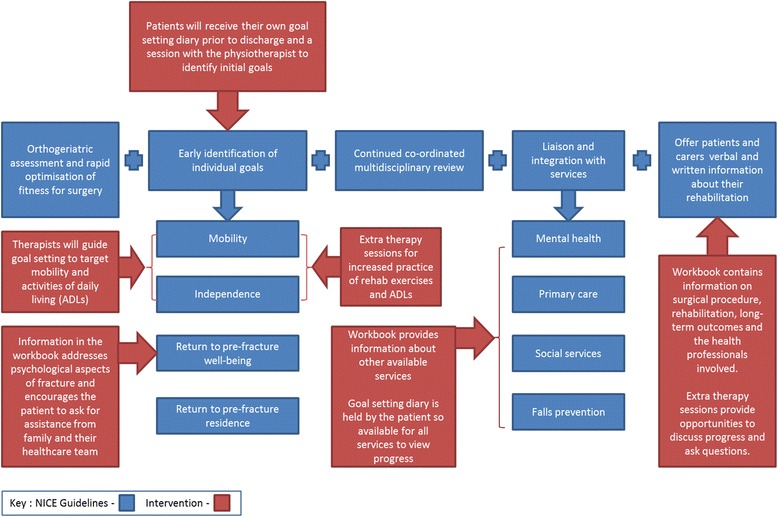
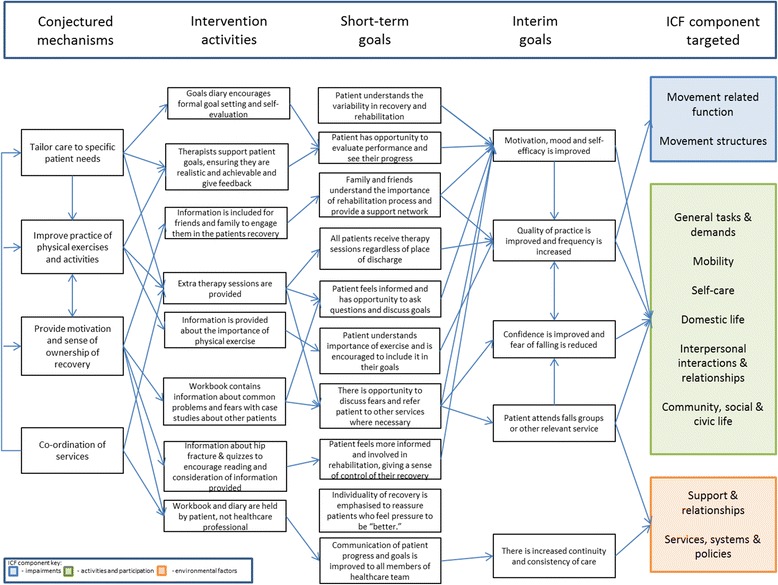
Proximal femoral fracture is a common, major health problem in old age resulting in loss of functional independence and a high-cost burden on society, with estimated health and social care costs of £2.3 billion per year in the UK. Rehabilitation has the potential to maximise functional recovery and maintain independent living, but evidence of effectiveness is lacking. Usual rehabilitation care is delivered by a multi-disciplinary team in the hospital and in the community. An 'enhanced rehabilitation' intervention has been developed consisting of a workbook, goal-setting diary and extra therapy sessions, designed to improve self-efficacy and increase the amount and quality of the practice of physical exercise and activities of daily living.
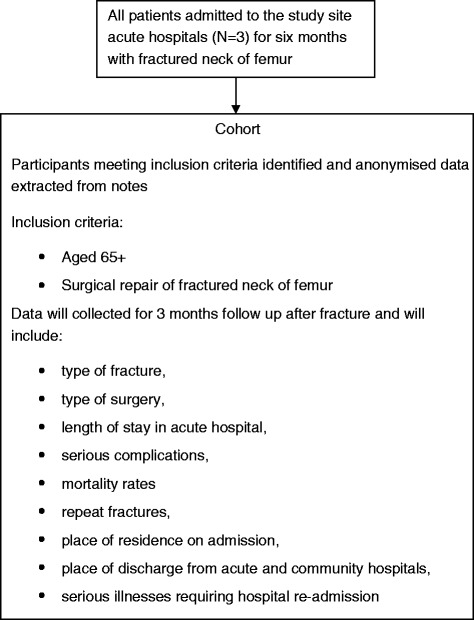
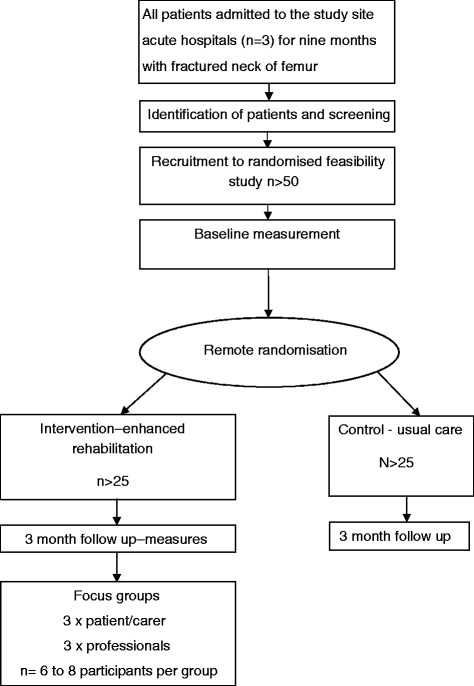
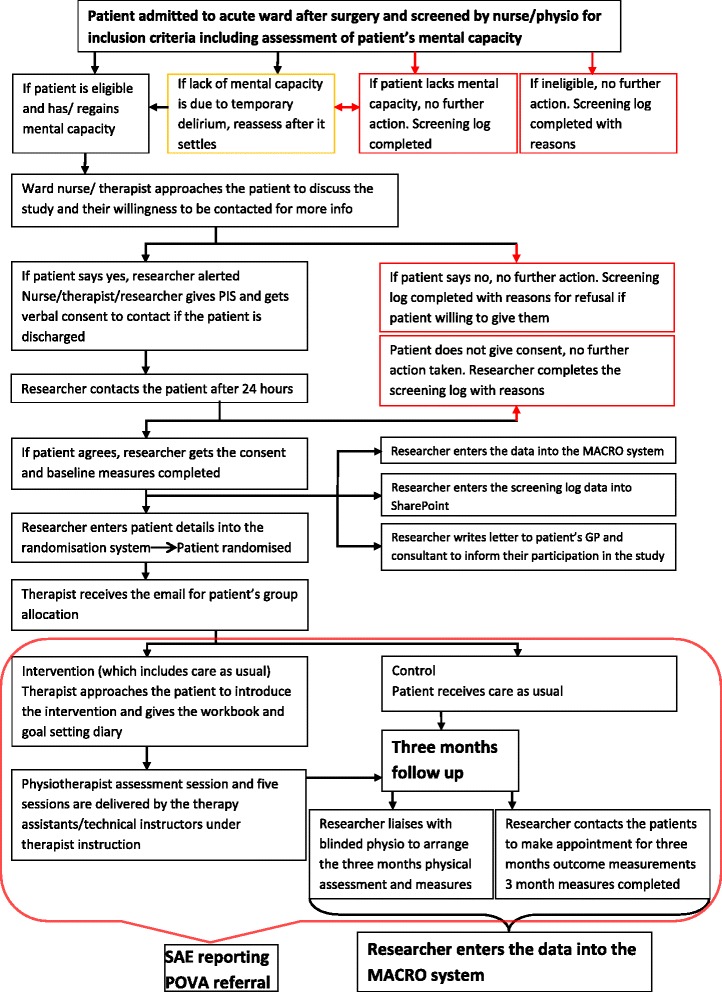
METHODS/DESIGN: This paper describes the design of a phase II study comprising an anonymous cohort of all proximal femoral fracture patients admitted to the three acute hospitals in Betsi Cadwaladr University Health Board over a 6-month period with a randomised feasibility study comparing the enhanced rehabilitation intervention with usual care. These will assess the feasibility of a future definitive randomised controlled trial and concurrent economic evaluation in terms of recruitment, retention, outcome measure completion, compliance with the intervention and fidelity of delivery, health service use data, willingness to be randomised and effect size for a future sample size calculation. Focus groups will provide qualitative data to contribute to the assessment of the acceptability of the intervention amongst patients, carers and rehabilitation professionals and the feasibility of delivering the planned intervention. The primary outcome measure is function assessed by the Barthel Index. Secondary outcomes measure the ability to perform activities of daily living, anxiety and depression, potential mediators of outcomes such as hip pain, self-efficacy and fear of falling, health utility, health service use, objectively assessed physical function and adverse events. Participants' preference for rehabilitation services will be assessed in a discrete choice experiment.
Phase II studies are an opportunity to not only assess the feasibility of trial methods but also to compare different methods of outcome measurement and novel methods of obtaining health service use data from routinely collected patient information.
Current Controlled Trials ISRCTN22464643, UKCRN16677.
股骨近端骨折是老年人常见的重大健康问题,会导致功能独立丧失,并给社会带来高昂的成本负担,据估计,英国每年的健康和社会护理成本为23亿英镑。康复治疗有潜力使功能恢复最大化并维持独立生活,但缺乏有效性证据。常规康复护理由医院和社区的多学科团队提供。一种“强化康复”干预措施已经开发出来,包括一本工作手册、目标设定日记和额外的治疗课程,旨在提高自我效能感,并增加体育锻炼和日常生活活动的练习量及质量。
方法/设计:本文描述了一项II期研究的设计,该研究包括在6个月期间内入住贝西·卡德瓦拉德大学健康委员会下属三家急症医院的所有股骨近端骨折患者组成的匿名队列,并进行一项随机可行性研究,将强化康复干预措施与常规护理进行比较。这些研究将从招募、留存、结局指标完成情况、干预措施依从性和实施保真度、卫生服务使用数据、随机分组意愿以及为未来样本量计算的效应大小等方面评估未来确定性随机对照试验和同期经济评估的可行性。焦点小组将提供定性数据,以帮助评估该干预措施在患者、护理人员和康复专业人员中的可接受性以及实施计划干预措施的可行性。主要结局指标是通过巴氏指数评估的功能。次要结局指标包括进行日常生活活动的能力、焦虑和抑郁、结局的潜在中介因素如髋部疼痛、自我效能感和跌倒恐惧、健康效用、卫生服务使用情况、客观评估的身体功能和不良事件。将通过离散选择实验评估参与者对康复服务的偏好。
II期研究不仅是评估试验方法可行性的机会,也是比较不同结局测量方法以及从常规收集的患者信息中获取卫生服务使用数据的新方法的机会。
当前受控试验ISRCTN22464643,英国临床试验注册号16677。