Chacko Anil, Isham Andrew, Cleek Andrew F, McKay Mary M
Department of Applied Psychology, New York University, 246 Greene Street, New York, NY 10003 USA.
University of Wisconsin, 1513 University Ave, Madison, WI 53706 USA.
Pilot Feasibility Stud. 2016 Sep 20;2:57. doi: 10.1186/s40814-016-0097-4. eCollection 2016.
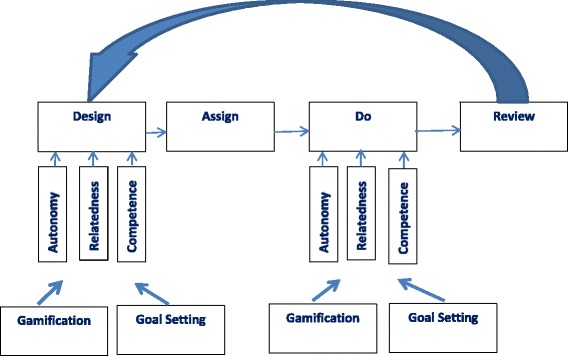
Disruptive behavior disorders (DBDs) (oppositional defiant disorder (ODD) and conduct disorder (CD)) are prevalent, costly, and oftentimes chronic psychiatric disorders of childhood. Evidence-based interventions that focus on assisting parents to utilize effective skills to modify children's problematic behaviors are first-line interventions for the treatment of DBDs. Although efficacious, the effects of these interventions are often attenuated by poor implementation of the skills learned during treatment by parents, often referred to as between-session homework. The multiple family group (MFG) model is an evidence-based, skills-based intervention model for the treatment of DBDs in school-age youth residing in urban, socio-economically disadvantaged communities. While data suggest benefits of MFG on DBD behaviors, similar to other skill-based interventions, the effects of MFG are mitigated by the poor homework implementation, despite considerable efforts to support parents in homework implementation. This paper focuses on the study protocol for the development and preliminary evaluation of a theory-based, smartphone mobile health (mHealth) application (My MFG) to support homework implementation by parents participating in MFG.
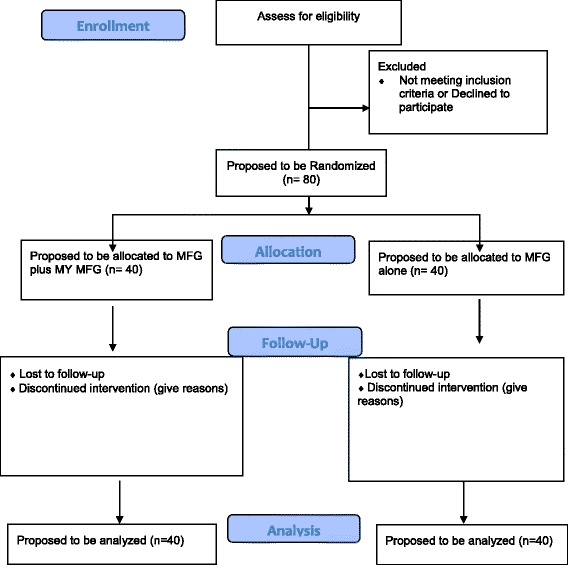
METHODS/DESIGN: This paper describes a study design proposal that begins with a theoretical model, uses iterative design processes to develop My MFG to support homework implementation in MFG through a series of pilot studies, and a small-scale pilot randomised controlled trial to determine if the intervention can demonstrate change (preliminary efficacy) of My MFG in outpatient mental health settings in socioeconomically disadvantaged communities.
This preliminary study aims to understand the implementation of mHealth methods to improve the effectiveness of evidence-based interventions in routine outpatient mental health care settings for youth with disruptive behavior and their families. Developing methods to augment the benefits of evidence-based interventions, such as MFG, where homework implementation is an essential mediator of treatment benefits is critical to full adoption/implementation of these intervention in routine practice settings and maximizing benefits for youth with DBDs and their families.
ClinicalTrials.gov NCT01917838.
破坏性行为障碍(DBDs)(对立违抗性障碍(ODD)和品行障碍(CD))是常见、代价高昂且往往为慢性的儿童期精神障碍。以证据为基础的干预措施,着重于帮助家长运用有效技能来改变孩子的问题行为,是治疗DBDs的一线干预手段。尽管这些干预措施有效,但家长在治疗期间所学技能的执行情况不佳(通常称为疗程间作业),往往会削弱这些干预措施的效果。多家庭小组(MFG)模式是一种以证据为基础、基于技能的干预模式,用于治疗居住在城市社会经济弱势社区的学龄青少年的DBDs。虽然数据表明MFG对DBD行为有益,但与其他基于技能的干预措施类似,尽管在支持家长执行作业方面付出了相当大的努力,但MFG的效果仍因作业执行不佳而受到影响。本文重点介绍一项研究方案,该方案旨在开发并初步评估一款基于理论的智能手机移动健康(mHealth)应用程序(我的MFG),以支持参与MFG的家长执行作业。
方法/设计:本文描述了一项研究设计方案,该方案始于一个理论模型,通过一系列试点研究,运用迭代设计流程来开发我的MFG,以支持MFG中的作业执行,并开展一项小规模的试点随机对照试验,以确定该干预措施能否在社会经济弱势社区的门诊心理健康环境中证明我的MFG的变化(初步疗效)。
这项初步研究旨在了解mHealth方法的实施情况,以提高针对有破坏性行为的青少年及其家庭的常规门诊心理健康护理环境中基于证据的干预措施的有效性。开发方法以增强基于证据的干预措施(如MFG)的益处至关重要,在MFG中,作业执行是治疗益处的关键调节因素,这对于在常规实践环境中全面采用/实施这些干预措施以及为患有DBDs的青少年及其家庭最大化益处至关重要。
ClinicalTrials.gov NCT01917838。