Aoyagi T, Newstead M W, Zeng X, Kunkel S L, Kaku M, Standiford T J
Division of Pulmonary and Critical Care Medicine, Department of Internal Medicine, University of Michigan, Ann Arbor, Michigan, USA.
Department of Infection Control and Laboratory Diagnostics, Internal Medicine, Tohoku University Graduate School of Medicine, Sendai, Japan.
Mucosal Immunol. 2017 Jul;10(4):1043-1055. doi: 10.1038/mi.2016.107. Epub 2016 Dec 14.
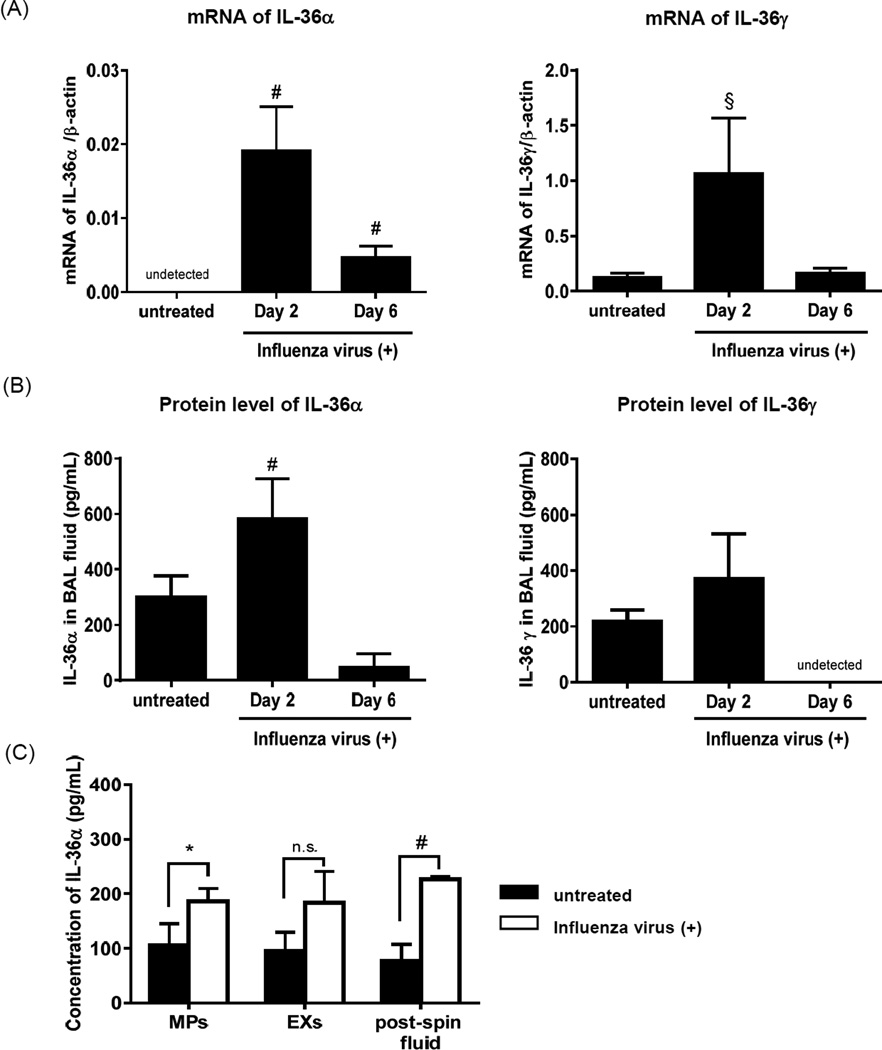
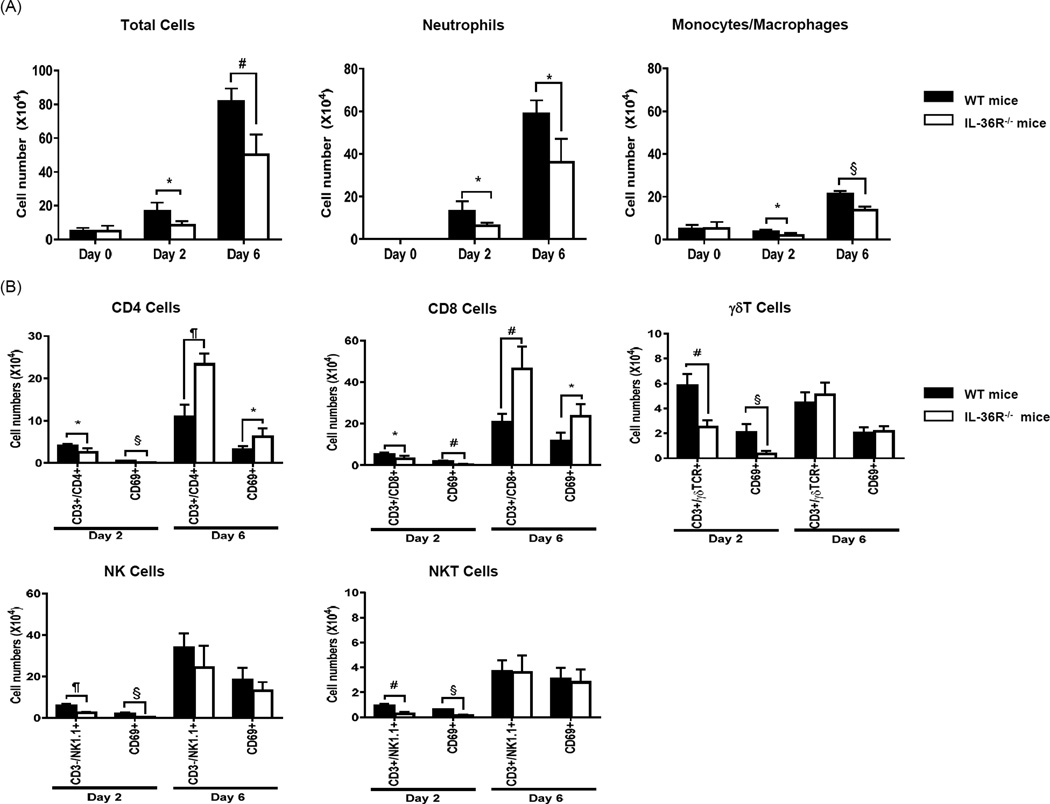
Influenza virus causes a respiratory disease in humans that can progress to lung injury with fatal outcome. The interleukin (IL)-36 cytokines are newly described IL-1 family cytokines that promote inflammatory responses via binding to the IL-36 receptor (IL-36R). The mechanism of expression and the role of IL-36 cytokines are poorly understood. Here, we investigated the role of IL-36 cytokines in modulating the innate inflammatory response during influenza virus-induced pneumonia in mice. The intranasal administration of influenza virus upregulated IL-36α mRNA and protein production in the lungs. In vitro, influenza virus-mediated IL-36α but not IL-36γ is induced and secreted from alveolar epithelial cells (AECs) through both a caspase-1 and caspase-3/7 dependent pathway. IL-36α was detected in microparticles shed from AECs and promoted the production of pro-inflammatory cytokines and chemokines in respiratory cells. IL-36R-deficient mice were protected from influenza virus-induced lung injury and mortality. Decreased mortality was associated with significantly reduced early accumulation of neutrophils and monocytes/macrophages, activation of lymphocytes, production of pro-inflammatory cytokines and chemokines, and permeability of the alveolar-epithelial barrier in despite impaired viral clearance. Taken together, these data indicate that IL-36 ligands exacerbate lung injury during influenza virus infection.
流感病毒可引发人类呼吸道疾病,严重时可进展为肺损伤并导致死亡。白细胞介素(IL)-36细胞因子是新发现的IL-1家族细胞因子,通过与IL-36受体(IL-36R)结合来促进炎症反应。目前,人们对IL-36细胞因子的表达机制及其作用了解甚少。在此,我们研究了IL-36细胞因子在调节小鼠流感病毒诱导的肺炎期间固有炎症反应中的作用。经鼻内接种流感病毒后,肺组织中IL-36α的mRNA和蛋白表达上调。在体外实验中,流感病毒通过半胱天冬酶-1和半胱天冬酶-3/7依赖的途径诱导并分泌IL-36α,而非IL-36γ,该过程由肺泡上皮细胞(AEC)完成。在从AEC脱落的微粒中检测到IL-36α,其可促进呼吸道细胞中促炎细胞因子和趋化因子的产生。IL-36R缺陷型小鼠可免受流感病毒诱导的肺损伤及死亡影响。尽管病毒清除能力受损,但死亡率降低与中性粒细胞和单核细胞/巨噬细胞的早期积聚显著减少、淋巴细胞激活、促炎细胞因子和趋化因子的产生以及肺泡上皮屏障通透性降低有关。综上所述,这些数据表明IL-36配体在流感病毒感染期间会加剧肺损伤。