Grose Charles, Buckingham Erin M, Carpenter John E, Kunkel Jeremy P
Virology Laboratory, Children's Hospital, University of Iowa, Iowa City, IA 52242, USA.
JC Wilt Infectious Diseases Research Centre, National Microbiology Laboratory, Public Health Agency of Canada, Winnipeg, MB R3E 3L5, Canada.
Pathogens. 2016 Dec 10;5(4):67. doi: 10.3390/pathogens5040067.
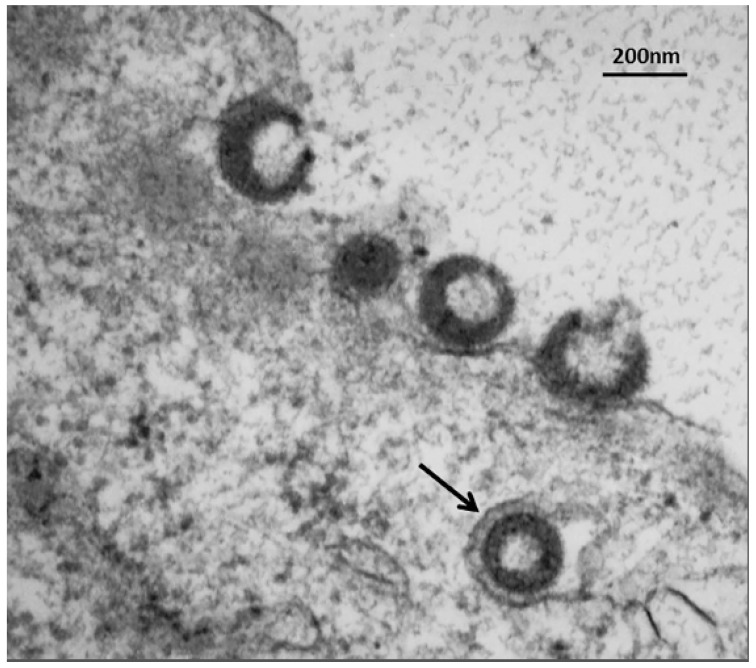
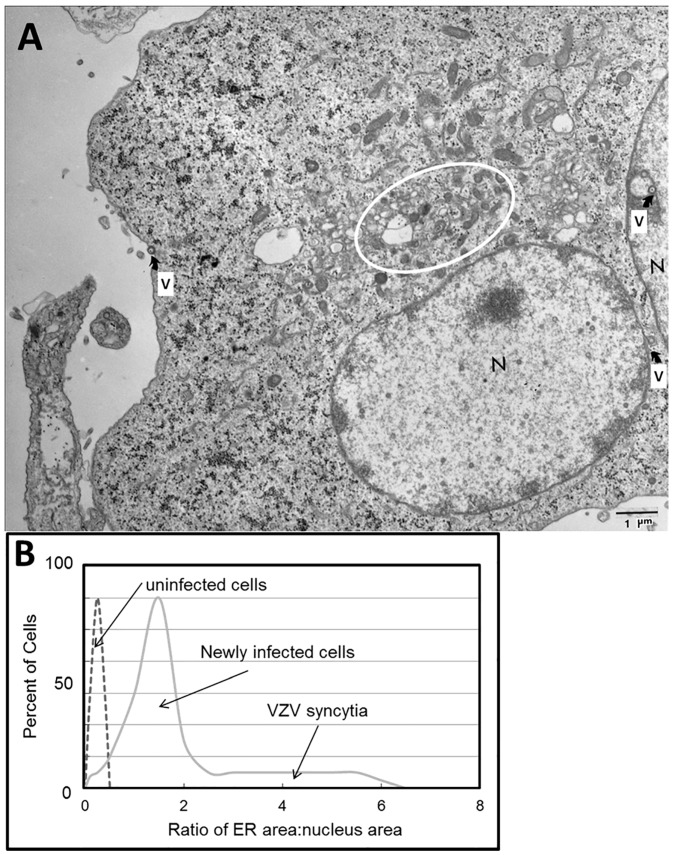
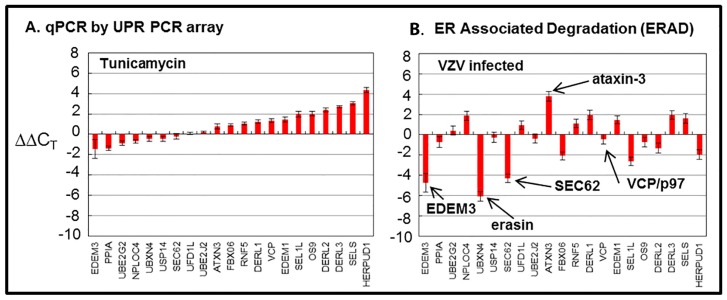
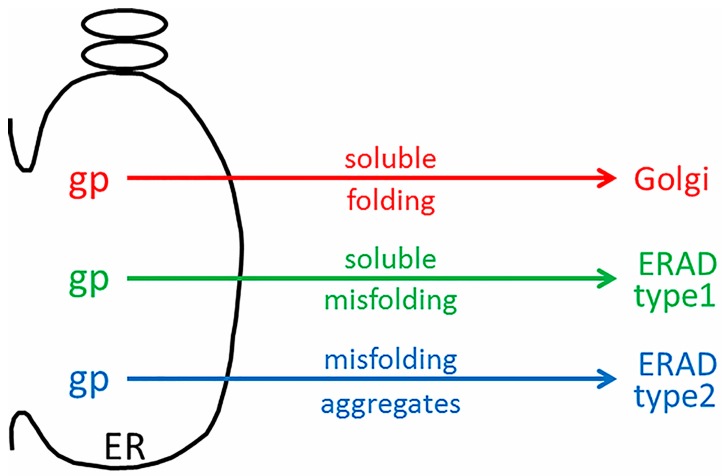
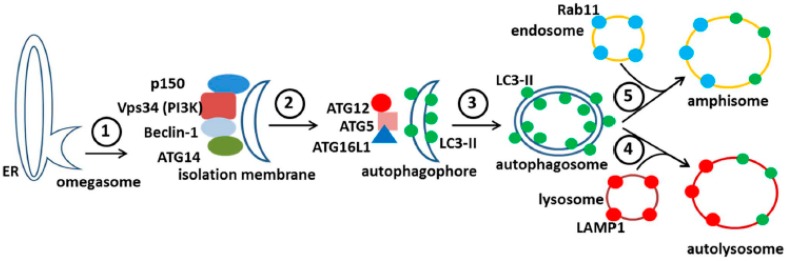
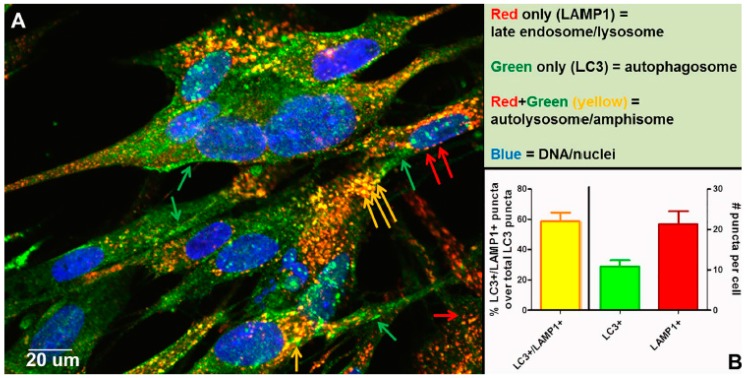
Varicella-zoster virus (VZV) induces abundant autophagy. Of the nine human herpesviruses, the VZV genome is the smallest (~124 kbp), lacking any known inhibitors of autophagy, such as the herpes simplex virus neurovirulence gene. Therefore, this review assesses the evidence for VZV-induced cellular stress, endoplasmic-reticulum-associated degradation (ERAD), and autophagic flux during the VZV infectious cycle. Even though VZV is difficult to propagate in cell culture, the biosynthesis of the both - and -linked viral glycoproteins was found to be abundant. In turn, this biosynthesis provided evidence of endoplasmic reticulum (ER) stress, including a greatly enlarged ER and a greatly diminished production of cellular glycoproteins. Other signs of ER stress following VZV infection included detection of the alternatively spliced higher-molecular-weight form of XBP1 as well as CHOP. VZV infection in cultured cells leads to abundant autophagosome production, as was visualized by the detection of the microtubule-associated protein 1 light chain 3-II (LC3-II). The degree of autophagy induced by VZV infection is comparable to that induced in uninfected cells by serum starvation. The inhibition of autophagic flux by chemicals such as 3-methyladenine or ATG5 siRNA, followed by diminished virus spread and titers, has been observed. Since the latter observation pointed to the virus assembly/trafficking compartments, we purified VZ virions by ultracentrifugation and examined the virion fraction for components of the autophagy pathway. We detected LC3-II protein (an autophagy marker) as well as Rab11 protein, a component of the endosomal pathway. We also observed that the virion-containing vesicles were single-walled; thus, they are not autophagosomes. These results suggested that some VZ virions after secondary envelopment were transported to the outer cell membrane in a vesicle derived from both the autophagy and endosomal pathways, such as an amphisome. Thus, these results demonstrate that herpesvirus trafficking pathways can converge with the autophagy pathway.
水痘带状疱疹病毒(VZV)可诱导大量自噬。在九种人类疱疹病毒中,VZV基因组最小(约124千碱基对),缺乏任何已知的自噬抑制剂,如单纯疱疹病毒神经毒力基因。因此,本综述评估了VZV感染周期中VZV诱导的细胞应激、内质网相关降解(ERAD)和自噬通量的证据。尽管VZV在细胞培养中难以增殖,但发现双连接和单连接病毒糖蛋白的生物合成很丰富。反过来,这种生物合成提供了内质网(ER)应激的证据,包括内质网大大扩张和细胞糖蛋白产量大幅下降。VZV感染后内质网应激的其他迹象包括检测到XBP1的可变剪接高分子量形式以及CHOP。培养细胞中的VZV感染导致大量自噬体产生,通过检测微管相关蛋白1轻链3-II(LC3-II)得以可视化。VZV感染诱导的自噬程度与血清饥饿诱导未感染细胞的自噬程度相当。已观察到用3-甲基腺嘌呤或ATG5 siRNA等化学物质抑制自噬通量,随后病毒传播和滴度降低。由于后一观察结果指向病毒组装/运输区室,我们通过超速离心纯化了VZ病毒粒子,并检查病毒粒子部分是否存在自噬途径的成分。我们检测到LC3-II蛋白(一种自噬标记物)以及内体途径的成分Rab11蛋白。我们还观察到含病毒粒子的囊泡是单壁的;因此,它们不是自噬体。这些结果表明,一些二次包膜后的VZ病毒粒子在源自自噬和内体途径的囊泡(如两性体)中被转运到细胞外膜。因此,这些结果表明疱疹病毒运输途径可与自噬途径汇合。