Sasaki Clarence T, Toman Julia, Vageli Dimitra
The Yale Larynx laboratory, Department of Surgery, Yale School of Medicine, New Haven, CT, United States of America.
PLoS One. 2016 Dec 14;11(12):e0168269. doi: 10.1371/journal.pone.0168269. eCollection 2016.
Extra-esophageal carcinogenesis has been widely discussed in relation to the chronic effects of laryngopharyngeal reflux and most prominently with pepsin historically central to this discussion. With refluxate known to include gastric (pepsin) and duodenal (bile) fluids, we recently demonstrated the mechanistic role of NF-κB in mediating the preneoplastic effects of acidic-bile. However, the role of pepsin in promoting hypopharyngeal premalignant events remains historically unclear. Here, we investigate the in vitro effect of acidic-pepsin on the NF-κB oncogenic pathway to better define its potential role in hypopharyngeal neoplasia.
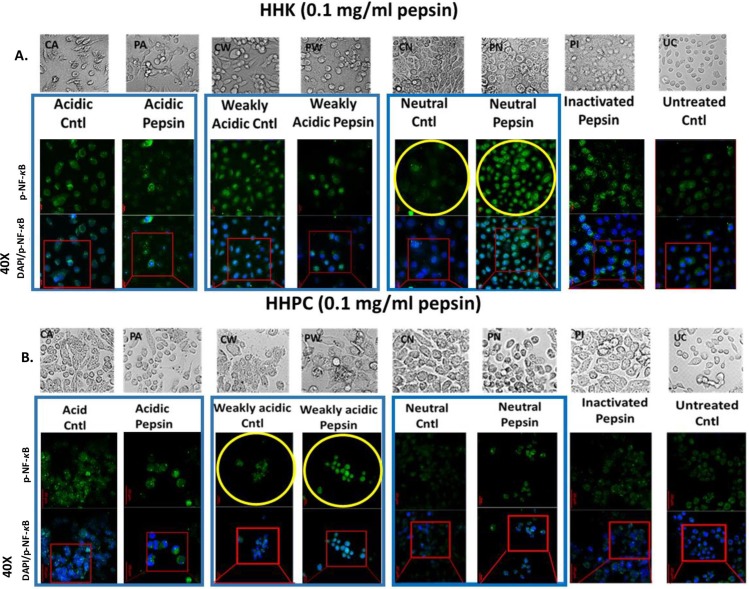
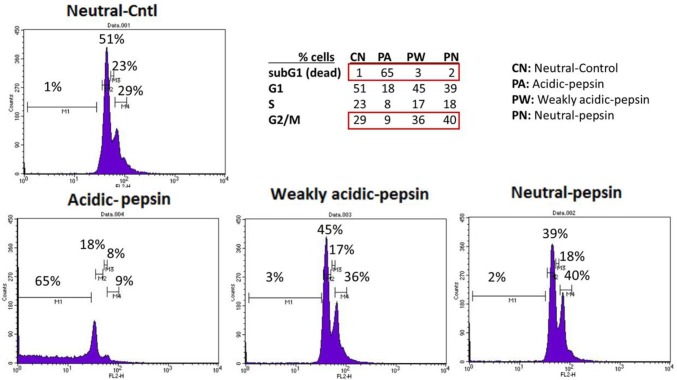
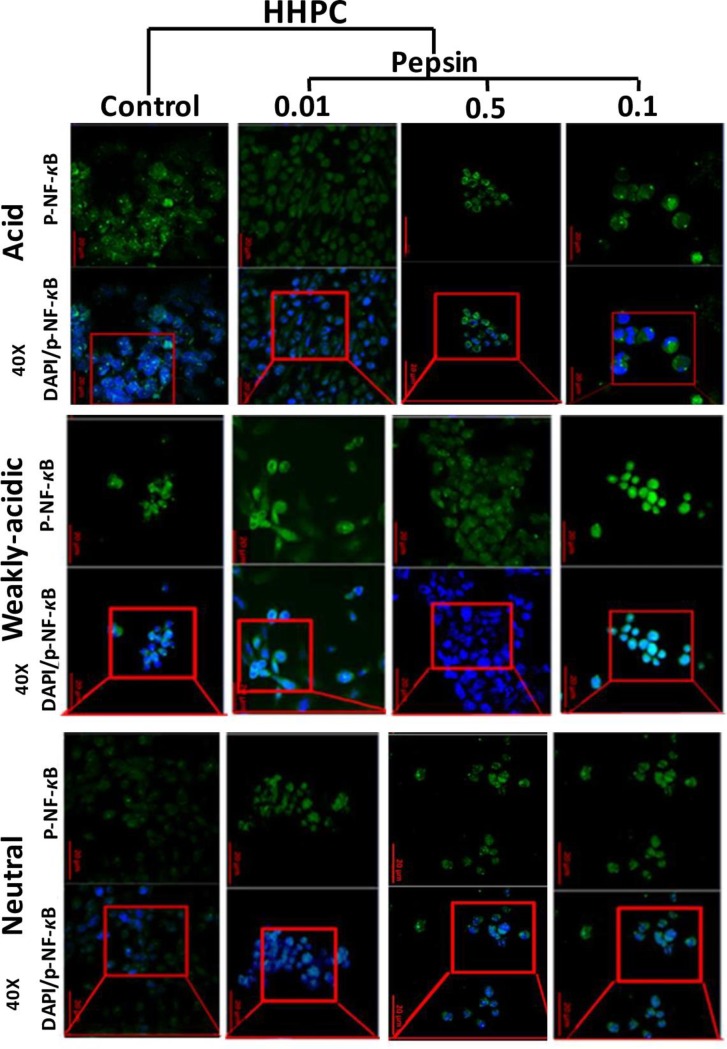
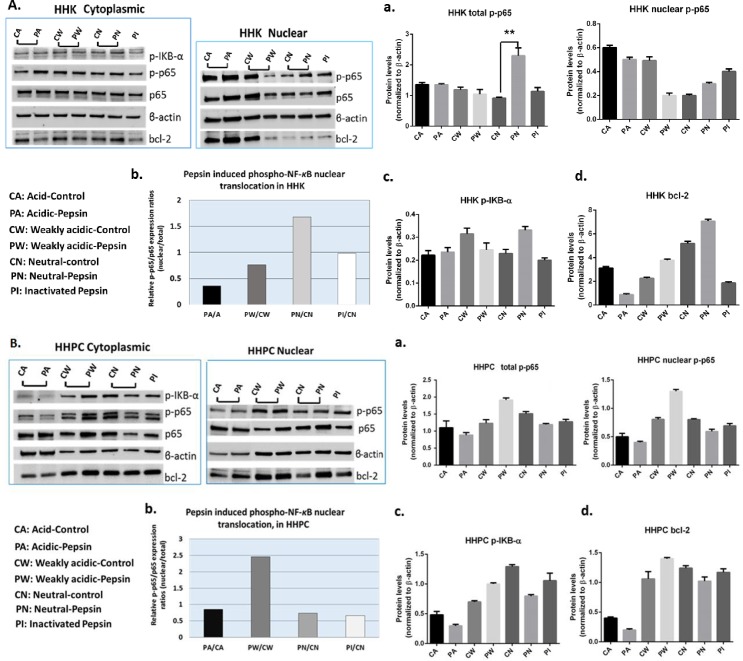
Human hypopharyngeal primary cells (HHPC) and keratinocytes (HHK) were repetitively exposed to physiologic pepsin concentrations (0.1 mg/ml) at pH 4.0, 5.0 and 7.0. Cellular localization of phospho-NF-κB and bcl-2 was determined using immunofluorescence and western blotting. NF-κB transcriptional activity was tested by luc reporter and qPCR. Analysis of DNA content of pepsin treated HHK and HHPC was performed using Fluorescence-activated-cell sorting assay. To explore a possible dose related effect, pepsin concentration was reduced from 0.1 to 0.05 and 0.01 mg/ml.
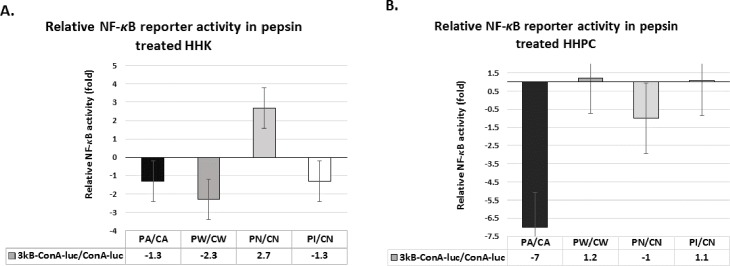
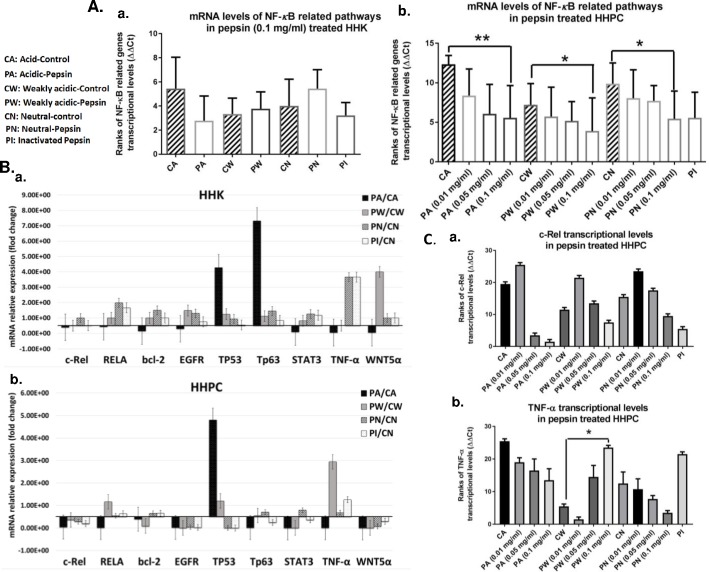
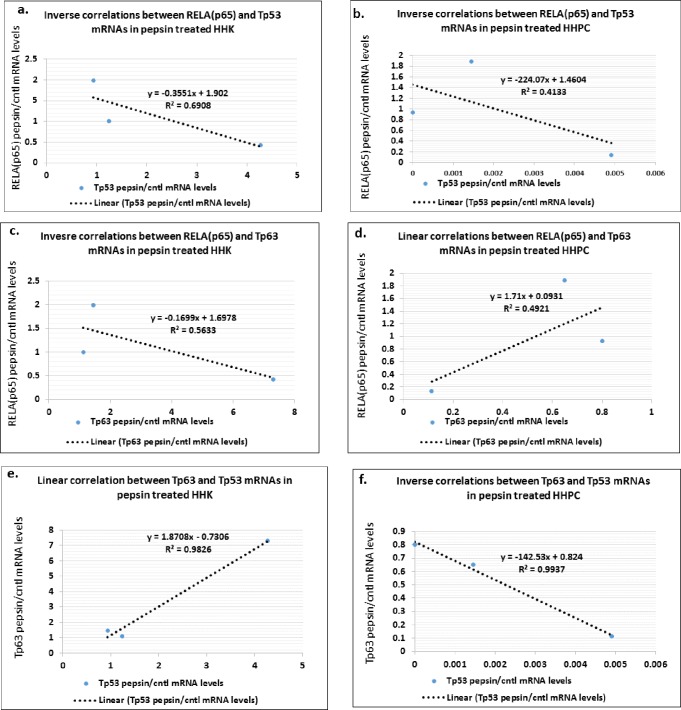
At physiologic concentration, acidic-pepsin (0.1 mg/ml at pH 4.0) is lethal to most normal hypopharyngeal cells. However, in surviving cells, no NF-κB transcriptional activity is noted. Acidic-pepsin fails to activate the NF-κB or bcl-2, TNF-α, EGFR, STAT3, and wnt5α but increases the Tp53 mRNAs, in both HHPC and HHK. Weakly acidic-pepsin (pH 5.0) and neutral-pepsin (pH 7.0) induce mild activation of NF-κB with increase in TNF-α mRNAs, without oncogenic transcriptional activity. Lower concentrations of pepsin at varying pH do not produce NF-κB activity or transcriptional activation of the analyzed genes.
Our findings in vitro do not support the role of acidic-pepsin in NF-κB related hypopharyngeal carcinogenesis.
食管外致癌作用已就喉咽反流的慢性影响进行了广泛讨论,历史上在该讨论中最为突出的是胃蛋白酶。已知反流物包括胃液(胃蛋白酶)和十二指肠液(胆汁),我们最近证明了核因子-κB(NF-κB)在介导酸性胆汁的癌前效应中的机制作用。然而,胃蛋白酶在促进下咽癌前病变中的作用在历史上仍不清楚。在此,我们研究酸性胃蛋白酶对NF-κB致癌途径的体外作用,以更好地确定其在下咽肿瘤形成中的潜在作用。
将人下咽原代细胞(HHPC)和角质形成细胞(HHK)反复暴露于pH值为4.0、5.0和7.0的生理胃蛋白酶浓度(0.1 mg/ml)下。使用免疫荧光和蛋白质印迹法测定磷酸化NF-κB和bcl-2的细胞定位。通过荧光素酶报告基因和定量聚合酶链反应(qPCR)检测NF-κB转录活性。使用荧光激活细胞分选法分析胃蛋白酶处理的HHK和HHPC的DNA含量。为了探索可能的剂量相关效应,将胃蛋白酶浓度从0.1降至0.05和0.01 mg/ml。
在生理浓度下,酸性胃蛋白酶(pH 4.0时为0.1 mg/ml)对大多数正常下咽细胞具有致死性。然而,在存活细胞中,未观察到NF-κB转录活性。酸性胃蛋白酶在HHPC和HHK中均未能激活NF-κB或bcl-2、肿瘤坏死因子-α(TNF-α)、表皮生长因子受体(EGFR)、信号转导和转录激活因子3(STAT3)以及无翅型MMTV整合位点家族成员5A(wnt5α),但增加了Tp53 mRNA的表达。弱酸性胃蛋白酶(pH 5.0)和中性胃蛋白酶(pH 7.0)诱导NF-κB轻度激活,TNF-α mRNA增加,但无致癌转录活性。不同pH值下较低浓度的胃蛋白酶不会产生NF-κB活性或所分析基因的转录激活。
我们的体外研究结果不支持酸性胃蛋白酶在NF-κB相关下咽癌发生中的作用。