Huang Jian-Feng, Zhang Fu-Zheng, Zou Qin-Zhou, Zhou Le-Yuan, Yang Bo, Chu Jian-Jun, Yu Jia-Hua, Zhang Hao-Wen, Yuan Xiao-Peng, Tai Guo-Mei, Liu Fen-Ju, Ma C-M Charlie
Department of Radiobiology, School of Radiation Medicine and Protection and Jiangsu Provincial Key Laboratory of Radiation Medicine and Protection, Medical College of Soochow University, Collaborative Innovation Center of Radiation Medicine of Jiangsu Higher Education Institutions and School for Radiological and Interdisciplinary Sciences (RAD-X), Soochow University, Suzhou, China.
Department of Radiation Oncology, Affiliated Hospital of Jiangnan University, Wuxi, China.
Oncotarget. 2017 Jan 10;8(2):2457-2465. doi: 10.18632/oncotarget.13899.
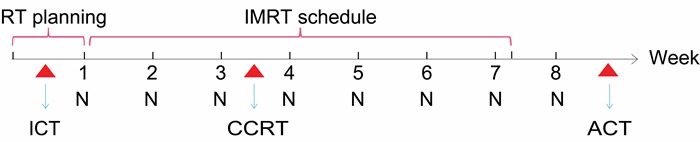
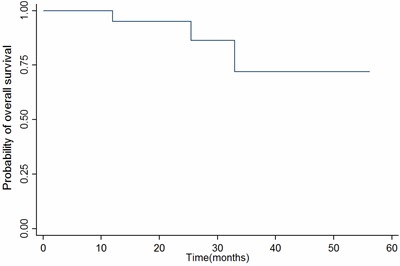
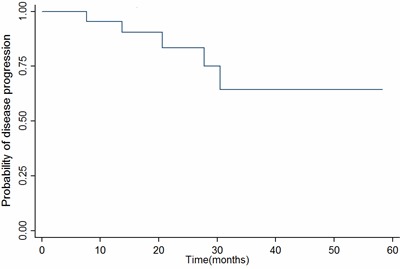
Overexpression of epidermal growth factor receptor can be found in more than 80% of patients with locoregionally advanced nasopharyngeal carcinoma and is associated with shorter survival. In this work, we evaluated the feasibility of adding nimotuzumab to chemoradiation in locoregionally advanced nasopharyngeal carcinoma. Twenty-three patients with clinically staged T3-4 or any node-positive disease were enrolled. They were scheduled to receive one cycle of induction chemotherapy followed by intensity-modulated radiotherapy, weekly administration of nimotuzumab and concurrent chemotherapy. Results showed that all patients received a full course of radiotherapy, 19(82.6%)patients completed the scheduled neoadjuvant and concurrent chemotherapy, and 22(95.7%) patients received ≥6 weeks of nimotuzumab. During the period of concurrent chemoradiation and nimotuzumab, grade 3-4 toxicities occurred in 14(60.9%) patients: 8 (34.8%) had grade 3-4 oral mucositis, 6(26.1%) had grade 3 neutropenia, and 1(4.3%) had grade 3 dermatitis. No acne-like rash was observed. With a median follow-up of 24.1 months, the 2-year progression-free survival and overall survival were 83.5% and 95.0%, respectively. In conclusion, concurrent administration of chemoradiation and nimotuzumab was well-tolerated with good compliance. Preliminary clinical outcome data appear encouraging with favorable normal tissue toxicity results comparing with historical data of concurrent chemoradiation plus cetuximab.
在超过80%的局部区域晚期鼻咽癌患者中可发现表皮生长因子受体过表达,且其与较短生存期相关。在本研究中,我们评估了在局部区域晚期鼻咽癌的放化疗中加用尼妥珠单抗的可行性。纳入了23例临床分期为T3 - 4或任何有淋巴结转移的患者。他们计划接受一个周期的诱导化疗,随后进行调强放疗、每周给予尼妥珠单抗及同步化疗。结果显示,所有患者均完成了全程放疗,19例(82.6%)患者完成了预定的新辅助化疗和同步化疗,22例(95.7%)患者接受了≥6周的尼妥珠单抗治疗。在同步放化疗和使用尼妥珠单抗期间,14例(60.9%)患者出现3 - 4级毒性反应:8例(34.8%)出现3 - 4级口腔黏膜炎,6例(26.1%)出现3级中性粒细胞减少,1例(4.3%)出现3级皮炎。未观察到痤疮样皮疹。中位随访24.1个月,2年无进展生存率和总生存率分别为83.5%和95.0%。总之,同步放化疗和尼妥珠单抗联合使用耐受性良好,依从性佳。与同步放化疗加西妥昔单抗的历史数据相比,初步临床疗效数据令人鼓舞,正常组织毒性结果良好。