Institut für Zellbiologie und Neurowissenschaft, Goethe-Universität, Frankfurt/M., Germany.
Department of Psychological &Brain Sciences, Johns Hopkins University, Baltimore, USA.
Sci Rep. 2016 Dec 15;6:39226. doi: 10.1038/srep39226.
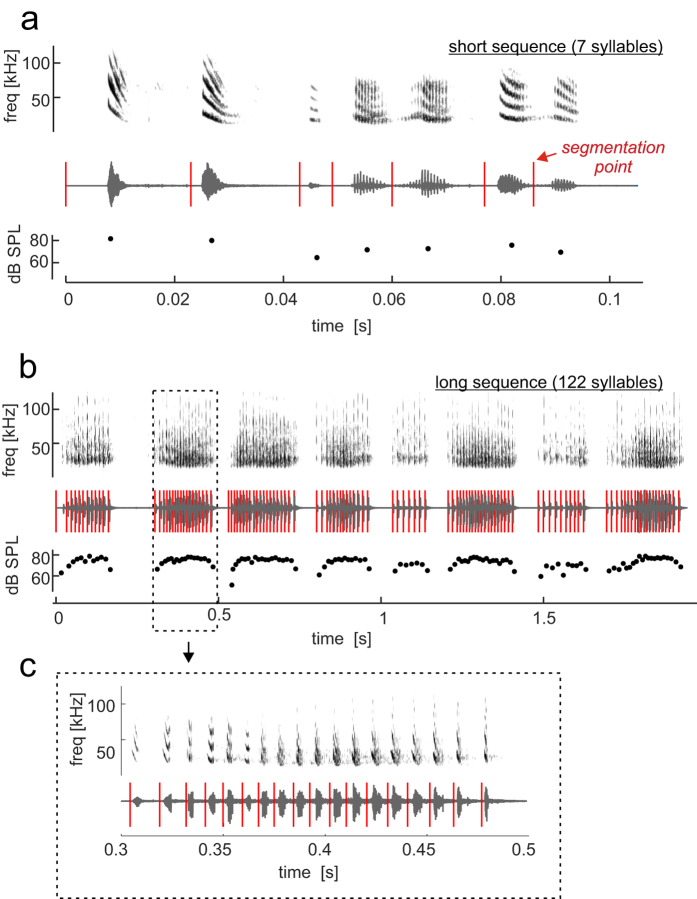
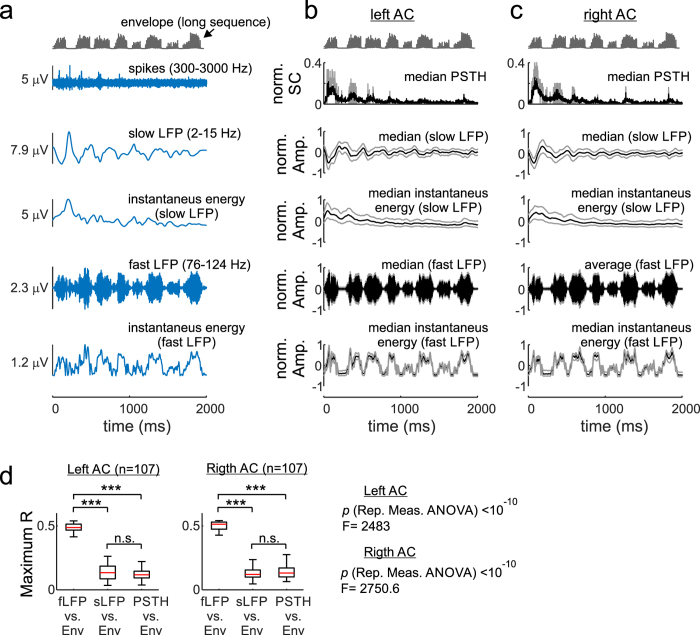
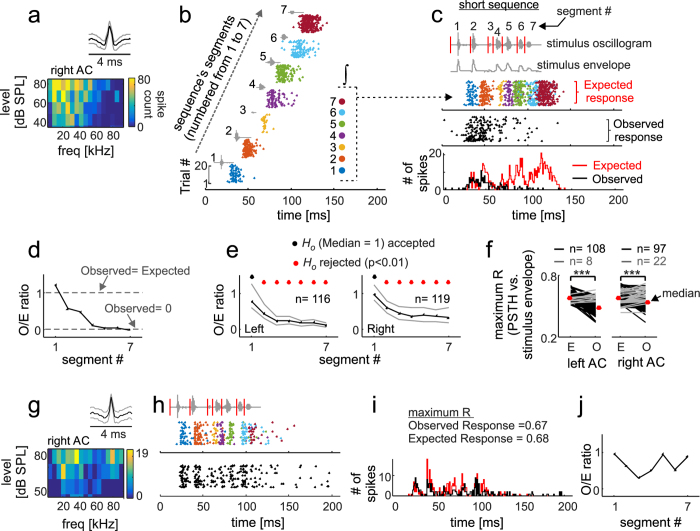
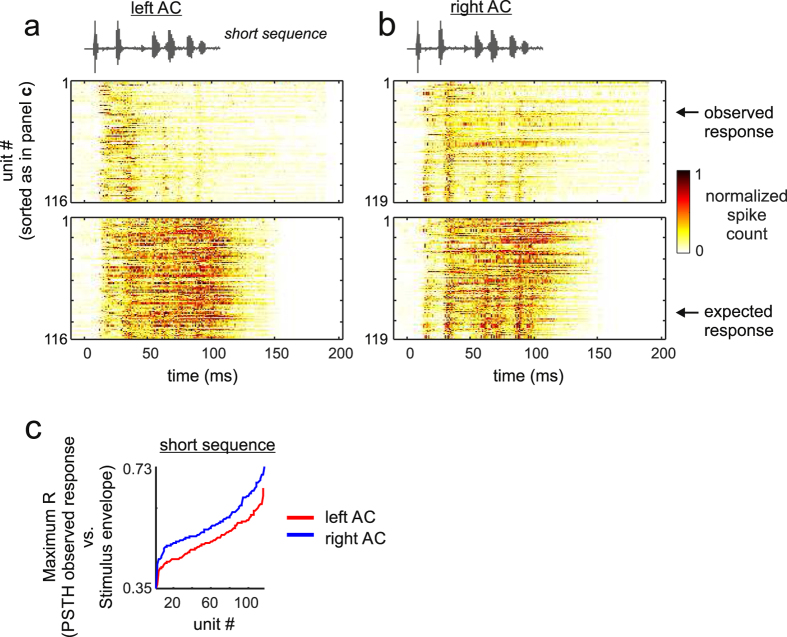
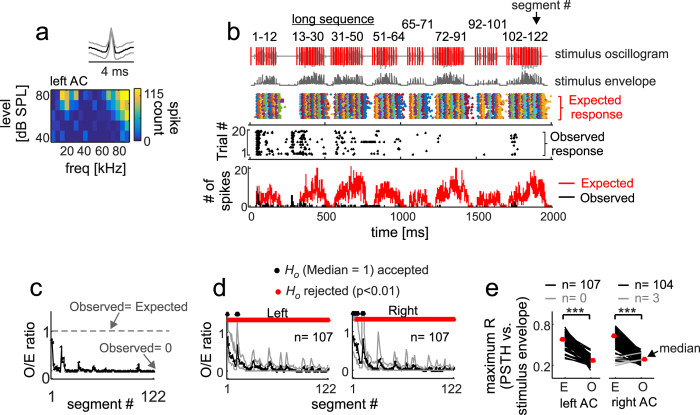
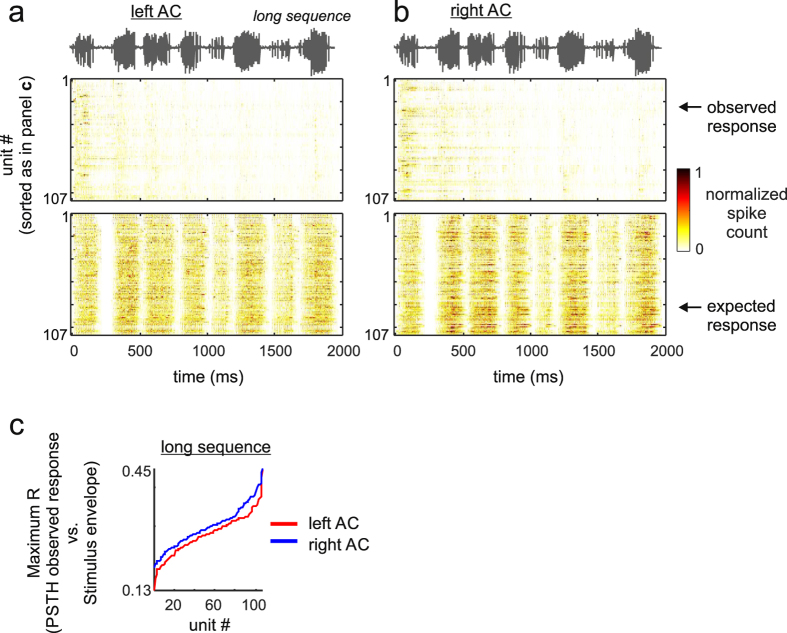
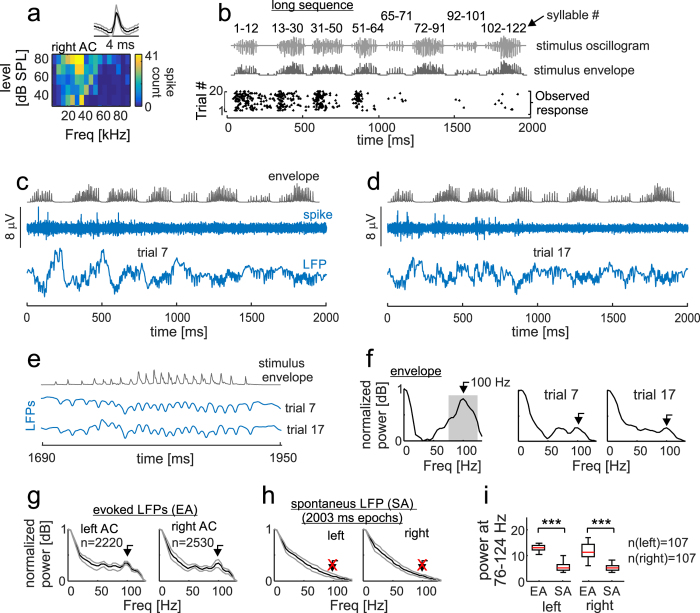
The mechanisms by which the mammalian brain copes with information from natural vocalization streams remain poorly understood. This article shows that in highly vocal animals, such as the bat species Carollia perspicillata, the spike activity of auditory cortex neurons does not track the temporal information flow enclosed in fast time-varying vocalization streams emitted by conspecifics. For example, leading syllables of so-called distress sequences (produced by bats subjected to duress) suppress cortical spiking to lagging syllables. Local fields potentials (LFPs) recorded simultaneously to cortical spiking evoked by distress sequences carry multiplexed information, with response suppression occurring in low frequency LFPs (i.e. 2-15 Hz) and steady-state LFPs occurring at frequencies that match the rate of energy fluctuations in the incoming sound streams (i.e. >50 Hz). Such steady-state LFPs could reflect underlying synaptic activity that does not necessarily lead to cortical spiking in response to natural fast time-varying vocal sequences.
哺乳动物大脑如何应对来自自然发声流的信息的机制仍知之甚少。本文表明,在像 Carollia perspicillata 这样高度发声的动物中,听觉皮层神经元的尖峰活动并不跟踪包含在同种动物发出的快速时变发声流中的时间信息流。例如,所谓的求救序列(由处于困境中的蝙蝠产生)的前音节会抑制皮质尖峰对滞后音节的激发。同时记录到的皮质尖峰诱发的求救序列的局部场电位 (LFP) 携带复用信息,低频 LFP(即 2-15 Hz)中发生响应抑制,而稳态 LFP 发生在与输入声音流能量波动率匹配的频率(即 >50 Hz)。这种稳态 LFP 可能反映了潜在的突触活动,而这种活动不一定会导致皮质尖峰对自然快速时变发声序列的反应。