Labots Mariette, Gotink Kristy J, Dekker Henk, Azijli Kaamar, van der Mijn Johannes C, Huijts Charlotte M, Piersma Sander R, Jiménez Connie R, Verheul Henk M W
Department of Medical Oncology, VU University Medical Center, Amsterdam, The Netherlands.
Exp Mol Med. 2016 Dec 16;48(12):e279. doi: 10.1038/emm.2016.114.
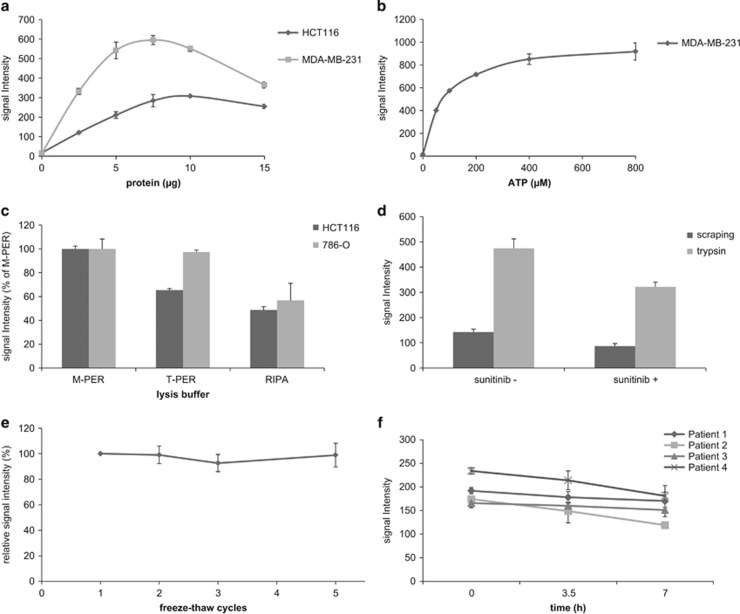
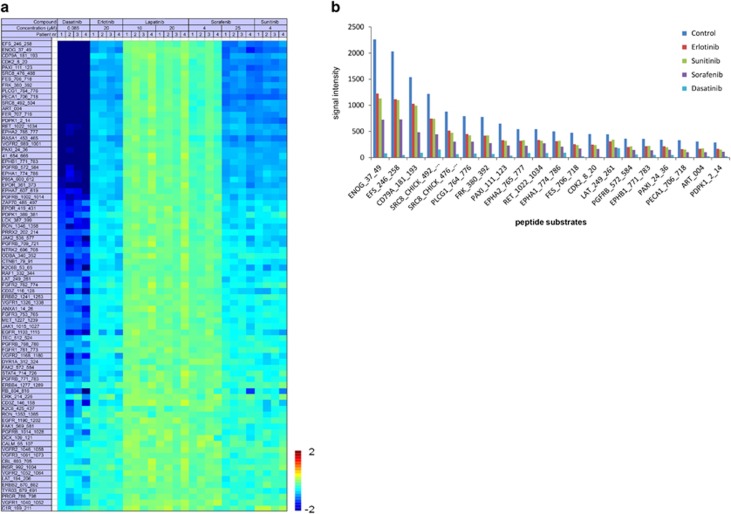
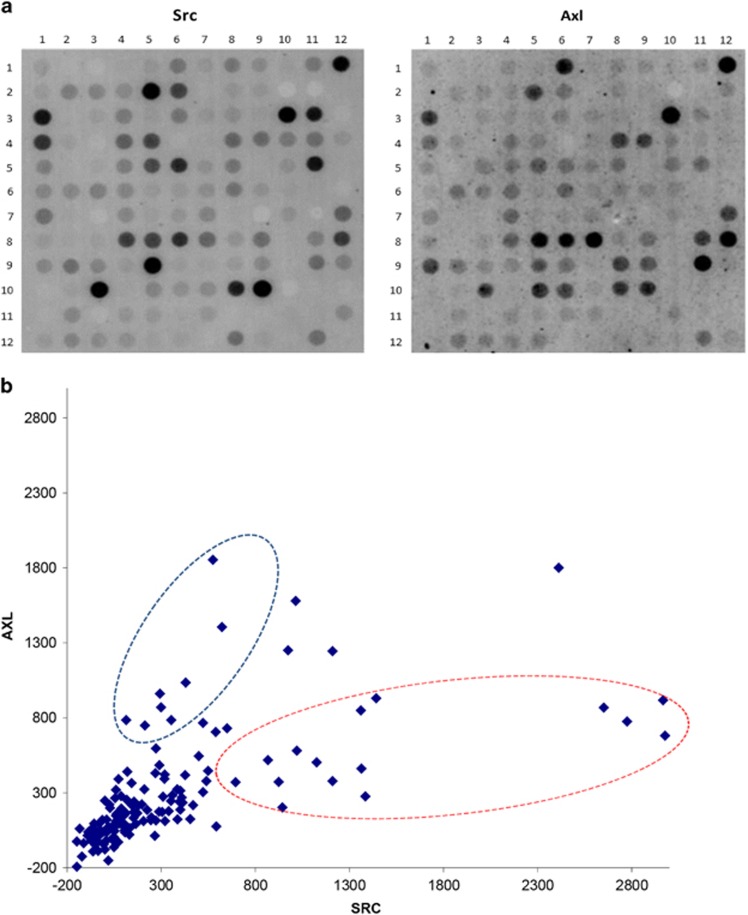
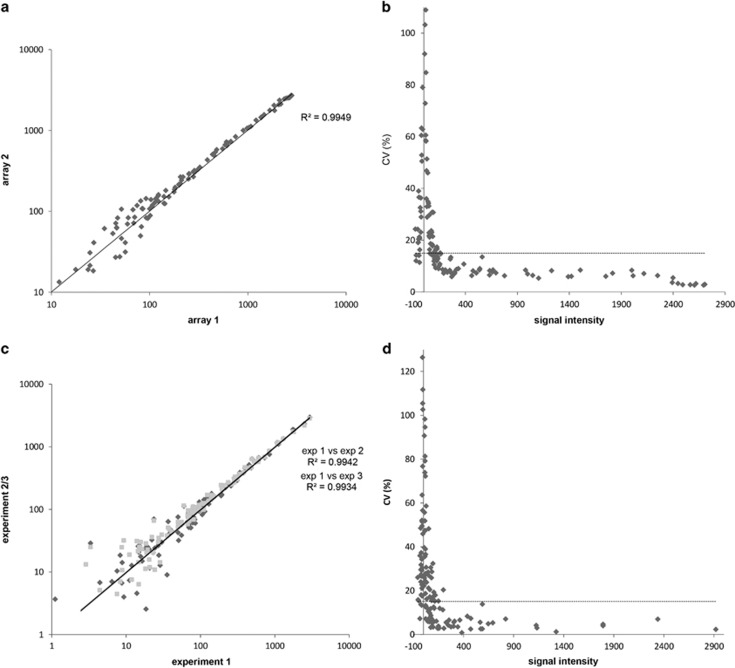
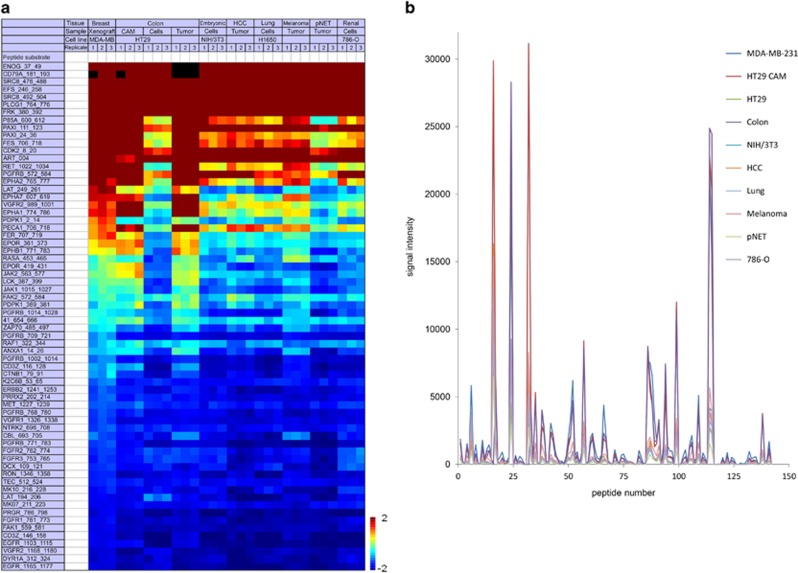
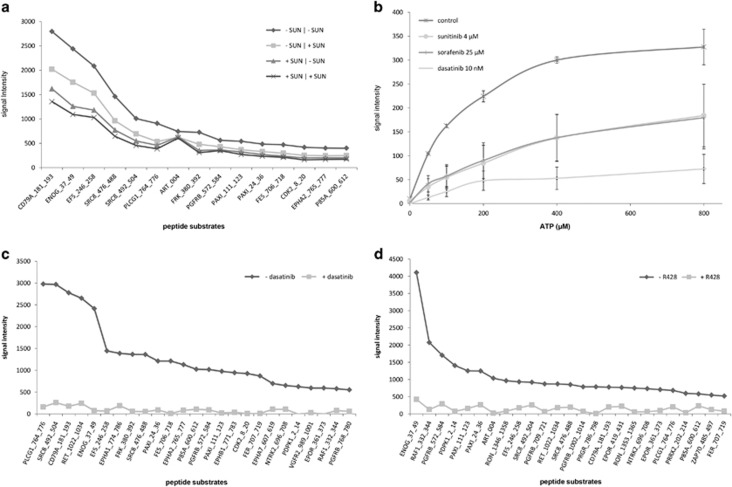
Personalized cancer medicine aims to accurately predict the response of individual patients to targeted therapies, including tyrosine kinase inhibitors (TKIs). Clinical implementation of this concept requires a robust selection tool. Here, using both cancer cell lines and tumor tissue from patients, we evaluated a high-throughput tyrosine kinase peptide substrate array to determine its readiness as a selection tool for TKI therapy. We found linearly increasing phosphorylation signal intensities of peptides representing kinase activity along the kinetic curve of the assay with 7.5-10 μg of lysate protein and up to 400 μM adenosine triphosphate (ATP). Basal kinase activity profiles were reproducible with intra- and inter-experiment coefficients of variation of <15% and <20%, respectively. Evaluation of 14 tumor cell lines and tissues showed similar consistently high phosphorylated peptides in their basal profiles. Incubation of four patient-derived tumor lysates with the TKIs dasatinib, sunitinib, sorafenib and erlotinib primarily caused inhibition of substrates that were highly phosphorylated in the basal profile analyses. Using recombinant Src and Axl kinase, relative substrate specificity was demonstrated for a subset of peptides, as their phosphorylation was reverted by co-incubation with a specific inhibitor. In conclusion, we demonstrated robust technical specifications of this high-throughput tyrosine kinase peptide microarray. These features required as little as 5-7 μg of protein per sample, facilitating clinical implementation as a TKI selection tool. However, currently available peptide substrates can benefit from an enhancement of the differential potential for complex samples such as tumor lysates. We propose that mass spectrometry-based phosphoproteomics may provide such an enhancement by identifying more discriminative peptides.
个性化癌症医学旨在准确预测个体患者对靶向治疗的反应,包括酪氨酸激酶抑制剂(TKIs)。这一概念的临床应用需要一种强大的筛选工具。在此,我们使用癌细胞系和患者肿瘤组织,评估了一种高通量酪氨酸激酶肽底物阵列,以确定其作为TKI治疗筛选工具的适用性。我们发现,在7.5 - 10μg裂解物蛋白和高达400μM三磷酸腺苷(ATP)的情况下,代表激酶活性的肽段的磷酸化信号强度沿测定动力学曲线呈线性增加。基础激酶活性谱具有可重复性,实验内和实验间变异系数分别<15%和<20%。对14种肿瘤细胞系和组织的评估显示,它们的基础谱中始终存在相似的高磷酸化肽段。用达沙替尼、舒尼替尼、索拉非尼和厄洛替尼这几种TKI对四种患者来源的肿瘤裂解物进行孵育,主要导致基础谱分析中高度磷酸化的底物受到抑制。使用重组Src和Axl激酶,对一部分肽段证明了相对底物特异性,因为与特异性抑制剂共同孵育可使它们的磷酸化逆转。总之,我们证明了这种高通量酪氨酸激酶肽微阵列强大的技术规格。这些特性每个样品仅需5 - 7μg蛋白质,便于作为TKI筛选工具用于临床。然而,目前可用的肽底物可能需要增强对肿瘤裂解物等复杂样品的区分潜力。我们建议基于质谱的磷酸化蛋白质组学可通过鉴定更具区分性的肽段来提供这种增强。