Shanaki Mehrnoosh, Hossein-Nezhad Arash, Meshkani Reza, Beigy Maani, Shirzad Mahmoud, Pasalar Parvin, Golmohammadi Taghi
Department of Biochemistry, School of Medicine, Tehran University of Medical Sciences, Tehran, Iran.; Department of Medical Laboratory Sciences, School of Allied Medical Sciences, Shahid Beheshti University of Medical Sciences, Tehran, Iran.
Osteoporosis Research Center, Endocrinology and Metabolism Clinical Sciences Institute, Tehran University of Medical Sciences, Tehran, Iran,; Department of Medicine, Section of Endocrinology, Nutrition, and Diabetes, Vitamin D, Skin, and Bone Research Laboratory, Boston University Medical Center, Boston, MA 02118, USA.
Iran J Pharm Res. 2016 Summer;15(3):547-559.
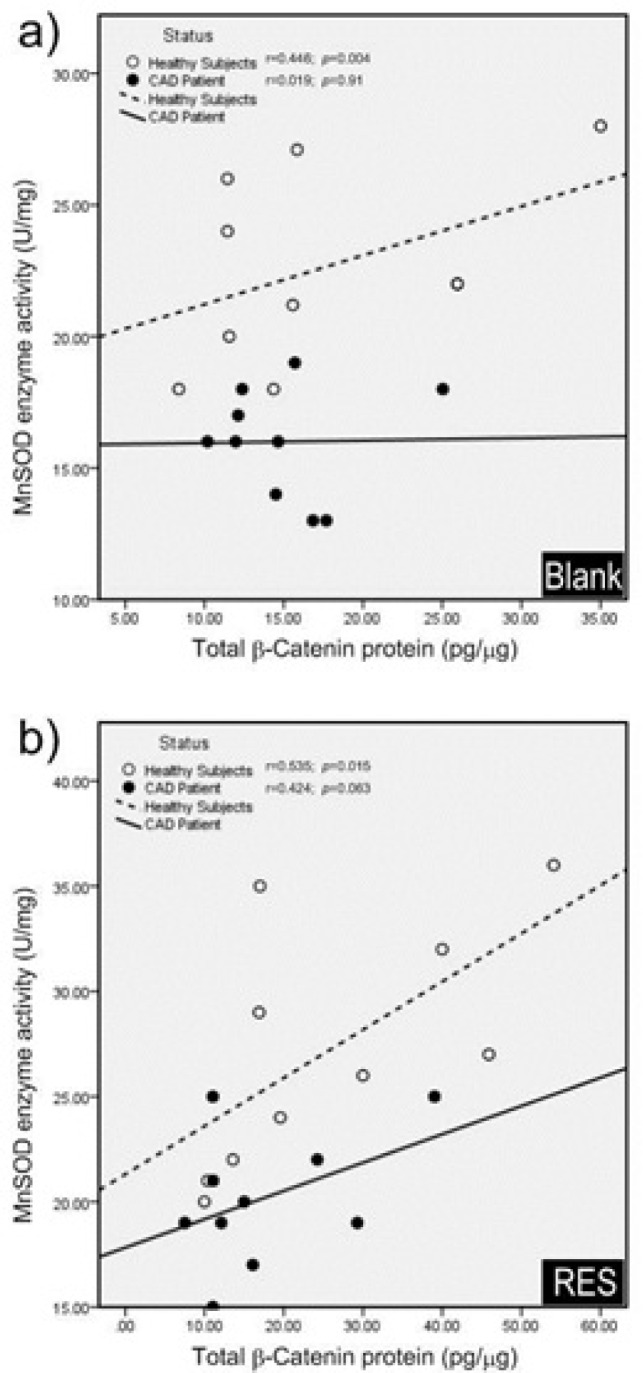
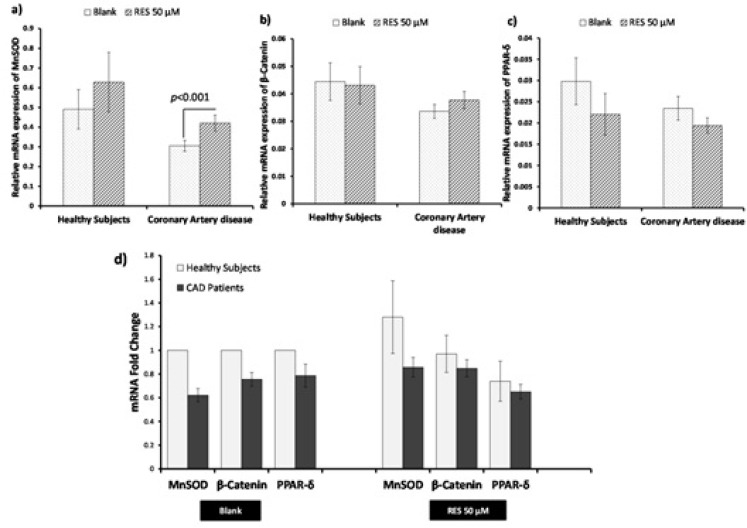
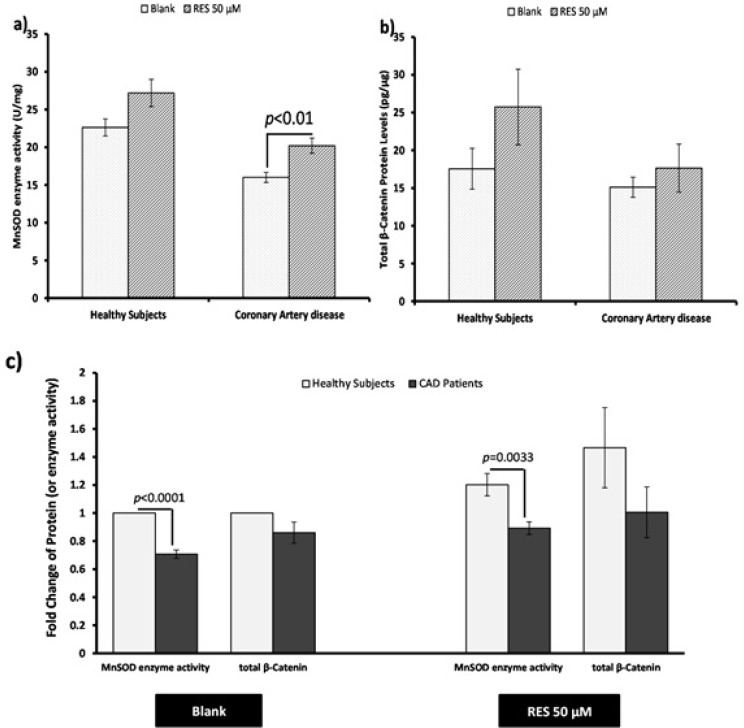
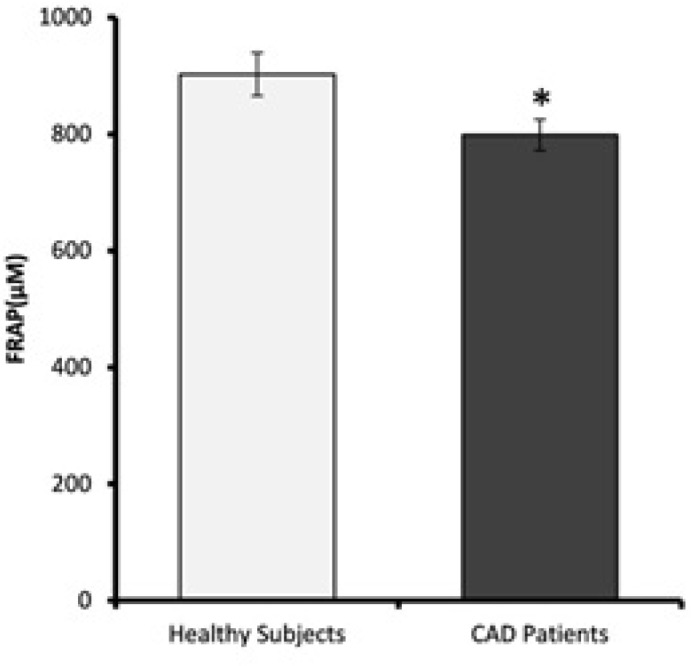
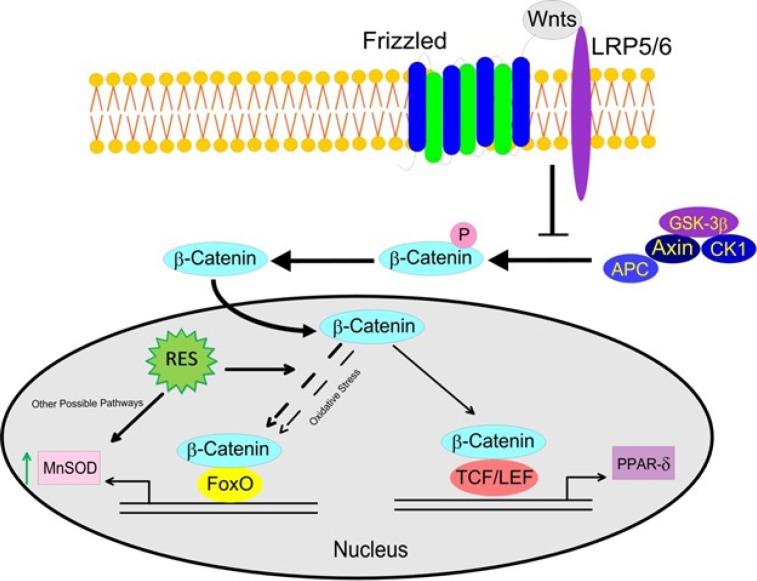
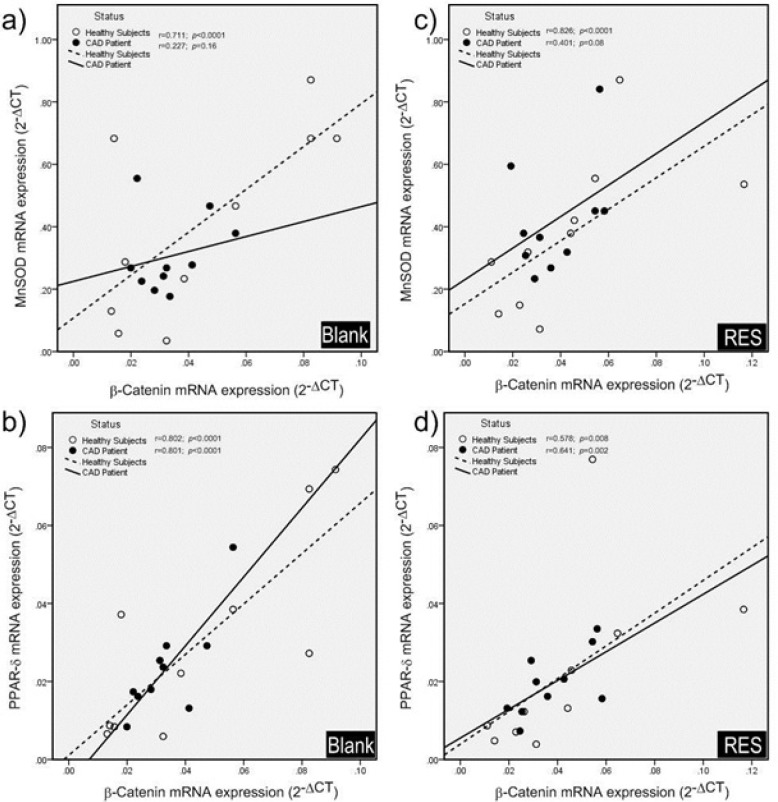
Coronary artery disease (CAD) is the major cause of mortality and morbidity worldwide. The aim of this study was to explore the effect of resveratrol (RES) on Canonical β-catenin/Wnt and forkhead box O (FOXO) pathways in CAD patients. We performed this study on 10 metabolic syndrome patients with three-vessel CAD and 10 sex-aged matched healthy subjects. The effects of RES on β-Catenin, manganese superoxide dismutase (MnSOD), and peroxisome proliferator-activated receptor delta (PPAR-δ) expression were evaluated in peripheral blood mononuclear cells (PBMCs) of participants. RES could increase the MnSOD expression in CAD patients (38%, p < 0.0001). After RES treatment, the MnSOD expression of patients is still non-significantly lower than controls. In both blank and RES treatments, a significant positive correlation between β-catenin and MnSOD mRNA expressions was found in controls, whereas no correlation between these gene expressions was found in untreated PBMCs of CAD patients. However, RES could modestly improve this pathway in CAD. RES could increase the MnSOD activity in healthy and CAD subjects (p = 0.051 and p = 0.009, respectively). Furthermore, in both blank and RES treatments, the significant correlation was found between total β-catenin protein and the MnSOD activity in PBMCs of the controls but not in patients. The cross-talk between β-catenin/Wnt and FOXO pathways was impaired in PBMCs of CAD patients. RES treatment could lead to a modest increase in the MnSOD activity independent of β-catenin/FOXO pathway. Despite a modest improvement in the β-catenin/FOXO pathway after RES treatment, this pathway was not completely repaired in CAD patients.
冠状动脉疾病(CAD)是全球范围内导致死亡和发病的主要原因。本研究的目的是探讨白藜芦醇(RES)对CAD患者中经典β-连环蛋白/Wnt和叉头框O(FOXO)信号通路的影响。我们对10例患有三支血管CAD的代谢综合征患者和10例年龄及性别匹配的健康受试者进行了本研究。在参与者的外周血单核细胞(PBMCs)中评估了RES对β-连环蛋白、锰超氧化物歧化酶(MnSOD)和过氧化物酶体增殖物激活受体δ(PPAR-δ)表达的影响。RES可使CAD患者的MnSOD表达增加(38%,p<0.0001)。RES治疗后,患者的MnSOD表达仍略低于对照组,但无统计学差异。在空白组和RES治疗组中,对照组的β-连环蛋白和MnSOD mRNA表达之间均存在显著正相关,而CAD患者未经治疗的PBMCs中这些基因表达之间无相关性。然而,RES可适度改善CAD患者的这一信号通路。RES可增加健康受试者和CAD患者的MnSOD活性(分别为p = 0.051和p = 0.009)。此外,在空白组和RES治疗组中,对照组PBMCs中总β-连环蛋白蛋白与MnSOD活性之间均存在显著相关性,而患者中未发现这种相关性。CAD患者PBMCs中β-连环蛋白/Wnt和FOXO信号通路之间的相互作用受损。RES治疗可导致MnSOD活性适度增加,且与β-连环蛋白/FOXO信号通路无关。尽管RES治疗后β-连环蛋白/FOXO信号通路有适度改善,但CAD患者的这一信号通路并未完全修复。