McCormick Ethan M, Telzer Eva H
Department of Psychology and Neuroscience, University of North Carolina, Chapel Hill, NC 27599, USA.
Department of Psychology and Neuroscience, University of North Carolina, Chapel Hill, NC 27599, USA.
Neuroimage. 2017 Feb 15;147:381-389. doi: 10.1016/j.neuroimage.2016.12.041. Epub 2016 Dec 16.
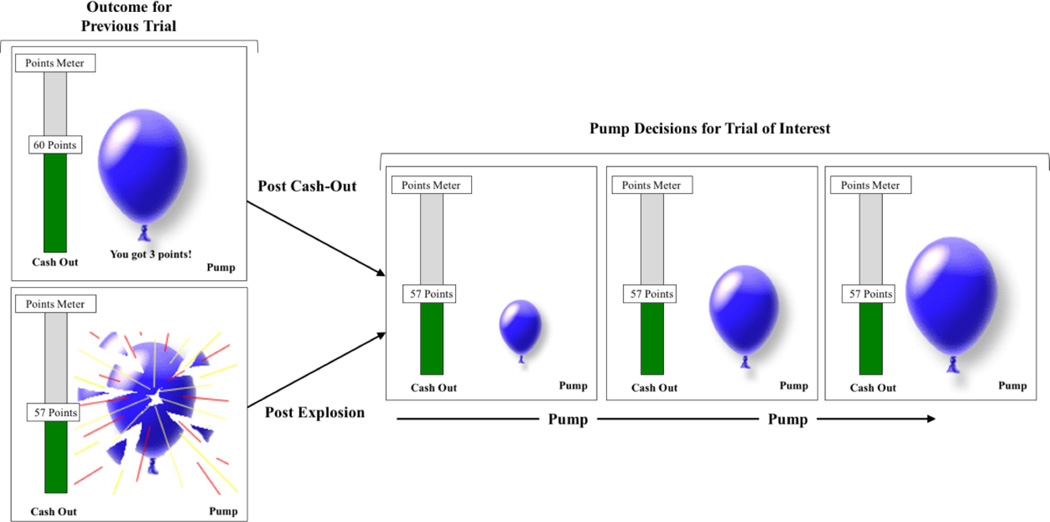
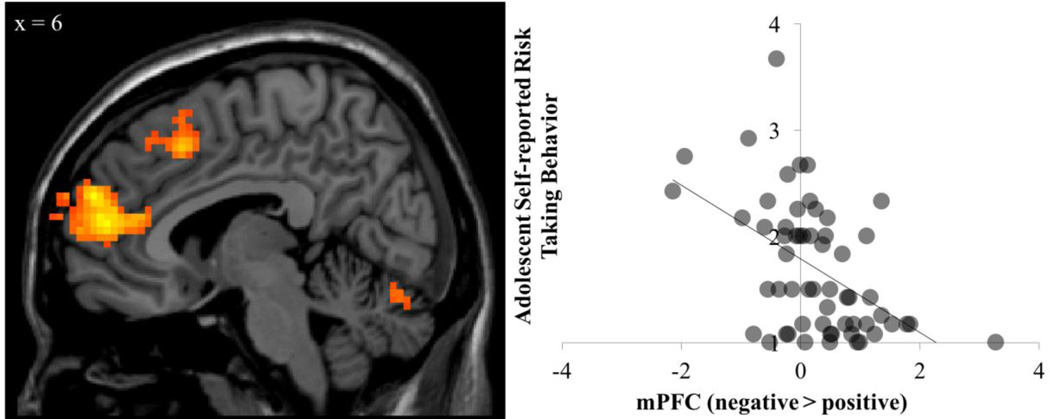
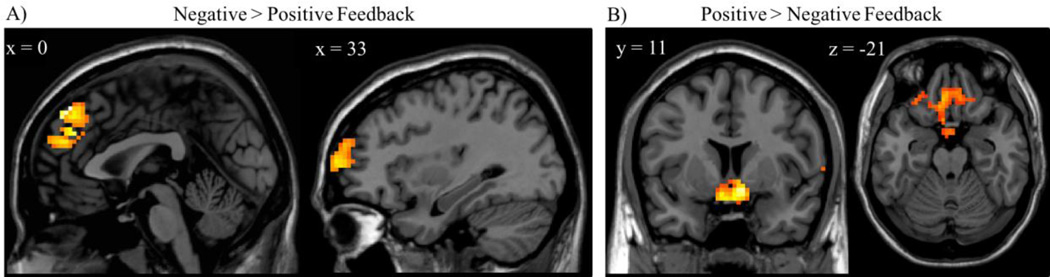
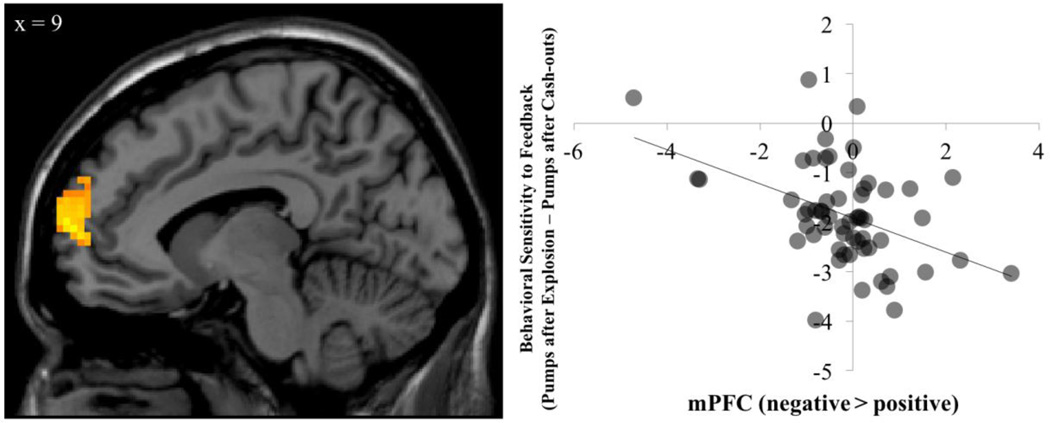
Decision-making processes rarely occur in isolation. Rather, representations are updated constantly based on feedback to past decisions and actions. However, previous research has focused on the reaction to feedback receipt itself, instead of examining how feedback information is integrated into future decisions. In the current study, we examined differential neural sensitivity during risk decisions following positive versus negative feedback in a risk-taking context, and how this differential sensitivity is linked to adolescent risk behavior. Fifty-eight adolescents (ages 13-17 years) completed the Balloon Analogue Risk Task (BART) during an fMRI session and reported on their levels of risk-taking behavior. Results show that reduced medial PFC (mPFC) response following negative versus positive feedback is associated with fewer reductions in task-based risky decisions following negative feedback, as well as increased self-reported risk-taking behavior. These results suggest that reduced neural integration of negative feedback into during future decisions supports risky behavior, perhaps by discounting negative relative to positive feedback information when making subsequent risky decisions.
决策过程很少孤立发生。相反,表征会根据对过去决策和行动的反馈不断更新。然而,以往的研究集中在对反馈接收本身的反应上,而不是研究反馈信息如何被整合到未来的决策中。在当前的研究中,我们考察了在冒险情境中,接受正面和负面反馈后进行风险决策时的神经敏感性差异,以及这种差异敏感性如何与青少年的冒险行为相关联。58名青少年(年龄在13至17岁之间)在功能磁共振成像(fMRI)实验过程中完成了气球模拟风险任务(BART),并报告了他们的冒险行为水平。结果表明,与正面反馈相比,负面反馈后内侧前额叶皮质(mPFC)反应减弱,这与负面反馈后基于任务的风险决策减少较少以及自我报告的冒险行为增加有关。这些结果表明,未来决策过程中负面反馈的神经整合减少可能会助长冒险行为,也许是因为在做出后续风险决策时,相对于正面反馈信息,负面反馈信息被低估了。