Begum Mahfuj A, Shi Xiao-Xiao, Tan Ye, Zhou Wen-Wu, Hannun Yusuf, Obeid Lina, Mao Cungui, Zhu Zeng-Rong
State Key Laboratory of Rice Biology, Key Laboratory of Agricultural Entomology, Ministry of Agriculture and Institute of Insect Sciences, Zhejiang University Hangzhou, China.
Stony Brook Cancer Center, Department of Medicine, The State University of New York at Stony Brook New York, NY, USA.
Front Plant Sci. 2016 Dec 1;7:1789. doi: 10.3389/fpls.2016.01789. eCollection 2016.
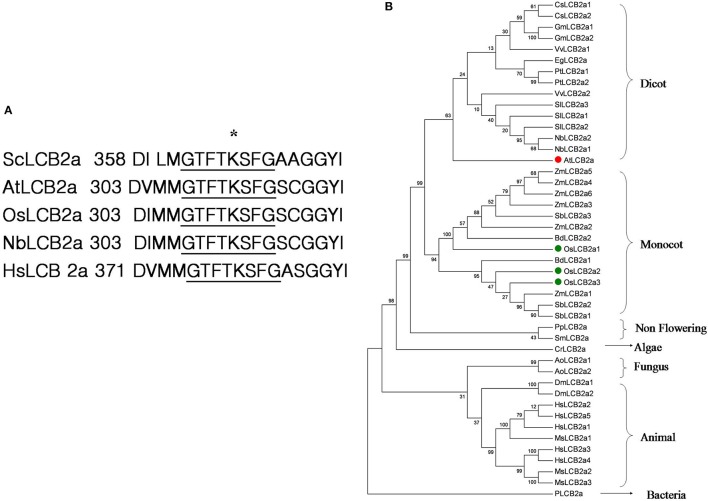
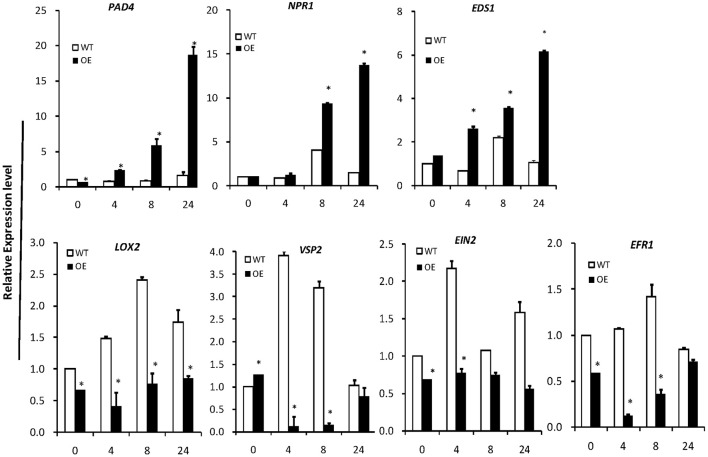
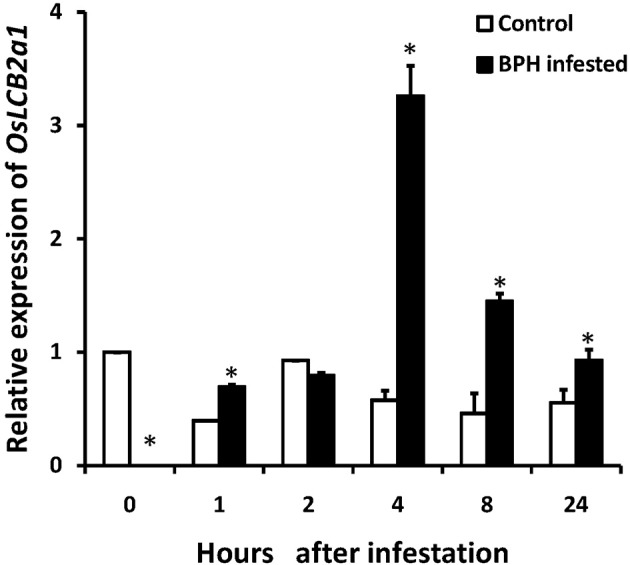
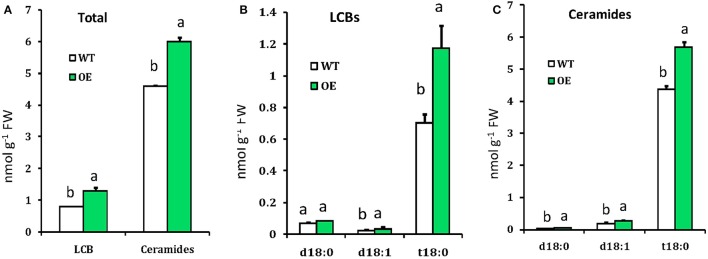
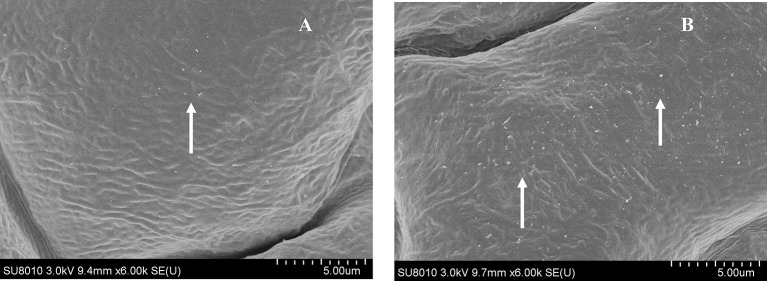
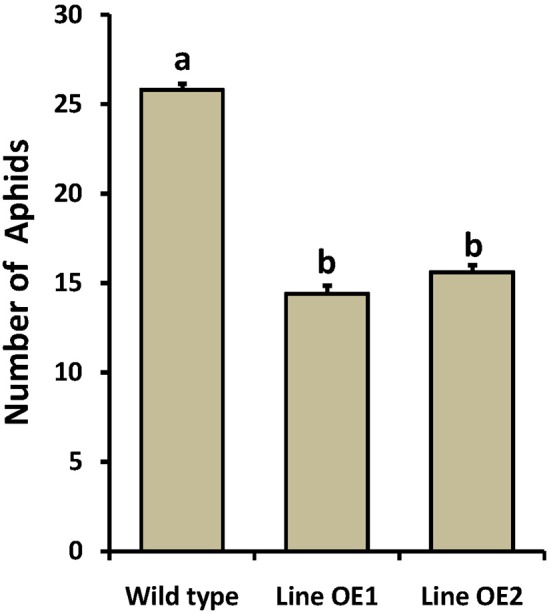
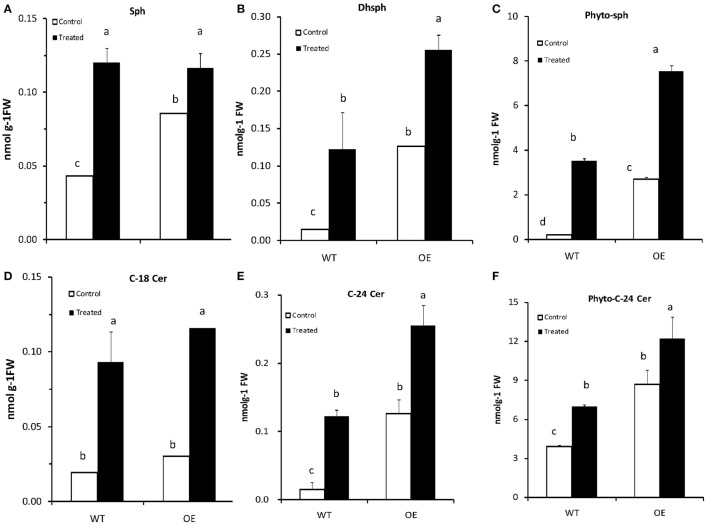
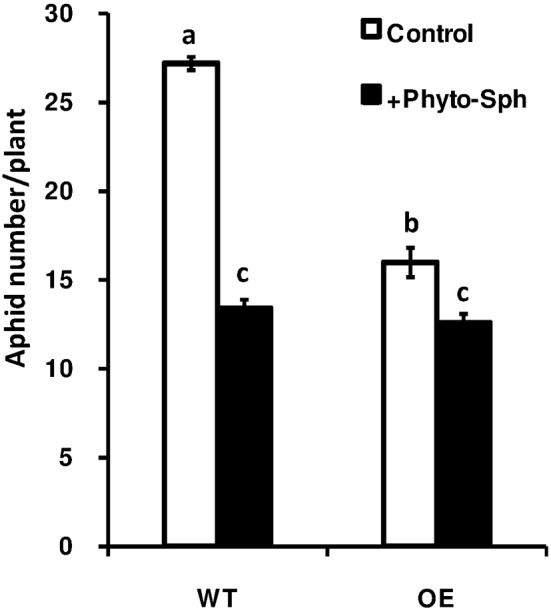
In plants, sphingolipids, such as long-chain bases (LCBs), act as bioactive molecules in stress responses. Until now, it is still not clear if these lipids are involved in biotic stress responses to herbivore. Herein we report that a rice LCB gene, encoding a subunit of serine palmitoyltransferase (SPT), a key enzyme responsible for the biosynthesis of sphingolipids, plays a critical role in plant defense response to the brown planthopper (BPH) attack and that its up-regulation protects plants from herbivore infestation. Transcripts of gene in rice seedlings were increased at 4 h, but decreased at 8-24 h after BPH attack. Sphingolipid measurement profiling revealed that overexpression of in increased trihydroxylated LCB phytosphingosine (t18:0) and phytoceramide by 1.7 and 1.3-fold, respectively, compared with that of wild type (WT) plants. Transgenic Arabidopsis plants also showed higher callose and wax deposition in leaves than that of WT. Overexpression of gene in reduced the population size of green peach aphid (). Moreover, the electrical penetration graph (EPG) results indicated that the aphids encounter resistance factors while reaching for the phloem on the transgenic plants. The defense response genes related to salicylic acid signaling pathway, remained uplgulated in the -overexpressing transgenic plants. Our data highlight the key functions of in biotic stress response in plants.
在植物中,鞘脂类物质,如长链碱(LCBs),在应激反应中作为生物活性分子发挥作用。到目前为止,这些脂质是否参与对食草动物的生物胁迫反应仍不清楚。在此我们报告,一个水稻LCB基因,编码丝氨酸棕榈酰转移酶(SPT)的一个亚基,SPT是负责鞘脂生物合成的关键酶,在植物对褐飞虱(BPH)攻击的防御反应中起关键作用,并且其上调可保护植物免受食草动物侵害。水稻幼苗中该基因的转录本在褐飞虱攻击后4小时增加,但在8 - 24小时减少。鞘脂测量分析表明,与野生型(WT)植物相比,该基因在水稻中的过表达使三羟基化LCB植物鞘氨醇(t18:0)和植物神经酰胺分别增加了1.7倍和1.3倍。转基因拟南芥植物叶片中的胼胝质和蜡质沉积也比野生型更高。该基因在拟南芥中的过表达减少了桃蚜的种群数量。此外,刺吸电位图谱(EPG)结果表明,蚜虫在转基因植物上取食韧皮部时遇到了抗性因子。与水杨酸信号通路相关的防御反应基因在该基因过表达的转基因植物中仍上调。我们的数据突出了该基因在植物生物胁迫反应中的关键功能。