Luttropp Karin, Nordfors Louise, McGuinness Dagmara, Wennberg Lars, Curley Hannah, Quasim Tara, Genberg Helena, Sandberg John, Sönnerborg Isabella, Schalling Martin, Qureshi Abdul Rashid, Bárány Peter, Shiels Paul G, Stenvinkel Peter
Neurogenetics Division, Department of Molecular Medicine and Surgery, Karolinska Institutet, Sweden.
Wolfson Wohl Translational Research Centre, Institute of Cancer Sciences, University of Glasgow, United Kingdom.
Transplant Direct. 2016 Nov 16;2(12):e116. doi: 10.1097/TXD.0000000000000629. eCollection 2016 Dec.
The uremic milieu exposes chronic kidney disease (CKD) patients to premature ageing processes. The impact of renal replacement therapy (dialysis and renal transplantation [RTx]) or immunosuppressive treatment regimens on ageing biomarkers has scarcely been studied.
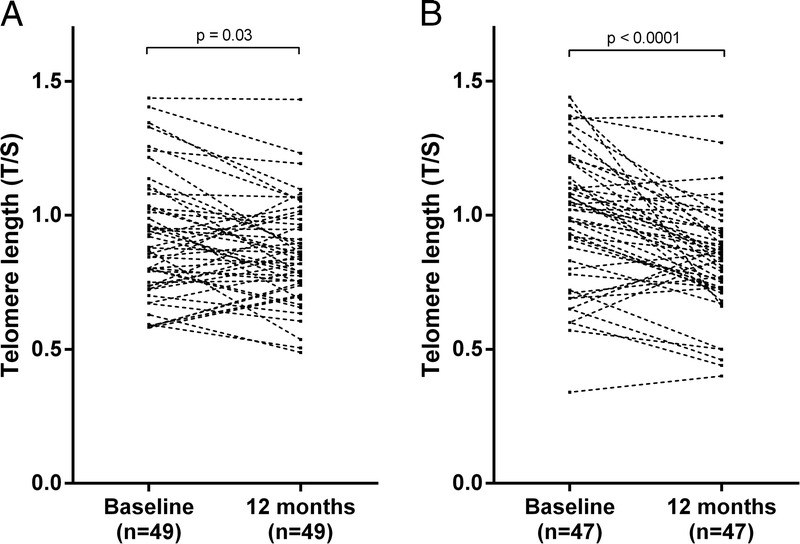
In this study telomere length in whole blood cells was measured in 49 dialysis patients and 47 RTx patients close to therapy initiation and again after 12 months. Forty-three non-CKD patients were included as controls.
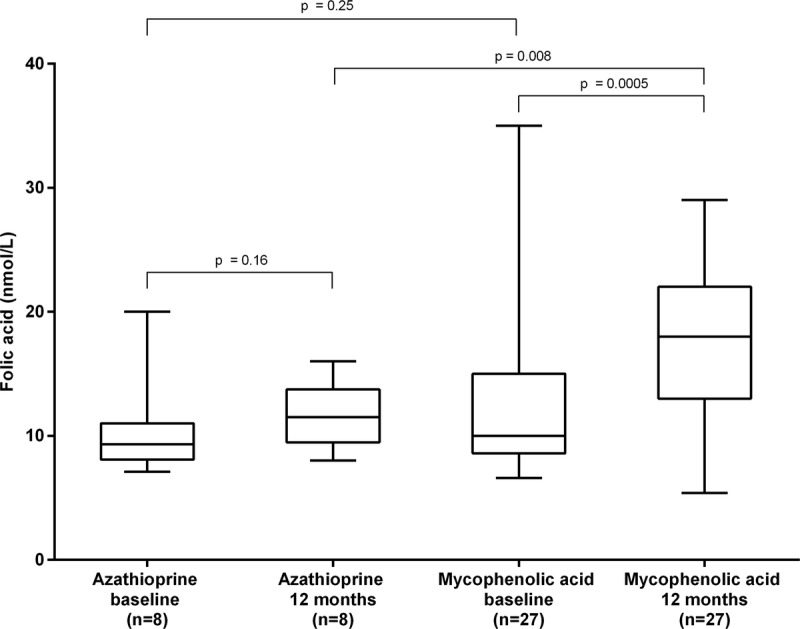
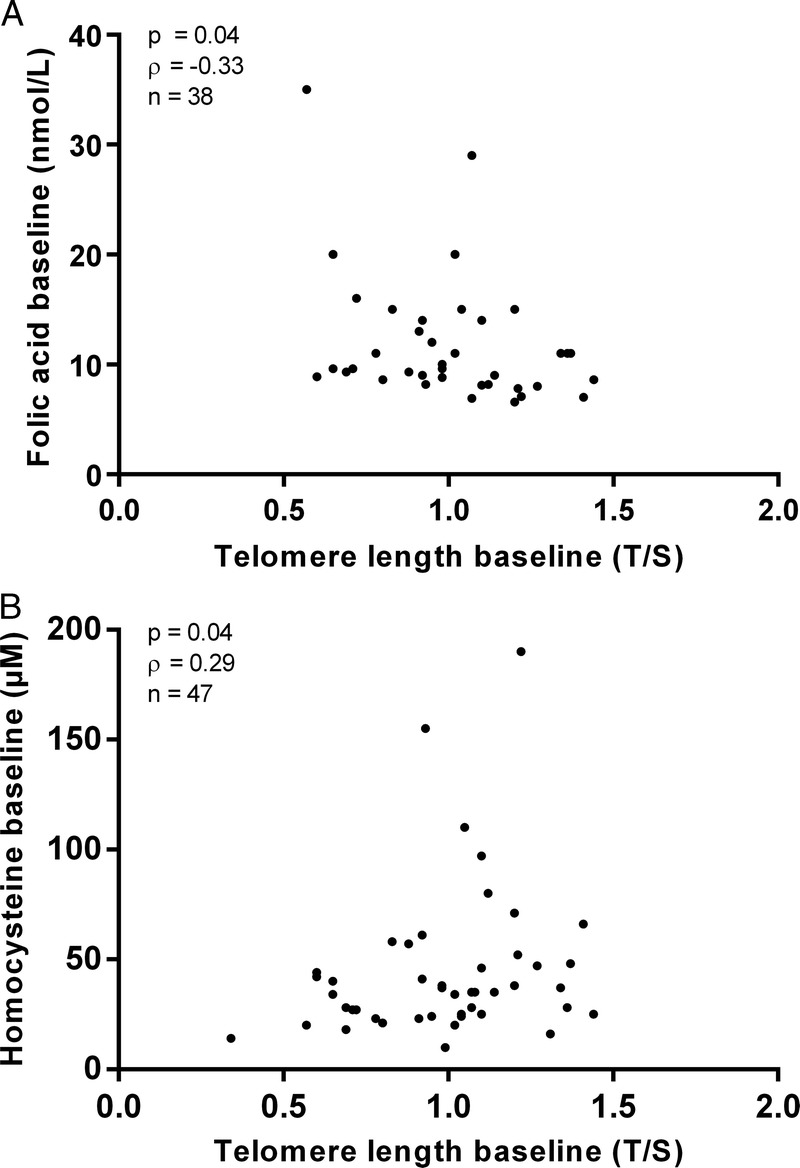
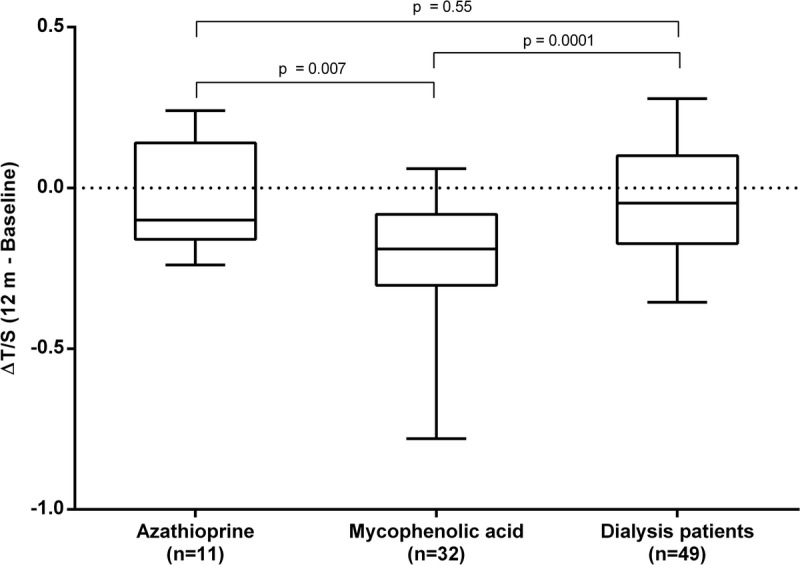
Non-CKD patients had significantly ( ≤ 0.01) longer telomeres than CKD patients. Telomere attrition after 12 months was significantly greater in RTx patients compared to dialysis patients ( = 0.008). RTx patients receiving mycophenolate mofetil (MMF) had a greater ( = 0.007) degree of telomere attrition compared to those treated with azathioprine. After 12 months, folate was significantly higher in RTx patients than in dialysis patients ( < 0.0001), whereas the opposite was true for homocysteine ( < 0.0001). The azathioprine group had lower levels of folate after 12 months than the MMF group ( = 0.003).
The associations between immunosuppressive therapy, telomere attrition, and changes in folate indicate a link between methyl donor potential, immunosuppressive drugs, and biological ageing. The hypothesis that the increased telomere attrition, observed in the MMF group after RTx, is driven by the immunosuppressive treatment, deserves further attention.
尿毒症环境使慢性肾脏病(CKD)患者面临早衰过程。肾替代治疗(透析和肾移植[RTx])或免疫抑制治疗方案对衰老生物标志物的影响鲜有研究。
本研究测量了49例透析患者和47例RTx患者在治疗开始时及12个月后的全血细胞端粒长度。纳入43例非CKD患者作为对照。
非CKD患者的端粒明显长于CKD患者(≤0.01)。与透析患者相比,RTx患者12个月后端粒损耗明显更大(=0.008)。接受霉酚酸酯(MMF)的RTx患者比接受硫唑嘌呤治疗的患者端粒损耗程度更大(=0.007)。12个月后,RTx患者的叶酸水平明显高于透析患者(<0.0001),而同型半胱氨酸则相反(<0.0001)。12个月后,硫唑嘌呤组的叶酸水平低于MMF组(=0.003)。
免疫抑制治疗、端粒损耗和叶酸变化之间的关联表明甲基供体潜力、免疫抑制药物和生物衰老之间存在联系。RTx后MMF组观察到的端粒损耗增加是由免疫抑制治疗驱动这一假设值得进一步关注。