Ngo Tony, Ilatovskiy Andrey V, Stewart Alastair G, Coleman James L J, McRobb Fiona M, Riek R Peter, Graham Robert M, Abagyan Ruben, Kufareva Irina, Smith Nicola J
Molecular Cardiology and Biophysics Division, Victor Chang Cardiac Research Institute, Darlinghurst, New South Wales, Australia.
St Vincent's Clinical School, University of New South Wales, Darlinghurst, New South Wales, Australia.
Nat Chem Biol. 2017 Feb;13(2):235-242. doi: 10.1038/nchembio.2266. Epub 2016 Dec 19.
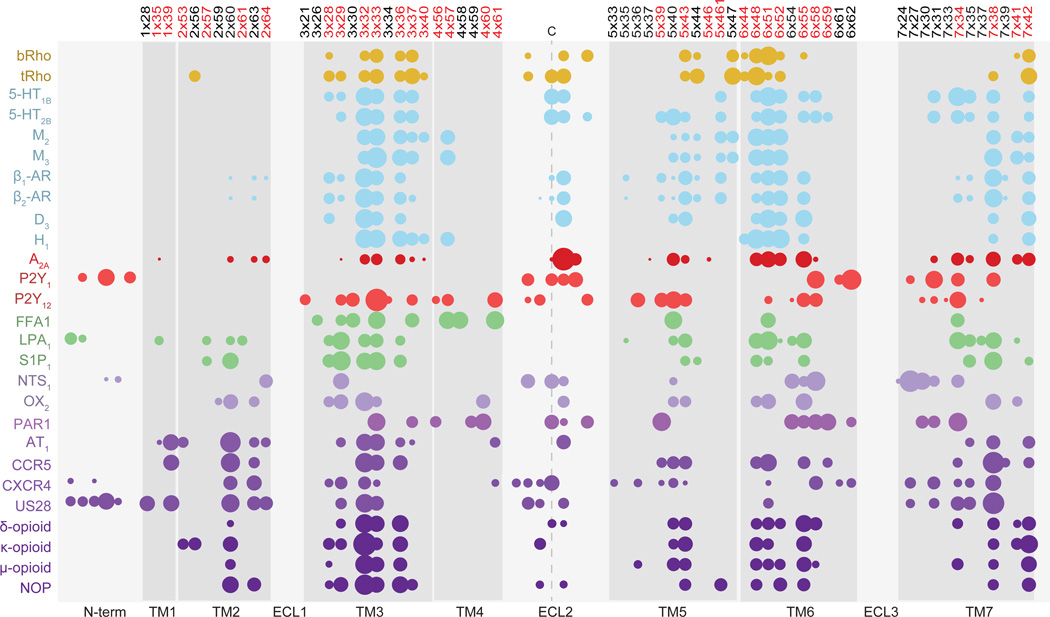
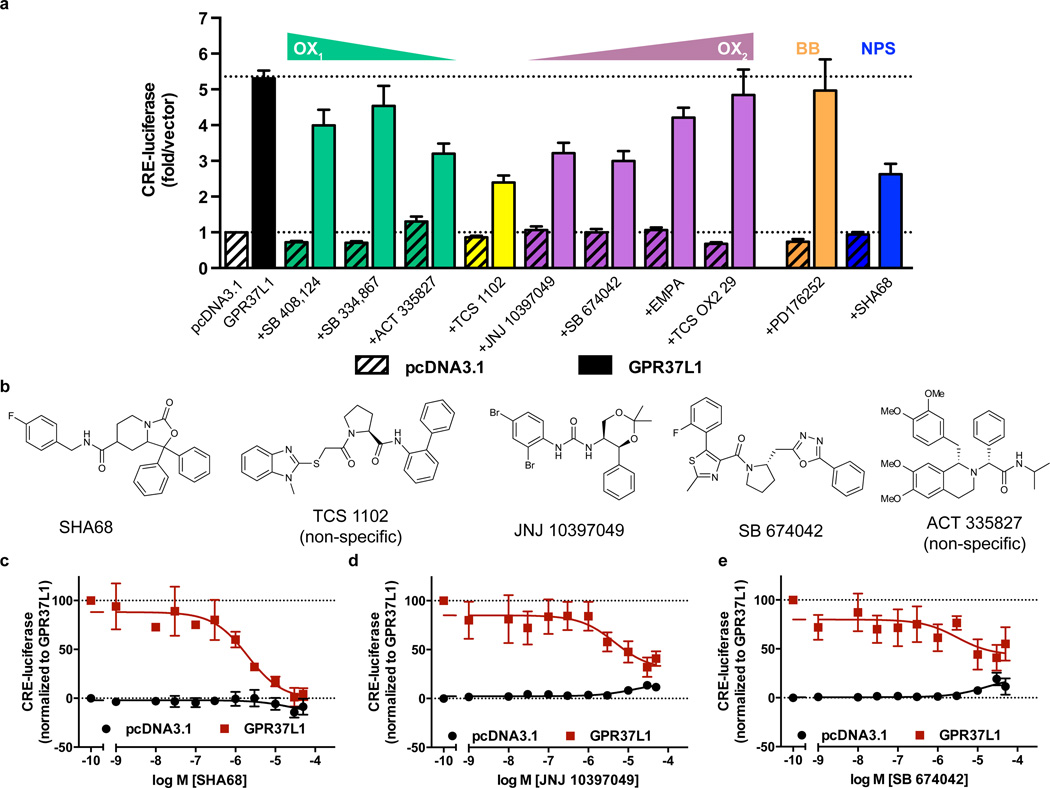
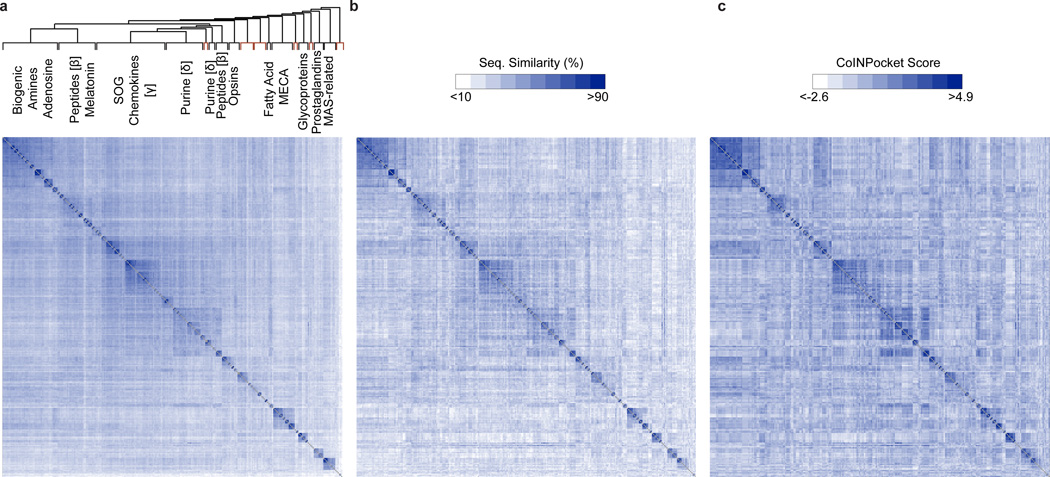
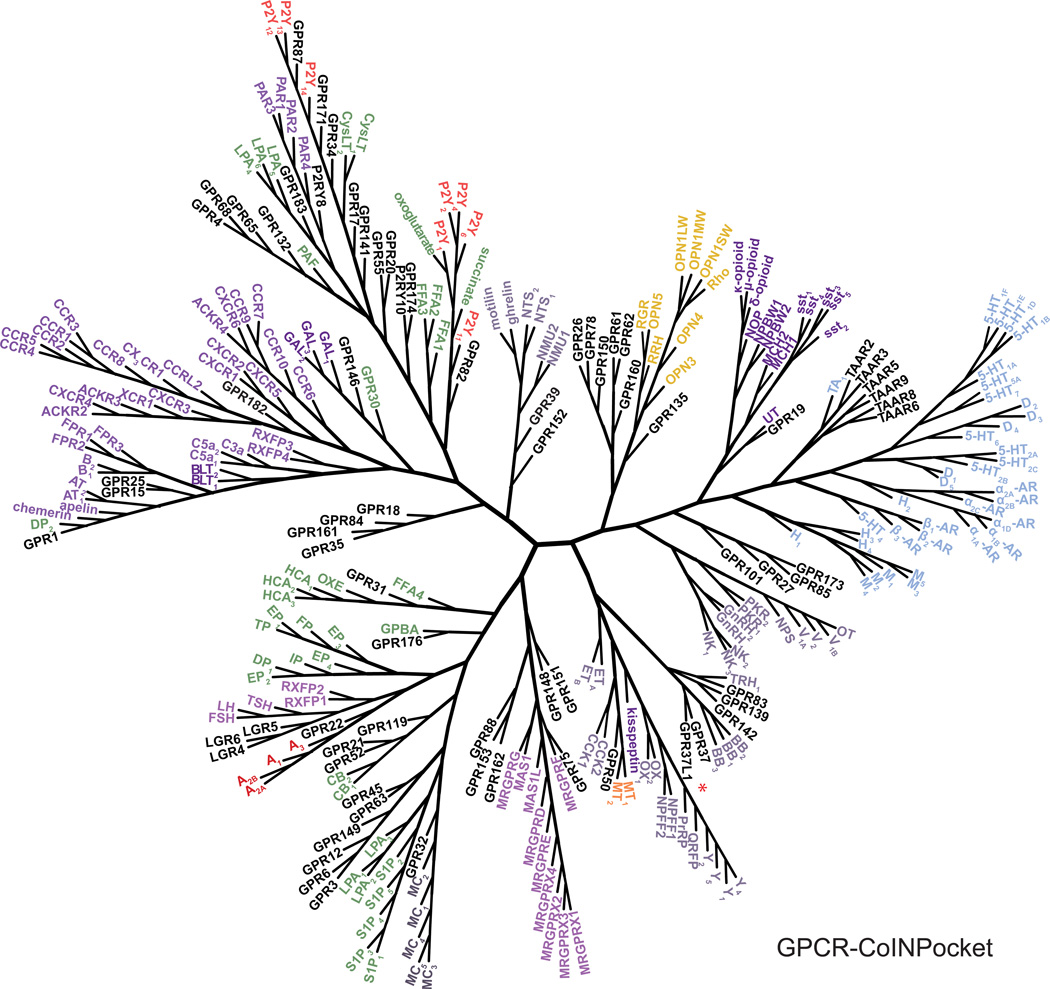
Understanding the pharmacological similarity of G protein-coupled receptors (GPCRs) is paramount for predicting ligand off-target effects, drug repurposing, and ligand discovery for orphan receptors. Phylogenetic relationships do not always correctly capture pharmacological similarity. Previous family-wide attempts to define pharmacological relationships were based on three-dimensional structures and/or known receptor-ligand pairings, both unavailable for orphan GPCRs. Here, we present GPCR-CoINPocket, a novel contact-informed neighboring pocket metric of GPCR binding-site similarity that is informed by patterns of ligand-residue interactions observed in crystallographically characterized GPCRs. GPCR-CoINPocket is applicable to receptors with unknown structure or ligands and accurately captures known pharmacological relationships between GPCRs, even those undetected by phylogeny. When applied to orphan receptor GPR37L1, GPCR-CoINPocket identified its pharmacological neighbors, and transfer of their pharmacology aided in discovery of the first surrogate ligands for this orphan with a 30% success rate. Although primarily designed for GPCRs, the method is easily transferable to other protein families.
了解G蛋白偶联受体(GPCR)的药理学相似性对于预测配体的脱靶效应、药物再利用以及发现孤儿受体的配体至关重要。系统发育关系并不总是能正确反映药理学相似性。以前全家族范围内定义药理学关系的尝试是基于三维结构和/或已知的受体-配体配对,而这两者对于孤儿GPCR均不可用。在此,我们提出了GPCR-CoINPocket,一种新型的基于接触信息的GPCR结合位点相似性邻近口袋度量方法,该方法由在晶体学表征的GPCR中观察到的配体-残基相互作用模式提供信息。GPCR-CoINPocket适用于结构未知的受体或配体,并且能够准确捕捉GPCR之间已知的药理学关系,即使是那些系统发育未检测到的关系。当应用于孤儿受体GPR37L1时,GPCR-CoINPocket确定了其药理学邻居,并且其药理学的转移有助于发现该孤儿受体的首个替代配体,成功率为30%。尽管该方法主要是为GPCR设计的,但很容易转移到其他蛋白质家族。