Lleixà Jessica, Manzano Maria, Mas Albert, Portillo María Del C
Biotecnología Enológica, Department Bioquímica i Biotecnologia, Facultat d'Enologia, Universitat Rovira i Virgili Tarragona, Spain.
Front Microbiol. 2016 Dec 5;7:1959. doi: 10.3389/fmicb.2016.01959. eCollection 2016.
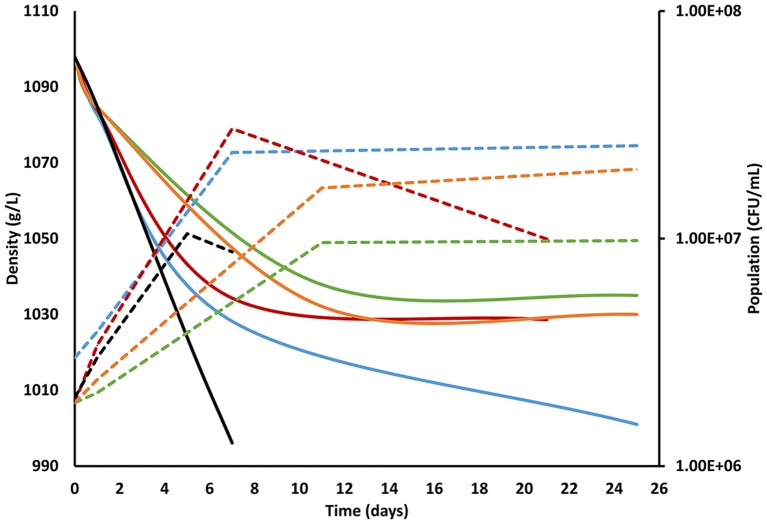
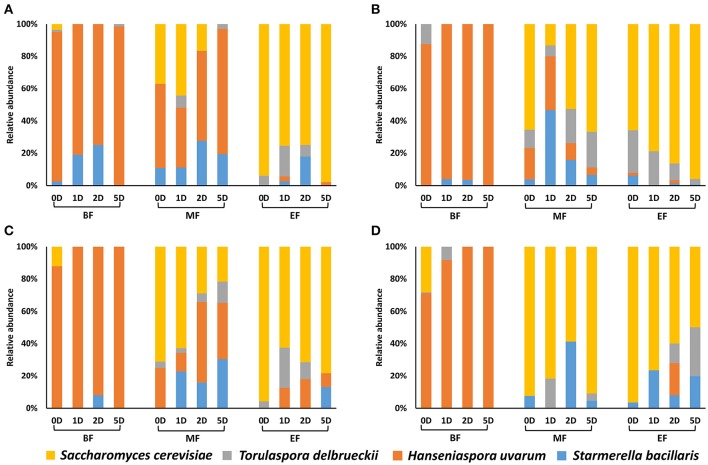
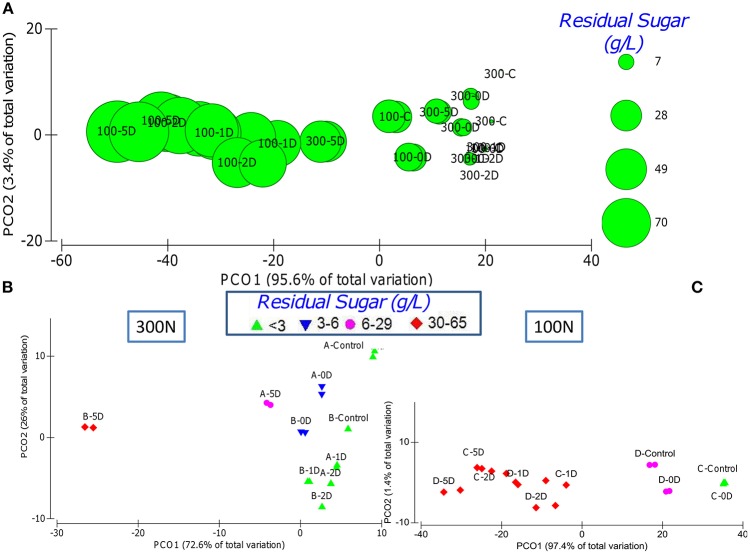
The inoculation of wines with autochthonous yeast allows obtaining complex wines with a peculiar microbial footprint characteristic from a wine region. Mixed inoculation of non- yeasts and is of interest for the wine industry for technological and sensory reasons. However, the interactions between these yeasts are not well understood, especially those regarding the availability of nutrients. The aim of the present study was to analyze the effect of nitrogen and sugar concentration on the evolution of mixed yeast populations on controlled laboratory-scale fermentations monitored by density, plate culturing, PCR-DGGE and sugar and nitrogen consumption. Furthermore, the effect of the time of inoculation of respect the initial co-inoculation of three non- yeasts was evaluated over the evolution of fermentation. Our results have shown that inoculation during the first 48 h conferred a stabilizing effect over the fermentations with non- strains tested and, generally, reduced yeast diversity at the end of the fermentation. On the other hand, nitrogen limitation increased the time of fermentation and also the proportion of non- yeasts at mid and final fermentation. High sugar concentration resulted in different proportions of the inoculated yeast depending on the time of inoculation. This work emphasizes the importance of the concentration of nutrients on the evolution of mixed fermentations and points to the optimal conditions for a stable fermentation in which the inoculated yeasts survived until the end.
用本土酵母接种葡萄酒能够酿造出具有特定微生物特征的复杂葡萄酒,这种特征是某个葡萄酒产区所特有的。出于技术和感官方面的原因,非酿酒酵母的混合接种对葡萄酒行业具有重要意义。然而,这些酵母之间的相互作用尚未得到充分理解,尤其是在营养物质可用性方面。本研究的目的是通过密度、平板培养、PCR-DGGE以及糖和氮消耗监测,分析氮和糖浓度对实验室规模受控发酵中混合酵母种群演变的影响。此外,还评估了相对于三种非酿酒酵母初始共接种时的接种时间对发酵过程的影响。我们的结果表明,在最初4天内接种对所测试的非酿酒酵母菌株的发酵具有稳定作用,并且在发酵结束时通常会降低酵母多样性。另一方面,氮限制延长了发酵时间,并且在发酵中期和末期非酿酒酵母的比例也有所增加。高糖浓度会导致根据接种时间不同而使接种酵母的比例有所差异。这项工作强调了营养物质浓度对混合发酵演变的重要性,并指出了实现稳定发酵的最佳条件,即接种酵母能够存活至发酵结束。