Institute of Vegetables and Flowers, Chinese Academy of Agricultural Sciences, Key Laboratory of Biology and Genetic Improvement of Horticultural Crops of the Ministry of Agriculture, Sino-Dutch Joint Laboratory of Horticultural Genomics, Beijing 10081, China.
Wageningen UR Plant Breeding, Wageningen University and Research centre, Droevendaalsesteeg 1, Wageningen 6708 PB, The Netherlands.
Sci Data. 2016 Dec 20;3:160119. doi: 10.1038/sdata.2016.119.
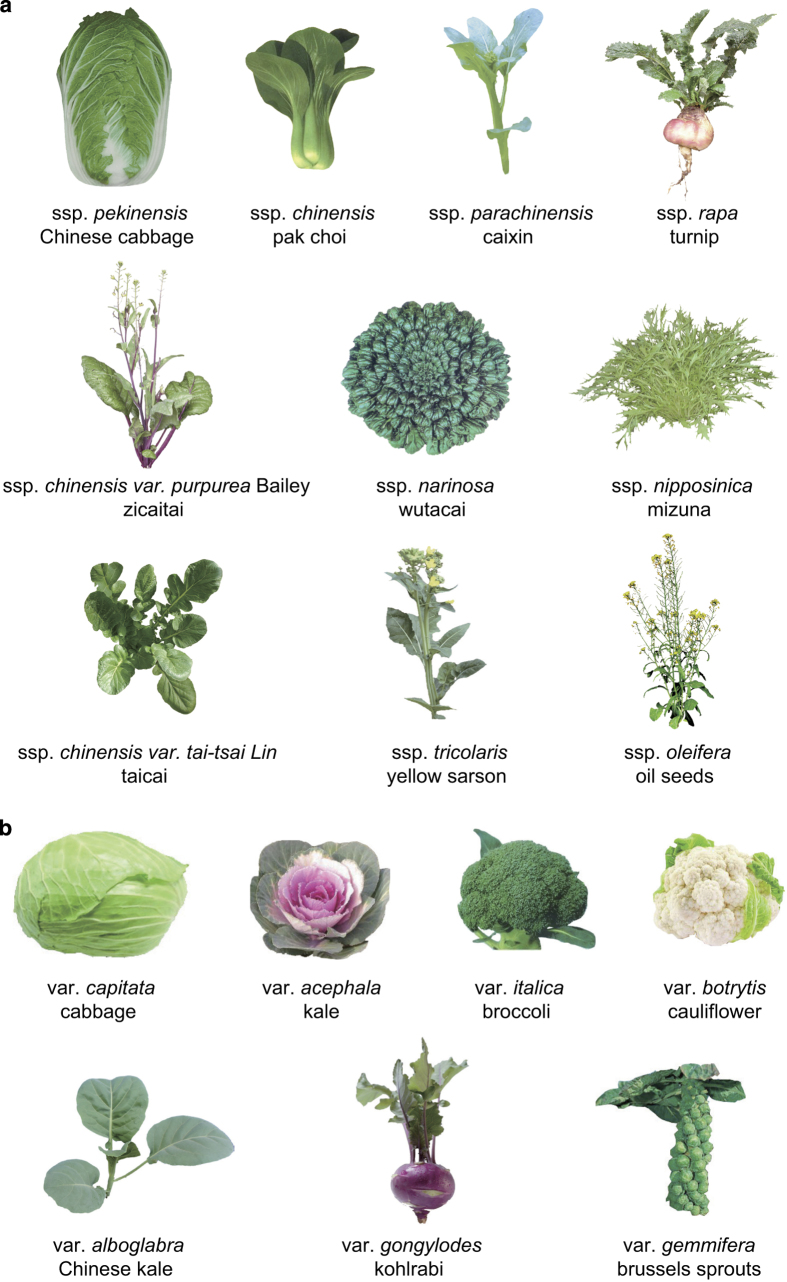
The closely related species Brassica rapa and B. oleracea encompass a wide range of vegetable, fodder and oil crops. The release of their reference genomes has facilitated resequencing collections of B. rapa and B. oleracea aiming to build their variome datasets. These data can be used to investigate the evolutionary relationships between and within the different species and the domestication of the crops, hereafter named morphotypes. These data can also be used in genetic studies aiming at the identification of genes that influence agronomic traits. We selected and resequenced 199 B. rapa and 119 B. oleracea accessions representing 12 and nine morphotypes, respectively. Based on these resequencing data, we obtained 2,249,473 and 3,852,169 high quality SNPs (single-nucleotide polymorphisms), as well as 303,617 and 417,004 InDels for the B. rapa and B. oleracea populations, respectively. The variome datasets of B. rapa and B. oleracea represent valuable resources to researchers working on evolution, domestication or breeding of Brassica vegetable crops.
closely related species Brassica rapa and B. oleracea encompass a wide range of vegetable, fodder and oil crops. closely related species Brassica rapa and B. oleracea 包含了广泛的蔬菜、饲料和油料作物。
The release of their reference genomes has facilitated resequencing collections of B. rapa and B. oleracea aiming to build their variome datasets. These data can be used to investigate the evolutionary relationships between and within the different species and the domestication of the crops, hereafter named morphotypes. These data can also be used in genetic studies aiming at the identification of genes that influence agronomic traits. 它们的参考基因组的发布促进了 B. rapa 和 B. oleracea 的重测序集合,旨在构建它们的变异组数据集。这些数据可用于研究不同物种之间和内部的进化关系以及作物的驯化,以下称为形态型。这些数据还可用于旨在鉴定影响农艺性状的基因的遗传研究。
We selected and resequenced 199 B. rapa and 119 B. oleracea accessions representing 12 and nine morphotypes, respectively. 我们选择并重新测序了 199 个 B. rapa 和 119 个 B. oleracea 品系,分别代表 12 个和 9 个形态型。
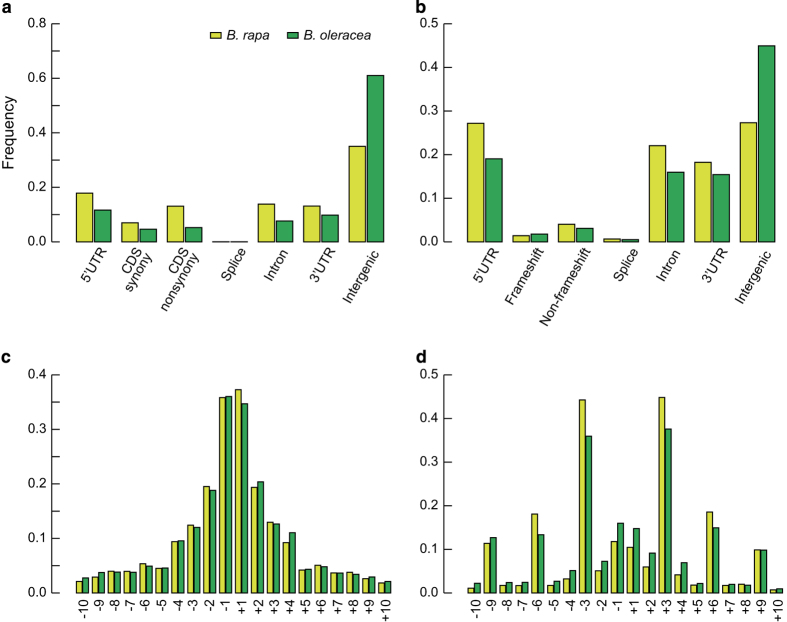
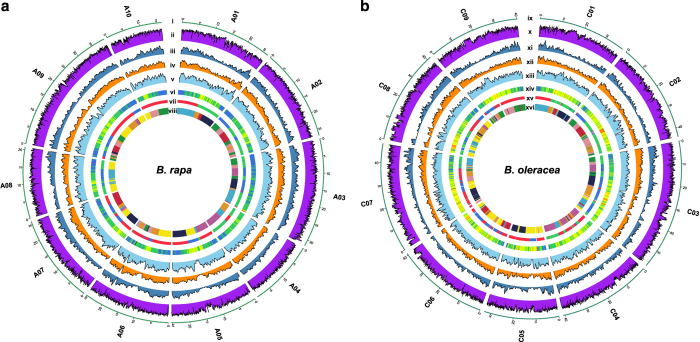
Based on these resequencing data, we obtained 2,249,473 and 3,852,169 high quality SNPs (single-nucleotide polymorphisms), as well as 303,617 and 417,004 InDels for the B. rapa and B. oleracea populations, respectively. 基于这些重测序数据,我们分别获得了 2,249,473 个和 3,852,169 个高质量的 SNPs(单核苷酸多态性),以及 303,617 个和 417,004 个 InDels ,用于 B. rapa 和 B. oleracea 群体。
The variome datasets of B. rapa and B. oleracea represent valuable resources to researchers working on evolution, domestication or breeding of Brassica vegetable crops. B. rapa 和 B. oleracea 的变异组数据集为从事 Brassica 蔬菜作物进化、驯化或育种研究的研究人员提供了宝贵的资源。