Li Jie, Du Xuewen, Hashim Saqib, Shy Adrianna, Xu Bing
Department of Chemistry, Brandeis University , 415 South Street, Waltham, Massachusetts 02454, United States.
J Am Chem Soc. 2017 Jan 11;139(1):71-74. doi: 10.1021/jacs.6b11512. Epub 2016 Dec 22.
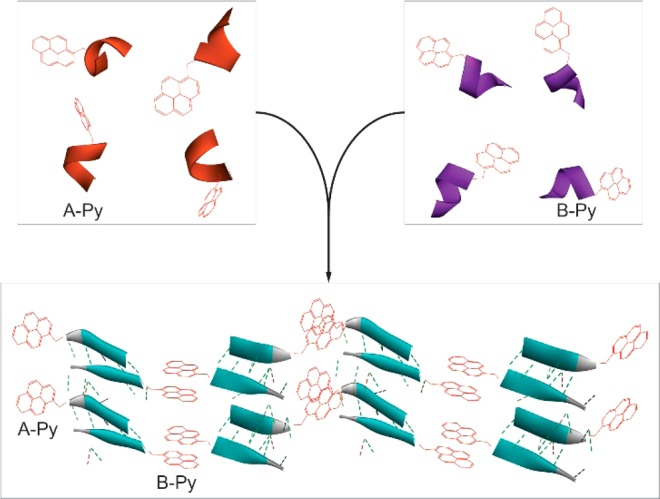
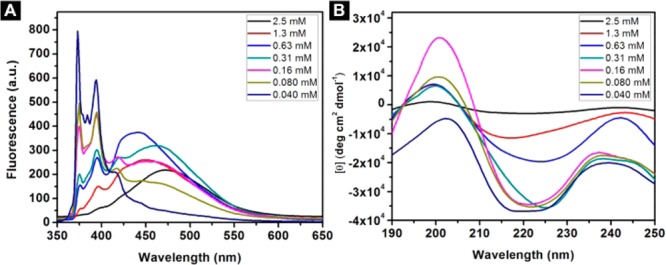
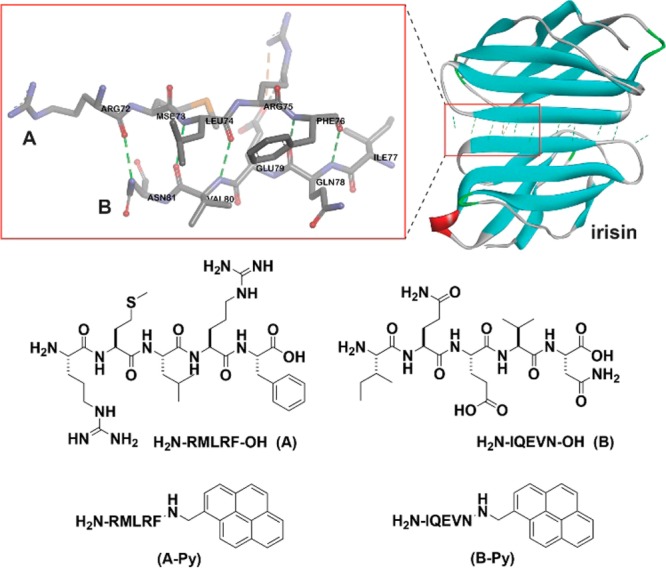
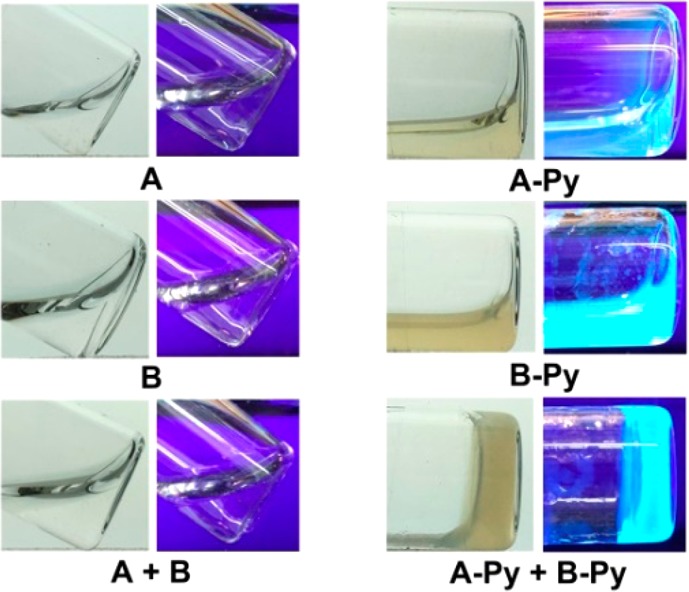
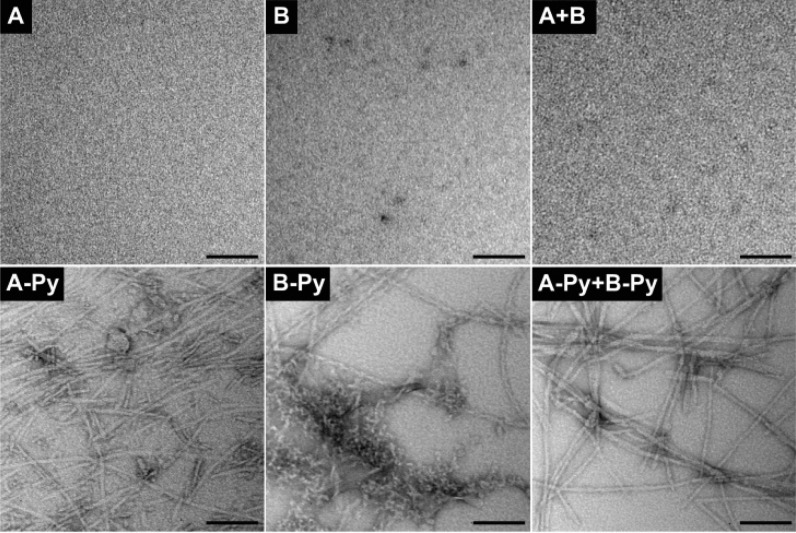
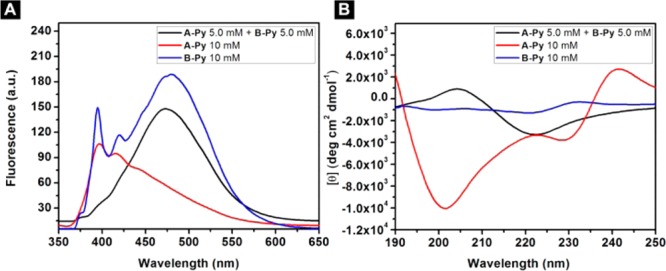
Isolated short peptides usually are unable to maintain their original secondary structures due to the lack of the restriction from proteins. Here we show that two complementary pentapeptides from a β-sheet motif of a protein, being connected to an aromatic motif (i.e., pyrene) at their C-terminal, self-assemble to form β-sheet like structures upon mixing. Besides enabling the self-assembly to result in supramolecular hydrogels upon mixing, aromatic-aromatic interactions promote the pentapeptides transform from α-helix to β-sheet conformation. As the first example of using aromatic-aromatic interactions to mimic the conformational restriction in a protein, this work illustrates a bioinspired way to generate peptide nanofibers with predefined secondary structures of the peptides by a rational design using protein structures as the blueprint.
由于缺乏蛋白质的限制,分离出的短肽通常无法维持其原始二级结构。在此我们表明,来自蛋白质β-折叠基序的两个互补五肽,在其C端连接到一个芳香基序(即芘),混合后会自组装形成类似β-折叠的结构。除了使混合时自组装形成超分子水凝胶外,芳香-芳香相互作用还促进五肽从α-螺旋构象转变为β-折叠构象。作为利用芳香-芳香相互作用模拟蛋白质构象限制的首个例子,这项工作展示了一种受生物启发的方法,即以蛋白质结构为蓝图进行合理设计,从而生成具有预定肽二级结构的肽纳米纤维。