School of Statistics & Mathematics, Zhejiang Gongshang University, Hangzhou, China.
Department of Computer Science, Hong Kong Baptist University, Kowloon Tong, Hong Kong.
Infect Dis Poverty. 2016 Dec 22;5(1):107. doi: 10.1186/s40249-016-0199-5.
Infectious diseases such as SARS and H1N1 can significantly impact people's lives and cause severe social and economic damages. Recent outbreaks have stressed the urgency of effective research on the dynamics of infectious disease spread. However, it is difficult to predict when and where outbreaks may emerge and how infectious diseases spread because many factors affect their transmission, and some of them may be unknown.
One feasible means to promptly detect an outbreak and track the progress of disease spread is to implement surveillance systems in regional or national health and medical centres. The accumulated surveillance data, including temporal, spatial, clinical, and demographic information can provide valuable information that can be exploited to better understand and model the dynamics of infectious disease spread. The aim of this work is to develop and empirically evaluate a stochastic model that allows the investigation of transmission patterns of infectious diseases in heterogeneous populations.
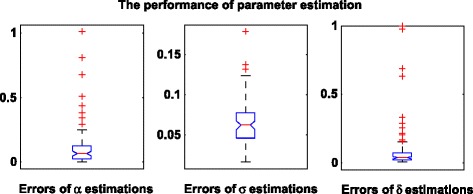
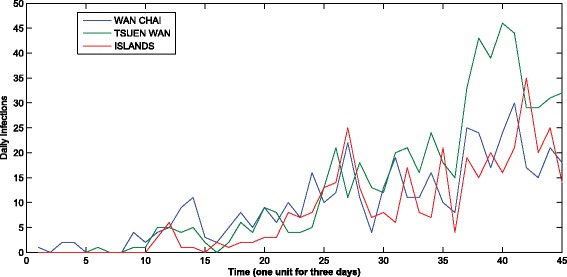
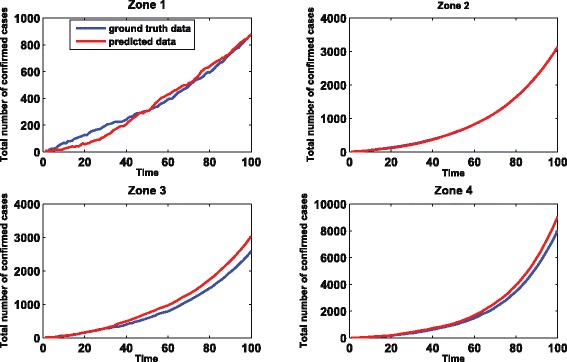
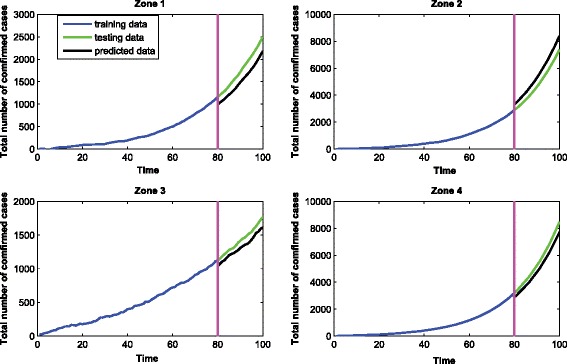
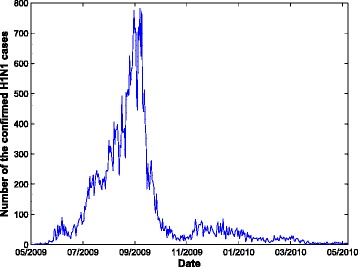
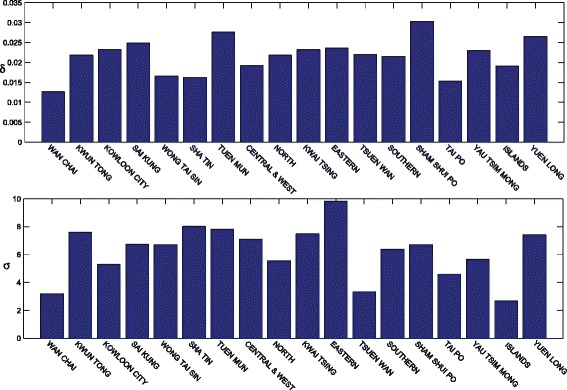
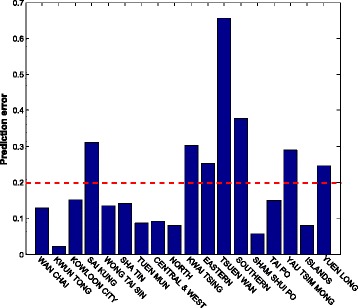
We test the proposed model on simulation data and apply it to the surveillance data from the 2009 H1N1 pandemic in Hong Kong. In the simulation experiment, our model achieves high accuracy in parameter estimation (less than 10.0 % mean absolute percentage error). In terms of the forward prediction of case incidence, the mean absolute percentage errors are 17.3 % for the simulation experiment and 20.0 % for the experiment on the real surveillance data.
We propose a stochastic model to study the dynamics of infectious disease spread in heterogeneous populations from temporal-spatial surveillance data. The proposed model is evaluated using both simulated data and the real data from the 2009 H1N1 epidemic in Hong Kong and achieves acceptable prediction accuracy. We believe that our model can provide valuable insights for public health authorities to predict the effect of disease spread and analyse its underlying factors and to guide new control efforts.
传染性疾病,如 SARS 和 H1N1,会对人们的生活产生重大影响,并造成严重的社会和经济损失。最近的疫情爆发凸显了对传染病传播动力学进行有效研究的紧迫性。然而,由于许多因素会影响传染病的传播,其中一些因素可能未知,因此很难预测疫情何时何地爆发以及传染病如何传播。
及时发现疫情并跟踪疾病传播进展的一种可行方法是在地区或国家的卫生和医疗中心实施监测系统。积累的监测数据,包括时间、空间、临床和人口统计学信息,可以提供有价值的信息,有助于更好地理解和模拟传染病传播的动态。本工作旨在开发和实证评估一种随机模型,以调查异质人群中传染病的传播模式。
我们在模拟数据上测试了所提出的模型,并将其应用于香港 2009 年 H1N1 大流行的监测数据。在模拟实验中,我们的模型在参数估计方面达到了很高的精度(小于 10.0%的平均绝对百分比误差)。就病例发病率的正向预测而言,模拟实验的平均绝对百分比误差为 17.3%,真实监测数据实验的平均绝对百分比误差为 20.0%。
我们提出了一种随机模型,用于从时空监测数据研究异质人群中传染病的传播动态。该模型使用模拟数据和香港 2009 年 H1N1 疫情的真实数据进行了评估,并达到了可接受的预测精度。我们相信,我们的模型可以为公共卫生当局提供有价值的见解,以预测疾病传播的效果,分析其潜在因素,并指导新的控制工作。