Karlstetter Marcus, Kopatz Jens, Aslanidis Alexander, Shahraz Anahita, Caramoy Albert, Linnartz-Gerlach Bettina, Lin Yuchen, Lückoff Anika, Fauser Sascha, Düker Katharina, Claude Janine, Wang Yiner, Ackermann Johannes, Schmidt Tobias, Hornung Veit, Skerka Christine, Langmann Thomas, Neumann Harald
Laboratory for Experimental Immunology of the Eye, Department of Ophthalmology, University of Cologne, Cologne, Germany.
Therapeutic Research Group Ophthalmology, Bayer Pharma AG, Wuppertal, Germany.
EMBO Mol Med. 2017 Feb;9(2):154-166. doi: 10.15252/emmm.201606627.
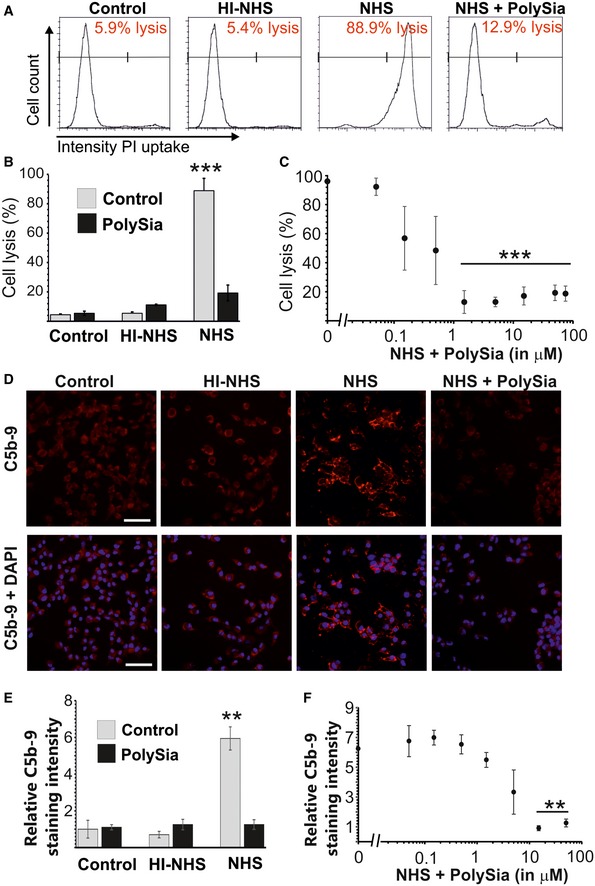
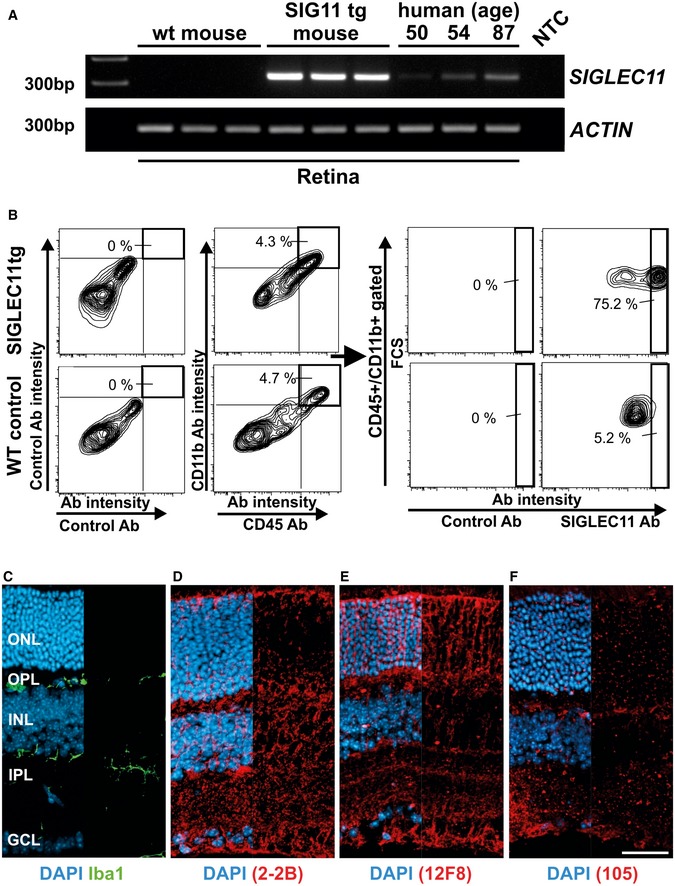
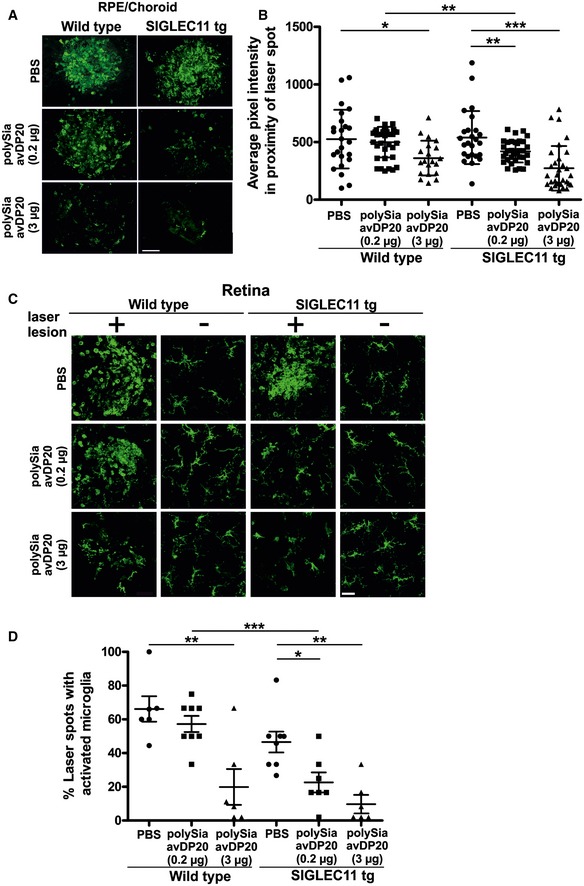
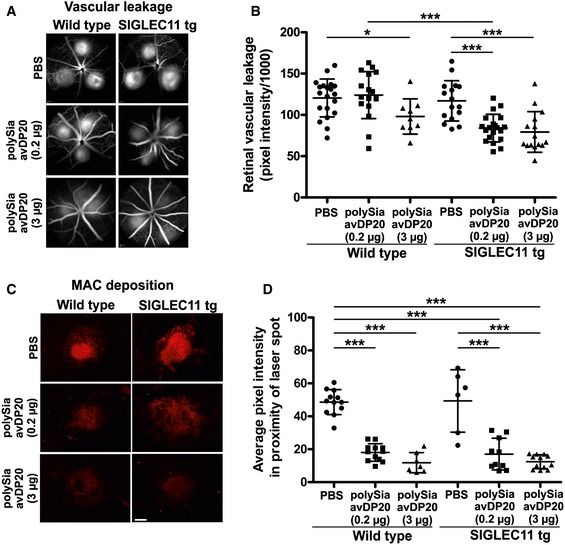
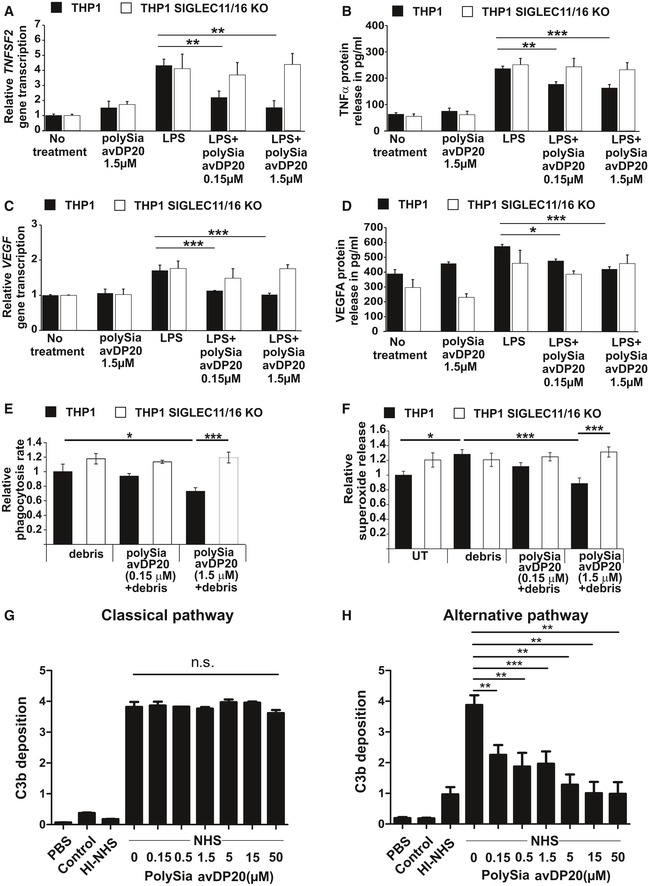
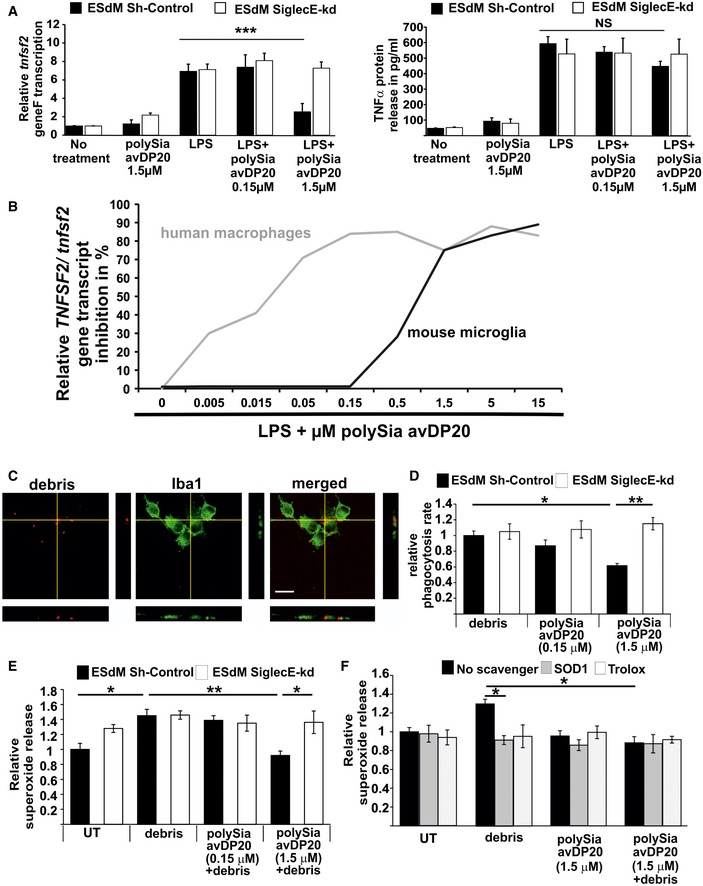
Age-related macular degeneration (AMD) is a major cause of blindness in the elderly population. Its pathophysiology is linked to reactive oxygen species (ROS) and activation of the complement system. Sialic acid polymers prevent ROS production of human mononuclear phagocytes via the inhibitory sialic acid-binding immunoglobulin-like lectin-11 (SIGLEC11) receptor. Here, we show that low-dose intravitreal injection of low molecular weight polysialic acid with average degree of polymerization 20 (polySia avDP20) in humanized transgenic mice expressing SIGLEC11 on mononuclear phagocytes reduced their reactivity and vascular leakage induced by laser coagulation. Furthermore, polySia avDP20 prevented deposition of the membrane attack complex in both SIGLEC11 transgenic and wild-type animals. In vitro, polySia avDP20 showed two independent, but synergistic effects on the innate immune system. First, polySia avDP20 prevented tumor necrosis factor-α, vascular endothelial growth factor A, and superoxide production by SIGLEC11-positive phagocytes. Second, polySia avDP20 directly interfered with complement activation. Our data provide evidence that polySia avDP20 ameliorates laser-induced damage in the retina and thus is a promising candidate to prevent AMD-related inflammation and angiogenesis.
年龄相关性黄斑变性(AMD)是老年人群失明的主要原因。其病理生理学与活性氧(ROS)和补体系统的激活有关。唾液酸聚合物通过抑制性唾液酸结合免疫球蛋白样凝集素-11(SIGLEC11)受体阻止人单核吞噬细胞产生ROS。在此,我们表明,在单核吞噬细胞上表达SIGLEC11的人源化转基因小鼠中,玻璃体内低剂量注射平均聚合度为20的低分子量聚唾液酸(聚唾液酸avDP20)可降低其由激光凝固诱导的反应性和血管渗漏。此外,聚唾液酸avDP20可防止膜攻击复合物在SIGLEC11转基因动物和野生型动物中沉积。在体外,聚唾液酸avDP20对先天免疫系统显示出两种独立但协同的作用。首先,聚唾液酸avDP20可阻止SIGLEC11阳性吞噬细胞产生肿瘤坏死因子-α、血管内皮生长因子A和超氧化物。其次,聚唾液酸avDP20直接干扰补体激活。我们的数据提供了证据,表明聚唾液酸avDP20可改善视网膜激光诱导的损伤,因此是预防AMD相关炎症和血管生成的有希望的候选物。