Lückoff Anika, Caramoy Albert, Scholz Rebecca, Prinz Marco, Kalinke Ulrich, Langmann Thomas
Retinal Immunology Laboratory (RIL), Department of Ophthalmology, University of Cologne, Cologne, Germany.
Institute of Neuropathology and BIOSS Center for Biological Signaling Studies, University of Freiburg, Freiburg, Germany.
EMBO Mol Med. 2016 Jun 1;8(6):670-8. doi: 10.15252/emmm.201505994. Print 2016 Jun.
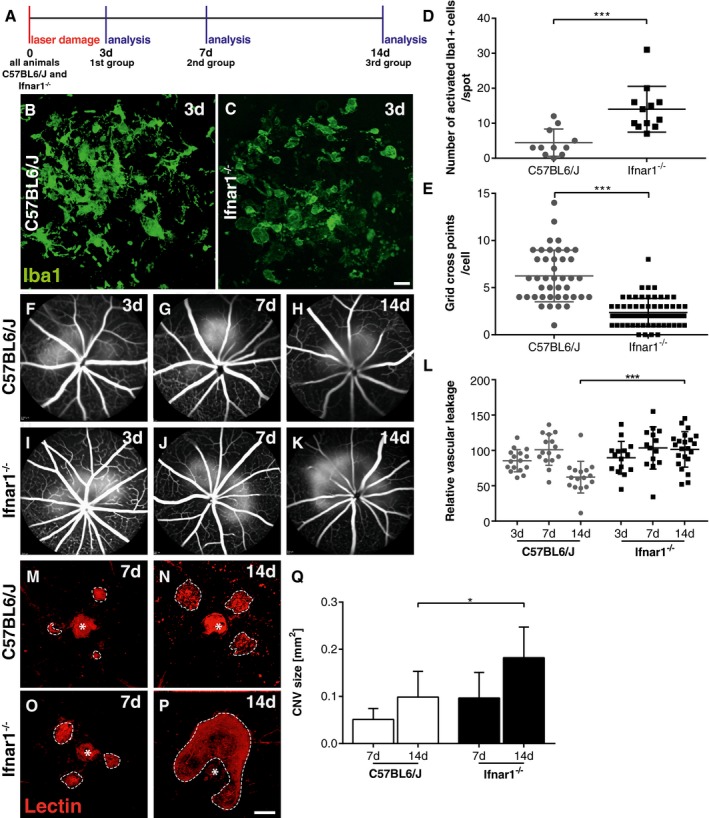
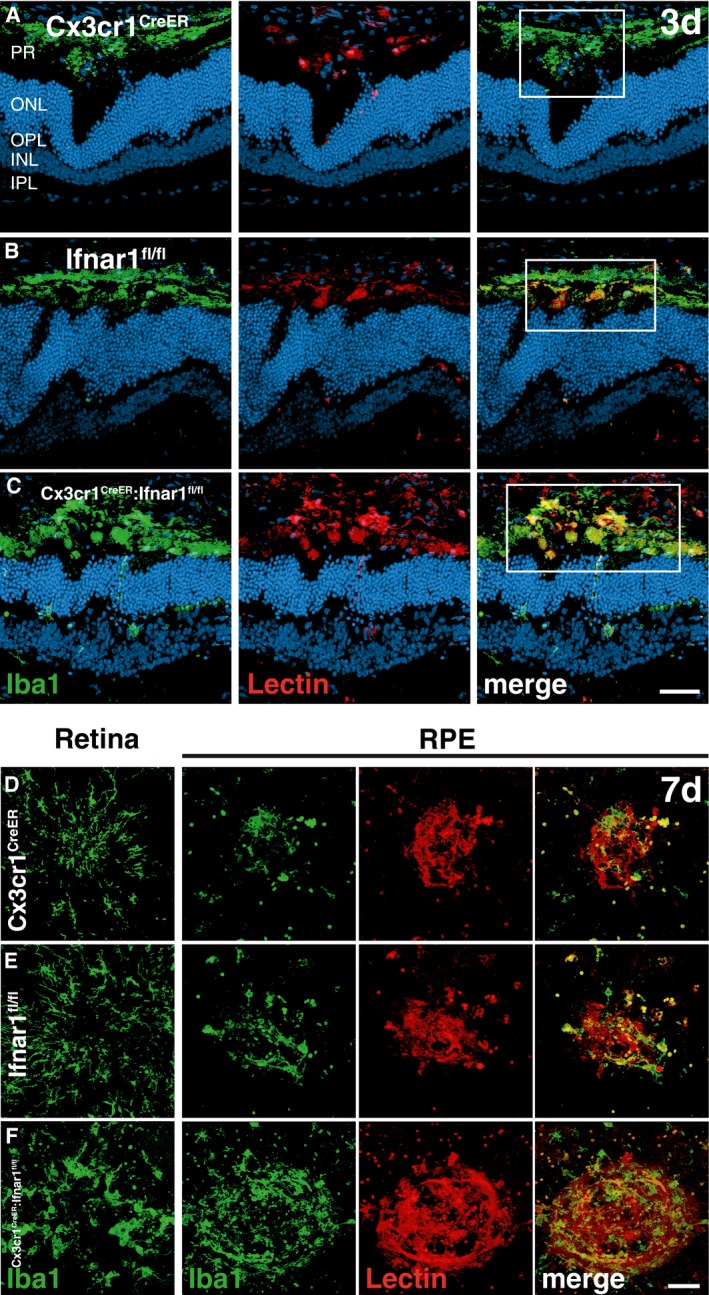
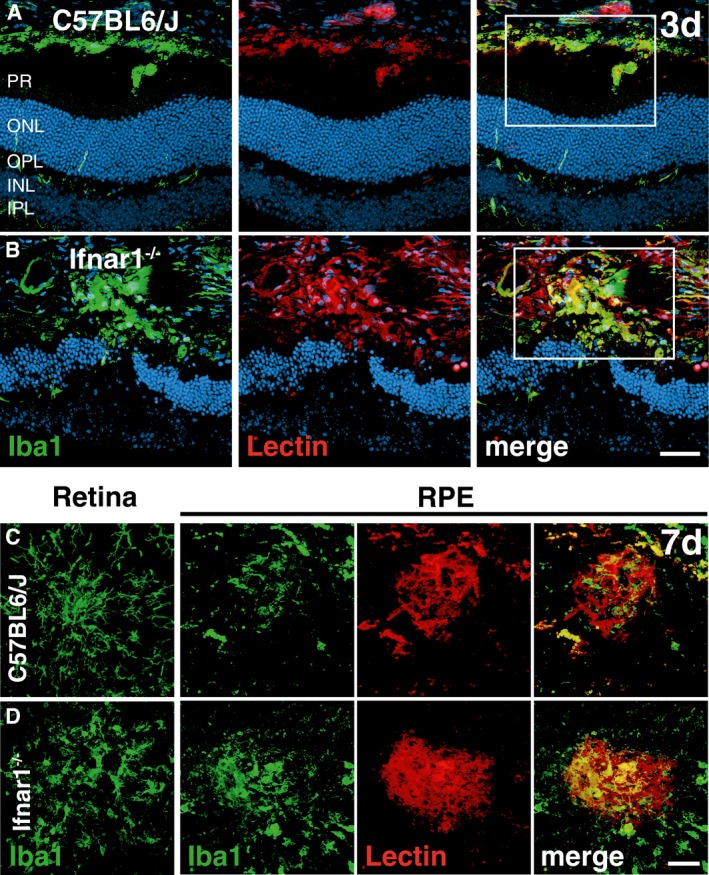
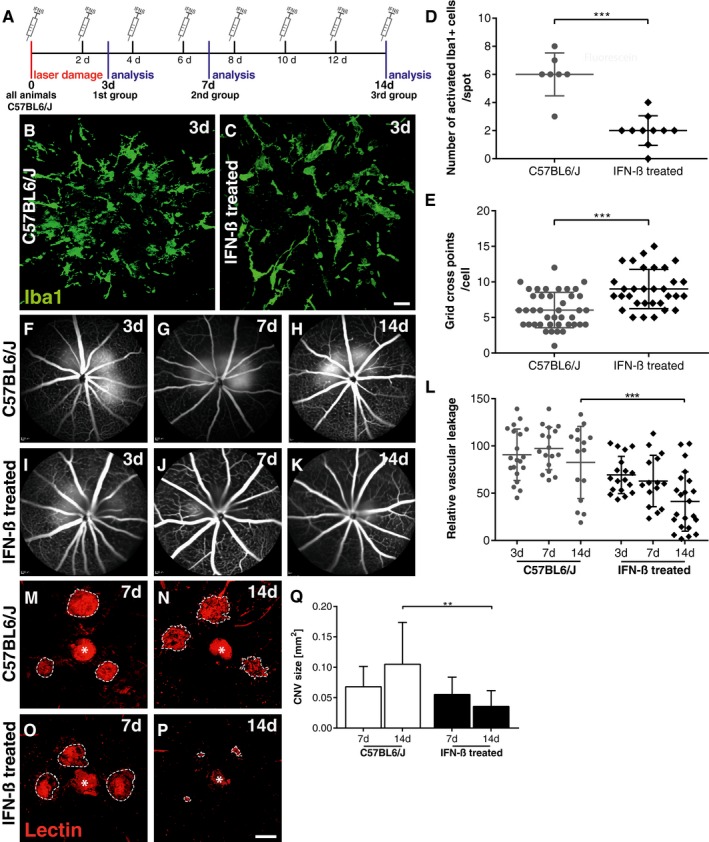
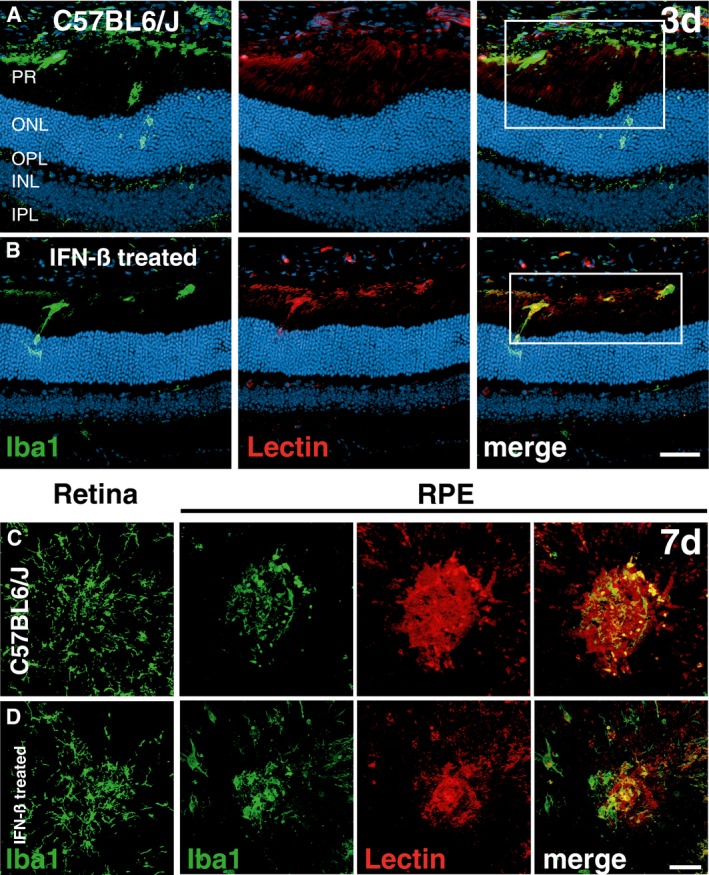
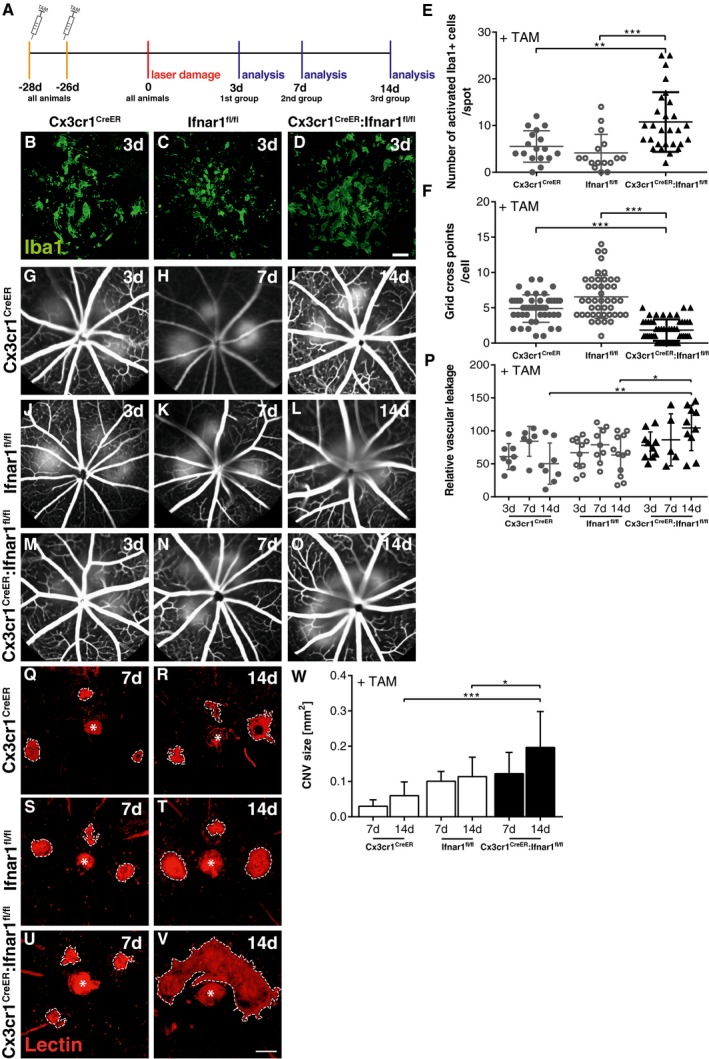
Age-related macular degeneration (AMD) is a leading cause of vision loss among the elderly. AMD pathogenesis involves chronic activation of the innate immune system including complement factors and microglia/macrophage reactivity in the retina. Here, we show that lack of interferon-β signaling in the retina accelerates mononuclear phagocyte reactivity and promotes choroidal neovascularization (CNV) in the laser model of neovascular AMD Complete deletion of interferon-α/β receptor (Ifnar) using Ifnar1(-/-) mice significantly enhanced early microglia and macrophage activation in lesion areas. This triggered subsequent vascular leakage and CNV at later stages. Similar findings were obtained in laser-treated Cx3cr1(Cre) (ER):Ifnar1(fl/fl) animals that allowed the tamoxifen-induced conditional depletion of Ifnar in resident mononuclear phagocytes only. Conversely, systemic IFN-β therapy of laser-treated wild-type animals effectively attenuated microgliosis and macrophage responses in the early stage of disease and significantly reduced CNV size in the late phase. Our results reveal a protective role of Ifnar signaling in retinal immune homeostasis and highlight a potential use for IFN-β therapy in the eye to limit chronic inflammation and pathological angiogenesis in AMD.
年龄相关性黄斑变性(AMD)是老年人视力丧失的主要原因。AMD的发病机制涉及先天性免疫系统的慢性激活,包括视网膜中的补体因子以及小胶质细胞/巨噬细胞反应性。在此,我们表明视网膜中缺乏干扰素-β信号会加速单核吞噬细胞反应,并在新生血管性AMD的激光模型中促进脉络膜新生血管形成(CNV)。使用Ifnar1(-/-)小鼠完全缺失干扰素-α/β受体(Ifnar)可显著增强病变区域早期小胶质细胞和巨噬细胞的激活。这引发了随后的血管渗漏和后期的CNV。在仅允许他莫昔芬诱导的常驻单核吞噬细胞中Ifnar条件性缺失的激光处理Cx3cr1(Cre)(ER):Ifnar1(fl/fl)动物中也获得了类似的结果。相反,对激光处理的野生型动物进行全身性IFN-β治疗可有效减轻疾病早期的小胶质细胞增生和巨噬细胞反应,并在后期显著减小CNV的大小。我们的结果揭示了Ifnar信号在视网膜免疫稳态中的保护作用,并突出了IFN-β治疗在眼部限制AMD中的慢性炎症和病理性血管生成的潜在用途。