Chowdhary Mudit, Patel Kirtesh R, Danish Hasan H, Lawson David H, Khan Mohammad K
Department of Radiation Oncology, Winship Cancer Institute, Emory University, Atlanta, GA; Department of Radiation Oncology, Rush University Medical Center, Chicago, IL.
Department of Radiation Oncology, Winship Cancer Institute, Emory University, Atlanta, GA.
Onco Targets Ther. 2016 Dec 12;9:7149-7159. doi: 10.2147/OTT.S119428. eCollection 2016.
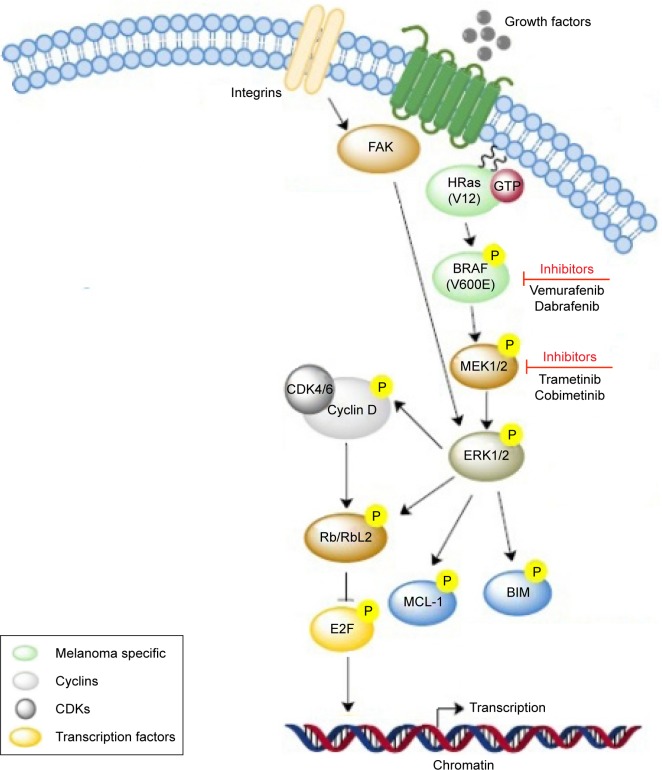
Melanoma is an aggressive malignancy that frequently spreads to the brain, resulting in rapid deterioration in both quality and quantity of life. Historically, treatment options for melanoma brain metastases (MBM) have predominantly consisted of surgery and radiotherapy. While these options can help provide local control, the majority of patients still develop intracranial progression. Indeed, novel therapeutic options, including molecularly targeted agents and immunotherapy, have improved outcomes and are now changing the role of radiotherapy. Up to 50% of melanomas contain an activating BRAF mutation, resulting in hyperactive cellular proliferation and survival. Drugs that target BRAF have been introduced for the treatment of metastatic melanoma and offer hope in improving disease outcomes; however, many of these trials either excluded or had a limited amount of patients with MBM. Recent studies have revealed that melanoma cell lines become more radiosensitive following BRAF inhibition, thus providing a potential synergistic mechanism when combining BRAF inhibitor (BRAFi) and radiotherapy. However, neurotoxicity concerns also exist with this combination. This article reviews the efficacy and limitations of BRAFi therapy for MBM, describes current evidence for combining BRAFis with radiation, discusses the rationale and evidence for combination modalities, and highlights emerging clinical trials specifically investigating this combination in MBM.
黑色素瘤是一种侵袭性恶性肿瘤,常扩散至脑部,导致生活质量和数量迅速下降。从历史上看,黑色素瘤脑转移(MBM)的治疗选择主要包括手术和放疗。虽然这些选择有助于实现局部控制,但大多数患者仍会出现颅内进展。事实上,包括分子靶向药物和免疫疗法在内的新型治疗选择已经改善了治疗效果,并且正在改变放疗的作用。高达50%的黑色素瘤含有激活的BRAF突变,导致细胞增殖和存活过度活跃。针对BRAF的药物已被引入用于治疗转移性黑色素瘤,并为改善疾病预后带来了希望;然而,许多这些试验要么排除了患有MBM的患者,要么纳入的此类患者数量有限。最近的研究表明,BRAF抑制后黑色素瘤细胞系对放疗更敏感,因此在联合使用BRAF抑制剂(BRAFi)和放疗时提供了一种潜在的协同机制。然而,这种联合治疗也存在神经毒性问题。本文综述了BRAFi治疗MBM的疗效和局限性,描述了将BRAFi与放疗联合使用的现有证据,讨论了联合治疗模式的基本原理和证据,并重点介绍了专门研究MBM中这种联合治疗的新兴临床试验。