Hasib Annie, Ng Ming T, Gault Victor A, Khan Dawood, Parthsarathy Vadivel, Flatt Peter R, Irwin Nigel
SAAD Centre for Pharmacy and Diabetes, School of Biomedical Sciences, University of Ulster, Cromore Road, Coleraine, BT52 1SA, Northern Ireland, UK.
Diabetologia. 2017 Mar;60(3):541-552. doi: 10.1007/s00125-016-4186-y. Epub 2016 Dec 21.
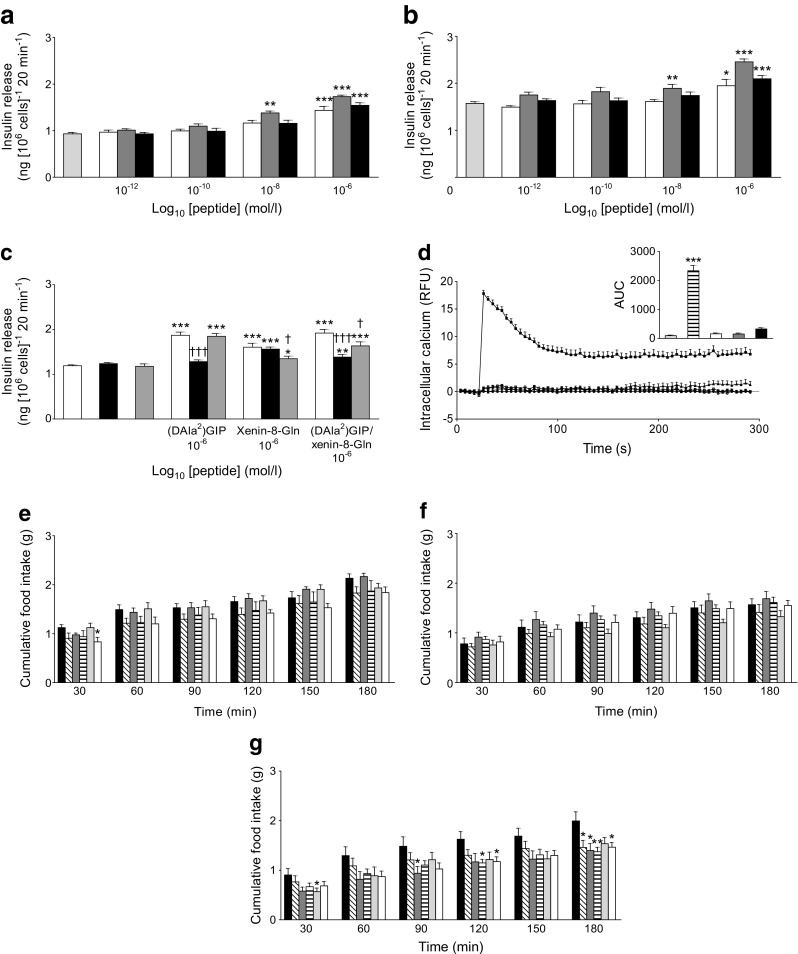
AIMS/HYPOTHESIS: Glucose-dependent insulinotropic polypeptide (GIP) and xenin, regulatory gut hormones secreted from enteroendocrine K cells, exert important effects on metabolism. In addition, xenin potentiates the biological actions of GIP. The present study assessed the actions and therapeutic utility of a (DAla)GIP/xenin-8-Gln hybrid peptide, in comparison with the parent peptides (DAla)GIP and xenin-8-Gln.
Following confirmation of enzymatic stability, insulin secretory activity of (DAla)GIP/xenin-8-Gln was assessed in BRIN-BD11 beta cells. Acute and persistent glucose-lowering and insulin-releasing effects were then examined in vivo. Finally, the metabolic benefits of twice daily injection of (DAla)GIP/xenin-8-Gln was determined in high-fat-fed mice.
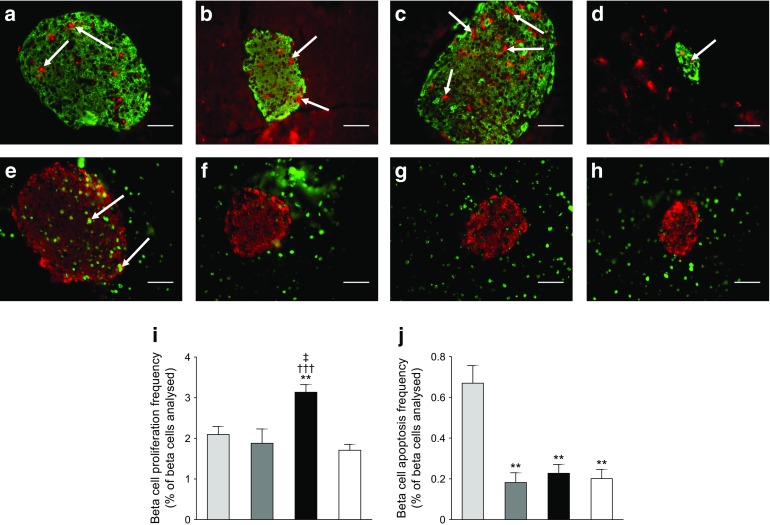
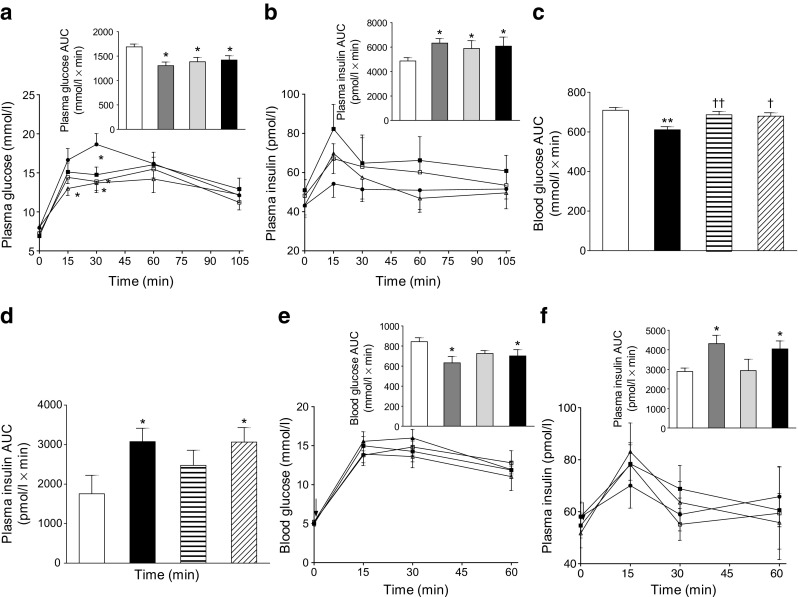
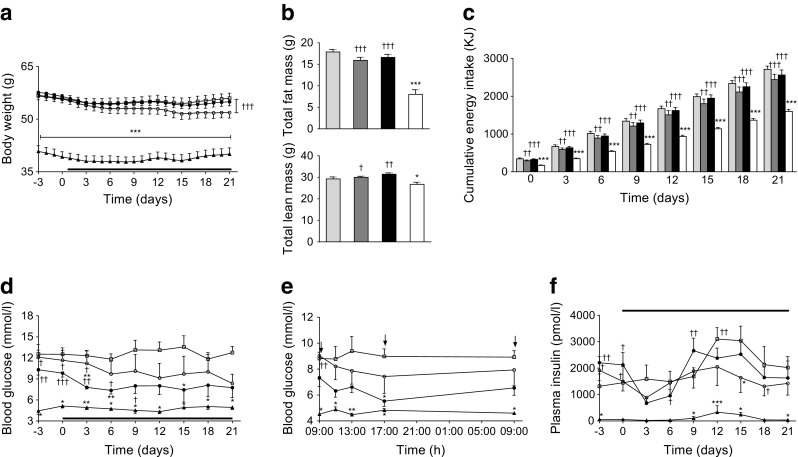
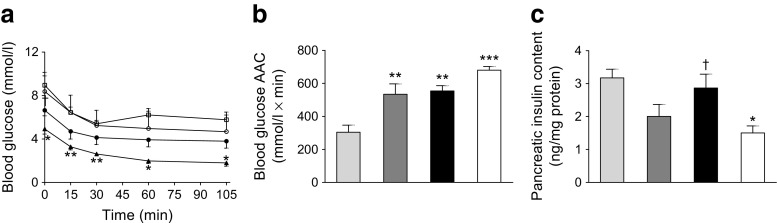
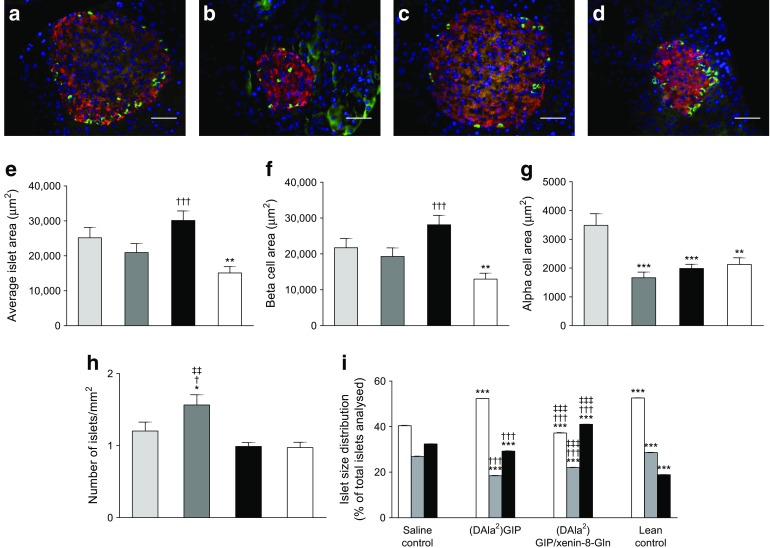
All peptides significantly (p < 0.05 to p < 0.001) enhanced in vitro insulin secretion from pancreatic clonal BRIN-BD11 cells, with xenin (and particularly GIP)-related signalling pathways, being important for this action. Administration of (DAla)GIP or (DAla)GIP/xenin-8-Gln in combination with glucose significantly (p < 0.05) lowered blood glucose and increased plasma insulin in mice, with a protracted response of up to 4 h. All treatments elicited appetite-suppressive effects (p < 0.05), particularly (DAla)GIP/xenin-8-Gln and xenin-8-Gln at elevated doses of 250 nmol/kg. Twice-daily administration of (DAla)GIP/xenin-8-Gln or (DAla)GIP for 21 days to high-fat-fed mice returned circulating blood glucose to lean control levels. In addition, (DAla)GIP/xenin-8-Gln treatment significantly (p < 0.05) reduced glycaemic levels during a 24 h glucose profile assessment. Neither of the treatment regimens had an effect on body weight, energy intake or circulating insulin concentrations. However, insulin sensitivity was significantly (p < 0.001) improved by both treatments. Interestingly, GIP-mediated glucose-lowering (p < 0.05) and insulin-releasing (p < 0.05 to p < 0.01) effects were substantially improved by (DAla)GIP and (DAla)GIP/xenin-8-Gln treatment. Pancreatic islet and beta cell area (p < 0.001), as well as pancreatic insulin content (p < 0.05), were augmented in (DAla)GIP/xenin-8-Gln-treated mice, related to enhanced proliferation and decreased apoptosis of beta cells, whereas (DAla)GIP evoked increases (p < 0.05 to p < 0.01) in islet number.
CONCLUSIONS/INTERPRETATION: These studies highlight the clear potential of GIP/xenin hybrids for the treatment of type 2 diabetes.
目的/假设:葡萄糖依赖性促胰岛素多肽(GIP)和胃泌酸调节素,这两种由肠内分泌K细胞分泌的肠道调节激素,对新陈代谢发挥着重要作用。此外,胃泌酸调节素能增强GIP的生物学活性。本研究评估了(D - Ala)GIP/胃泌酸调节素 - 8 - Gln杂合肽与亲本肽(D - Ala)GIP和胃泌酸调节素 - 8 - Gln相比的作用及治疗效用。
在确认酶稳定性后,于BRIN - BD11β细胞中评估(D - Ala)GIP/胃泌酸调节素 - 8 - Gln的胰岛素分泌活性。随后在体内检测急性和持续性降糖及胰岛素释放作用。最后,在高脂喂养小鼠中确定每日注射两次(D - Ala)GIP/胃泌酸调节素 - 8 - Gln的代谢益处。
所有肽均显著(p < 0.05至p < 0.001)增强了胰腺克隆BRIN - BD11细胞的体外胰岛素分泌,其中胃泌酸调节素(尤其是GIP)相关信号通路对此作用至关重要。在小鼠中,(D - Ala)GIP或(D - Ala)GIP/胃泌酸调节素 - 8 - Gln与葡萄糖联合给药显著(p < 0.05)降低血糖并增加血浆胰岛素,反应持续长达4小时。所有治疗均引发食欲抑制作用(p < 0.05),特别是在250 nmol/kg的高剂量下,(D - Ala)GIP/胃泌酸调节素 - 8 - Gln和胃泌酸调节素 - 8 - Gln。对高脂喂养小鼠每日注射两次(D - Ala)GIP/胃泌酸调节素 - 8 - Gln或(D - Ala)GIP,持续21天,可使循环血糖恢复至瘦素对照水平。此外,在24小时血糖曲线评估期间,(D - Ala)GIP/胃泌酸调节素 - 8 - Gln治疗显著(p < 0.05)降低血糖水平。两种治疗方案均对体重、能量摄入或循环胰岛素浓度无影响。然而,两种治疗均显著(p < 0.001)改善了胰岛素敏感性。有趣的是,(D - Ala)GIP和(D - Ala)GIP/胃泌酸调节素 - 8 - Gln治疗显著改善了GIP介导的降糖(p < 0.05)和胰岛素释放(p < 0.05至p < 0.01)作用。在(D - Ala)GIP/胃泌酸调节素 - 8 - Gln治疗的小鼠中,胰岛和β细胞面积(p < 0.001)以及胰腺胰岛素含量(p < 0.05)增加,这与β细胞增殖增强和凋亡减少有关,而(D - Ala)GIP使胰岛数量增加(p < 0.05至p < 0.01)。
结论/解读:这些研究突出了GIP/胃泌酸调节素杂合肽在治疗2型糖尿病方面的明显潜力。