Cagnan Hayriye, Pedrosa David, Little Simon, Pogosyan Alek, Cheeran Binith, Aziz Tipu, Green Alexander, Fitzgerald James, Foltynie Thomas, Limousin Patricia, Zrinzo Ludvic, Hariz Marwan, Friston Karl J, Denison Timothy, Brown Peter
1 Institute of Neurology, University College London, London, UK
2 Nuffield Department of Clinical Neurosciences, University of Oxford, Oxford, UK.
Brain. 2017 Jan;140(1):132-145. doi: 10.1093/brain/aww286. Epub 2016 Dec 22.
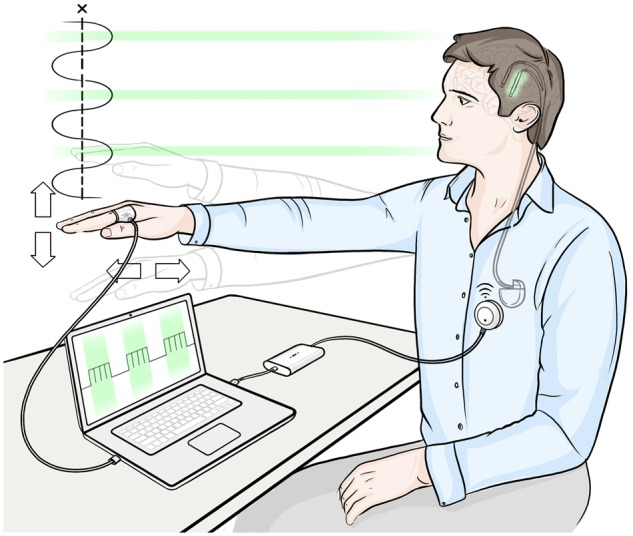
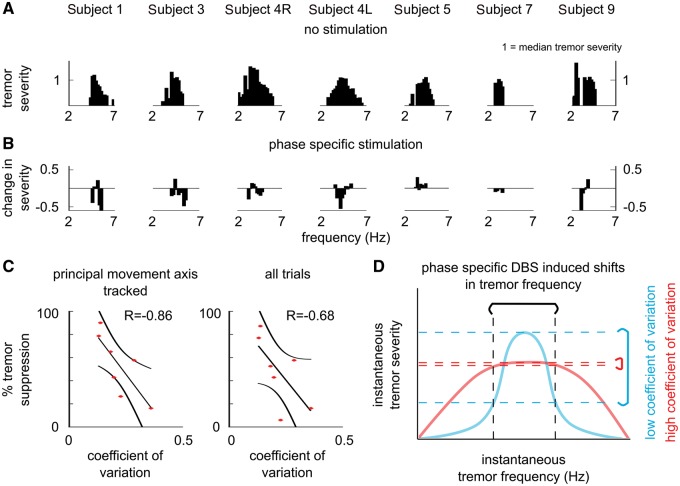
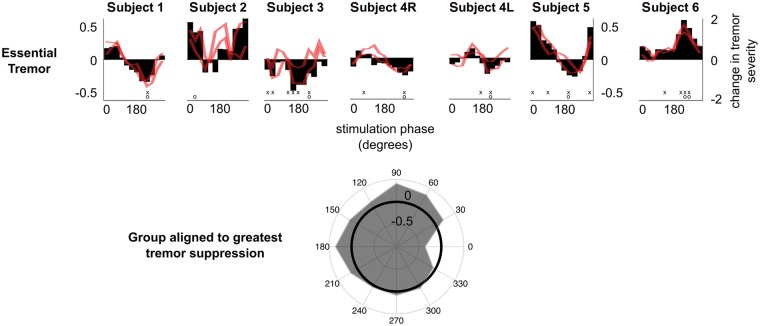
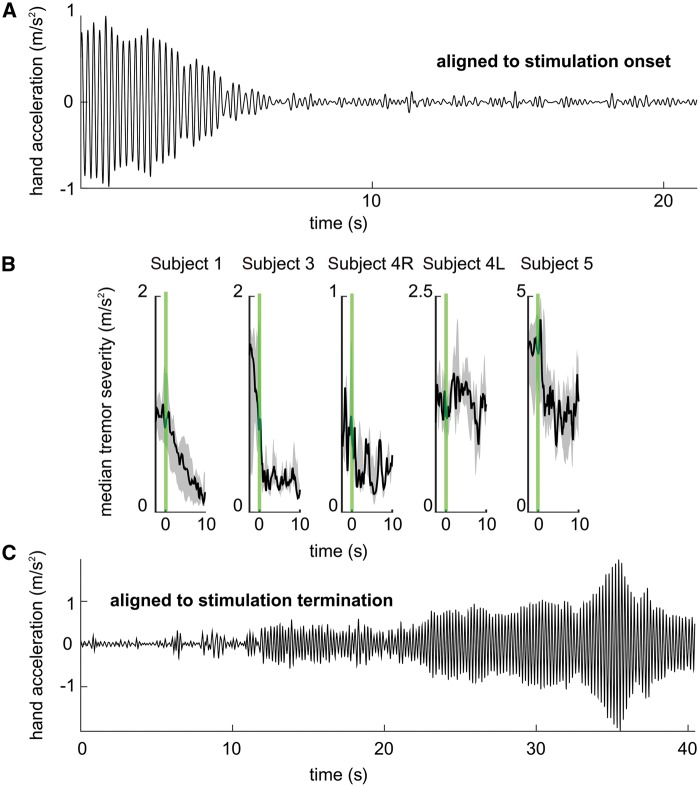
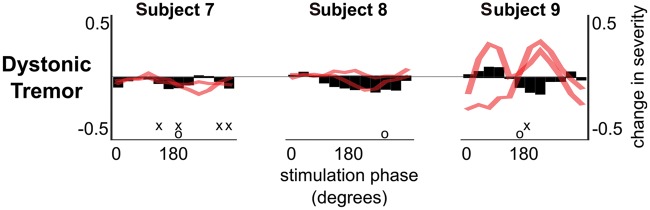
SEE MOLL AND ENGEL DOI101093/AWW308 FOR A SCIENTIFIC COMMENTARY ON THIS ARTICLE: Brain regions dynamically engage and disengage with one another to execute everyday actions from movement to decision making. Pathologies such as Parkinson's disease and tremor emerge when brain regions controlling movement cannot readily decouple, compromising motor function. Here, we propose a novel stimulation strategy that selectively regulates neural synchrony through phase-specific stimulation. We demonstrate for the first time the therapeutic potential of such a stimulation strategy for the treatment of patients with pathological tremor. Symptom suppression is achieved by delivering stimulation to the ventrolateral thalamus, timed according to the patient's tremor rhythm. Sustained locking of deep brain stimulation to a particular phase of tremor afforded clinically significant tremor relief (up to 87% tremor suppression) in selected patients with essential tremor despite delivering less than half the energy of conventional high frequency stimulation. Phase-specific stimulation efficacy depended on the resonant characteristics of the underlying tremor network. Selective regulation of neural synchrony through phase-locked stimulation has the potential to both increase the efficiency of therapy and to minimize stimulation-induced side effects.
有关本文的科学评论,请参阅莫尔和恩格尔的文献DOI101093/AWW308:大脑区域相互动态地参与和脱离,以执行从运动到决策的日常行动。当控制运动的大脑区域不能轻易解耦时,就会出现帕金森病和震颤等病理状况,从而损害运动功能。在此,我们提出一种新颖的刺激策略,通过相位特异性刺激选择性地调节神经同步性。我们首次证明了这种刺激策略对治疗病理性震颤患者的治疗潜力。通过根据患者的震颤节律向腹外侧丘脑传递刺激来实现症状抑制。尽管所传递的能量不到传统高频刺激的一半,但深部脑刺激持续锁定在震颤的特定相位,在部分特发性震颤患者中实现了临床上显著的震颤缓解(震颤抑制高达87%)。相位特异性刺激效果取决于潜在震颤网络的共振特性。通过锁相刺激选择性调节神经同步性,有可能提高治疗效率并将刺激引起的副作用降至最低。