Shoaib Hamrah Mohammad, Hashem Hamrah Mohammad, Ishii Hideki, Suzuki Susumu, Hussain Hamrah Mohammad, Hassan Hamrah Mohammad, Yisireyili Maimaiti, Kano Naoaki, Takeshita Kyosuke, Sakamoto Junichi, Murohara Toyoaki
Department of Cardiology, Nagoya University Graduate School of Medicine, Nagoya, Japan.
Dr.Mohammad Hashem Hamrah's Curative Clinic, Andkhoy, Afghanistan.
Nagoya J Med Sci. 2016 Dec;78(4):377-386. doi: 10.18999/nagjms.78.4.377.
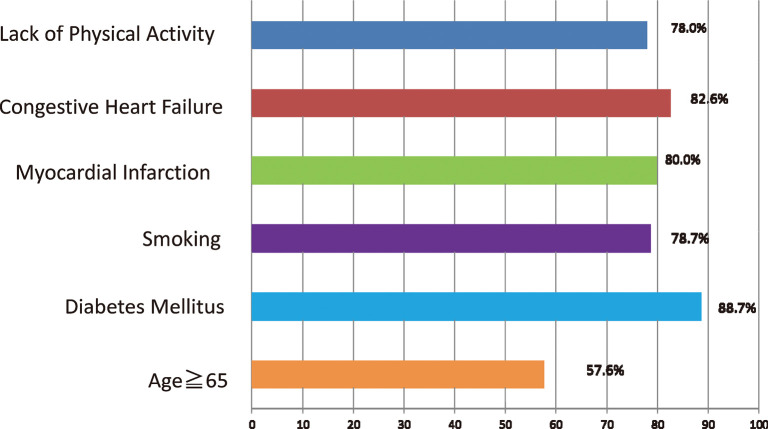
Proteinuria in hypertension is an early marker of renal disease and a predictor for the progression of end stage renal disease, and cardiovascular diseases. This study was designed to determine the prevalence of proteinuria and its association with cardiovascular risk factors among adult hypertensive patients in Afghanistan. Five hundred fifty-five patients with a high blood pressure recorded in an outpatient clinic in Andkhoy, Afghanistan from December 2014 to May 2015, were included in this study. Data obtained from each patient, included demographic characteristics, body mass index, blood pressure patterns, cardiovascular history, cardiovascular risk factors, comorbidity, and current drug-therapy. Dipstick screening for proteinuria was performed with reagent test strips. The mean age of the patients was 57.9 ± 13.3 years, and a female predominance was observed (n = 333, 60%). The prevalence of proteinuria was 67.2%. The predictors of proteinuria were found to be age ≥65 years (odds ratio [OR] 1.02, 95% confidence interval [CI] 1.00-1.04), smoking (OR 1.88, 95% CI 1.17-3.02), heart failure (OR 2.23, 95% CI 1.13-4.41), and diabetes mellitus (OR 3.41, 95% CI 1.49-7.81). In conclusion, this study shows that proteinuria is highly prevalent among hypertensive outpatients in an outpatient clinic in Andkhoy, Afghanistan, especially in those with high cardiovascular risk.
高血压患者的蛋白尿是肾脏疾病的早期标志物,也是终末期肾病和心血管疾病进展的预测指标。本研究旨在确定阿富汗成年高血压患者中蛋白尿的患病率及其与心血管危险因素的关联。2014年12月至2015年5月期间,在阿富汗安德胡伊的一家门诊诊所记录的555例高血压患者被纳入本研究。从每位患者获得的数据包括人口统计学特征、体重指数、血压模式、心血管病史、心血管危险因素、合并症和当前药物治疗情况。使用试剂测试条进行蛋白尿的试纸筛查。患者的平均年龄为57.9±13.3岁,观察到女性占优势(n = 333,60%)。蛋白尿的患病率为67.2%。发现蛋白尿的预测因素为年龄≥65岁(比值比[OR]1.02,95%置信区间[CI]1.00 - 1.04)、吸烟(OR 1.88,95% CI 1.17 - 3.02)、心力衰竭(OR 2.23,95% CI 1.13 - 4.41)和糖尿病(OR 3.41,95% CI 1.49 - 7.81)。总之,本研究表明,在阿富汗安德胡伊的一家门诊诊所中,高血压门诊患者中蛋白尿非常普遍,尤其是在那些心血管风险高的患者中。