Zhang Yu, Zhao Jianhua, Li Yali, Yuan Zhengjie, He Haiyan, Yang Haihe, Qu Haiyan, Ma Chenyan, Qu Shaohong
State Key Laboratory Breeding Base for Zhejiang Sustainable Pest and Disease Control, Institute of Virology and Biotechnology, Zhejiang Academy of Agricultural Sciences Hangzhou, China.
Front Plant Sci. 2016 Dec 8;7:1834. doi: 10.3389/fpls.2016.01834. eCollection 2016.
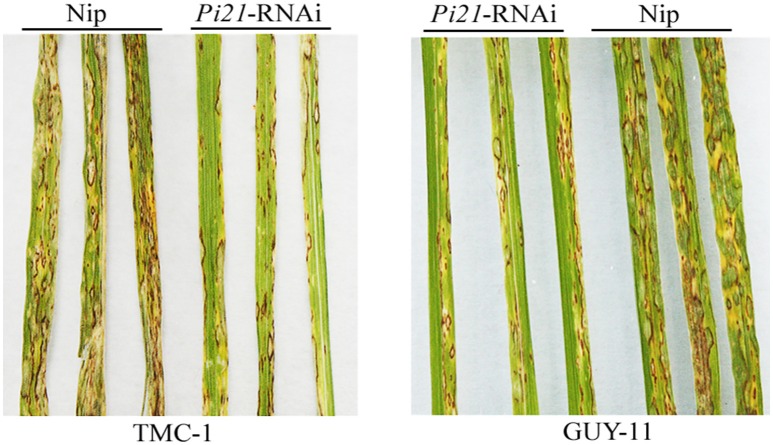
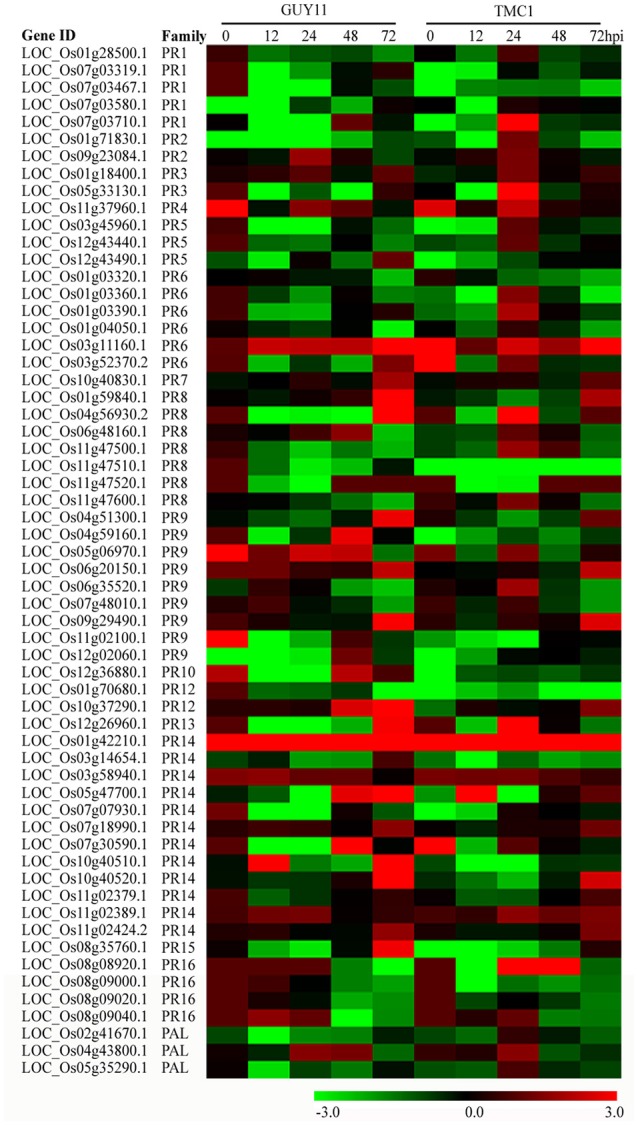
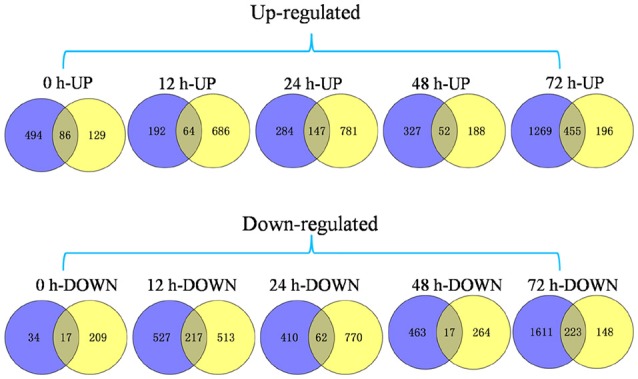
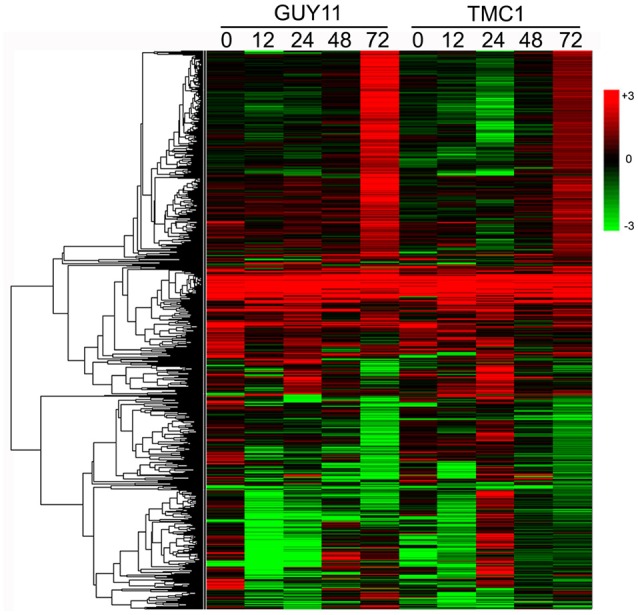
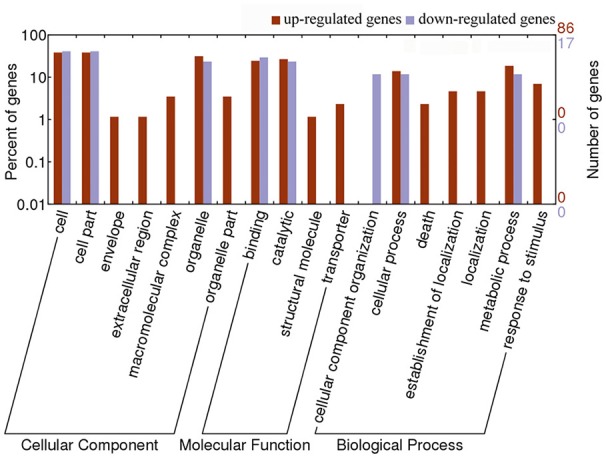
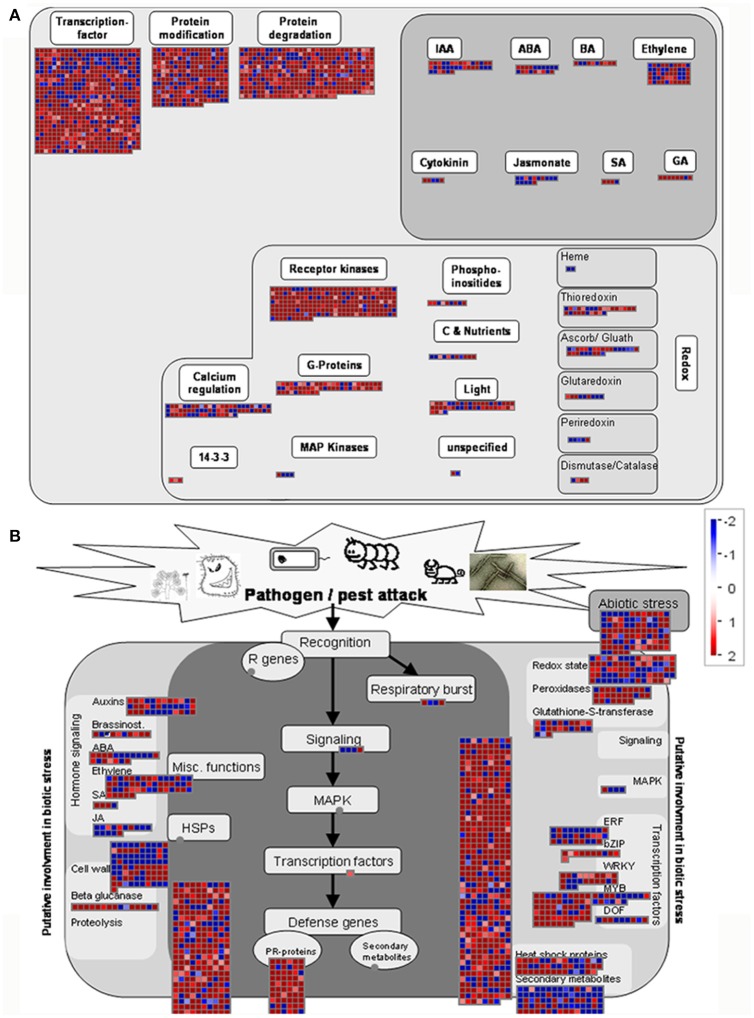
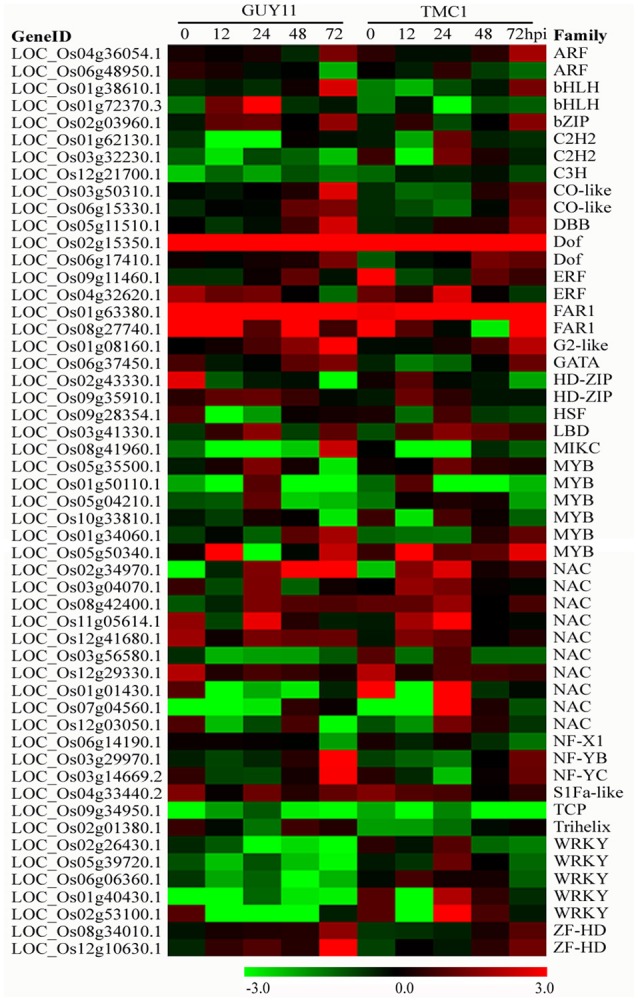
Rice blast disease is one of the most destructive rice diseases worldwide. The gene confers partial and durable resistance to . However, little is known regarding the molecular mechanisms of resistance mediated by the loss-of-function of . In this study, comparative transcriptome profiling of the -RNAi transgenic rice line and Nipponbare with infection at different time points (0, 12, 24, 48, and 72 hpi) were investigated using RNA sequencing. The results generated 43,222 unique genes mapped to the rice genome. In total, 1109 differentially expressed genes (DEGs) were identified between the -RNAi line and Nipponbare with infection, with 103, 281, 209, 69, and 678 DEGs at 0, 12, 24, 48, and 72 hpi, respectively. Functional analysis showed that most of the DEGs were involved in metabolism, transport, signaling, and defense. Among the genes assigned to plant-pathogen interaction, we identified 43 receptor kinase genes associated with pathogen-associated molecular pattern recognition and calcium ion influx. The expression levels of brassinolide-insensitive 1, flagellin sensitive 2, and elongation factor Tu receptor, ethylene (ET) biosynthesis and signaling genes, were higher in the -RNAi line than Nipponbare. This suggested that there was a more robust PTI response in -RNAi plants and that ET signaling was important to rice blast resistance. We also identified 53 transcription factor genes, including WRKY, NAC, DOF, and ERF families that show differential expression between the two genotypes. This study highlights possible candidate genes that may serve a function in the partial rice blast resistance mediated by the loss-of-function of and increase our understanding of the molecular mechanisms involved in partial resistance against .
稻瘟病是全球最具破坏性的水稻病害之一。该基因赋予对……的部分持久抗性。然而,关于由……功能丧失介导的抗性分子机制知之甚少。在本研究中,利用RNA测序研究了在不同时间点(接种后0、12、24、48和72小时)感染……的-RNAi转基因水稻系和日本晴的比较转录组图谱。结果产生了43222个映射到水稻基因组的独特基因。总共在感染……的-RNAi系和日本晴之间鉴定出1109个差异表达基因(DEG),在接种后0、12、24、48和72小时分别有103、281、209、69和678个DEG。功能分析表明,大多数DEG参与代谢、运输、信号传导和防御。在分配给植物-病原体相互作用的基因中,我们鉴定出43个与病原体相关分子模式识别和钙离子内流相关的受体激酶基因。油菜素内酯不敏感1、鞭毛蛋白敏感2和延伸因子Tu受体、乙烯(ET)生物合成和信号传导基因在-RNAi系中的表达水平高于日本晴。这表明-RNAi植物中存在更强的PTI反应,并且ET信号传导对稻瘟病抗性很重要。我们还鉴定出53个转录因子基因,包括WRKY、NAC、DOF和ERF家族,它们在两种基因型之间表现出差异表达。本研究突出了可能在由……功能丧失介导的部分稻瘟病抗性中起作用的候选基因,并增加了我们对参与部分抗……分子机制的理解。