Beijing Animal Husbandry Station, Beijing, China.
National Engineering Laboratory for Animal Breeding, Key Laboratory of Animal Genetics and Breeding of the Ministry of Agriculture, Beijing Key Laboratory for Animal Genetic Improvement, College of Animal Science and Technology, China Agricultural University, Beijing, China.
Sci Rep. 2016 Dec 23;6:39799. doi: 10.1038/srep39799.
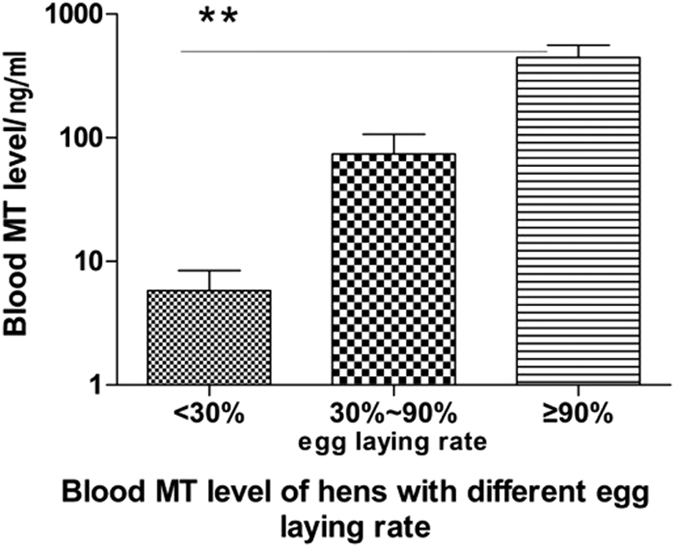
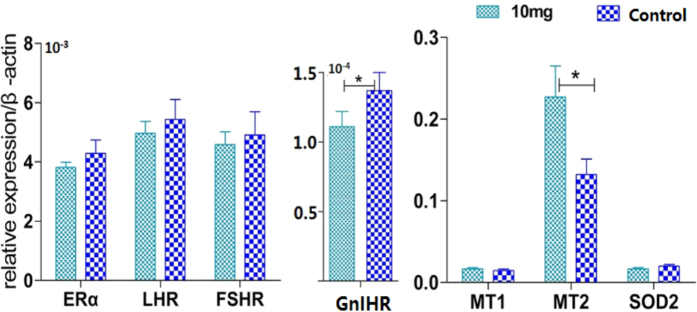
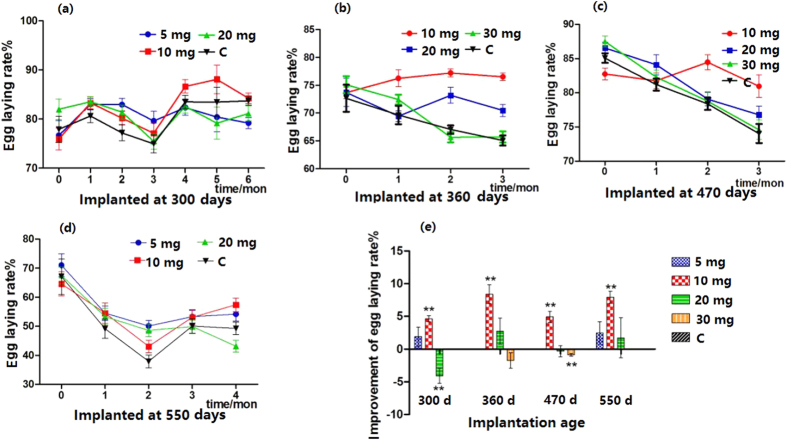
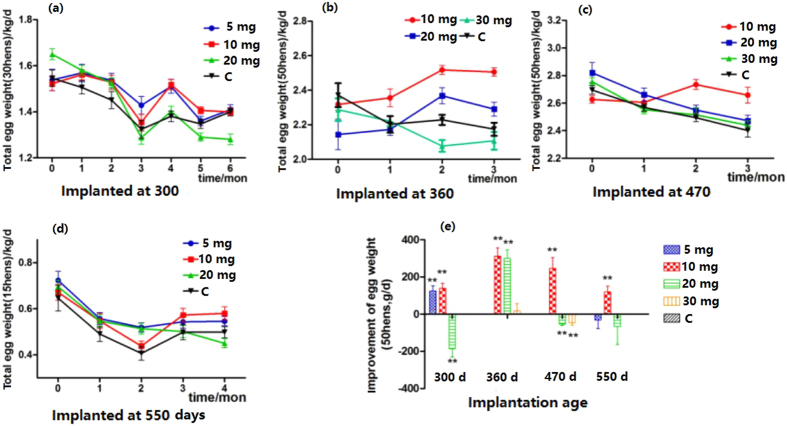
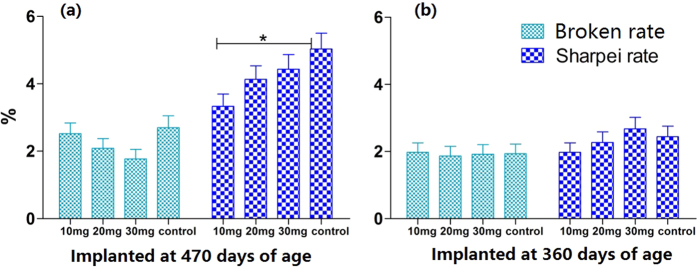
The egg-laying rates of hens approximately 470 days of age exhibited a positive correlation to blood melatonin levels. The hens with an egg-laying rate <30%, 30~90% and ≥90% had blood melatonin levels of 5.8 ± 2.6, 74.0 ± 32.9 and 445.9 ± 115.3 ng/ml, respectively. When 10 mg of melatonin was implanted into the hens at 300, 360, 470 and 550 days of age, the egg-laying rates increased 4.63 ± 0.46%, 8.38 ± 1.45%, 4.93 ± 0.85% and 7.93 ± 0.91%, respectively, compared to that of the controls. Melatonin implantation in hens at 300-470 days of age was observed to enhance egg production and reduce the rate of appearance of sharpei eggs. Melatonin (10 mg) implanted in hens 360 days of age did not influence the blood levels of progesterone (P4) or the gene expression levels of ovarian follicle stimulating hormone receptor (FSHR), luteinizing hormone receptor (LHR), oestradiol receptor alpha (ERα), superoxide dismutase 2 (SOD2) or melatonin receptor 1 (MT1). In contrast, melatonin significantly elevated the serum oestradiol-17β (E2) content, down-regulated the gene expression of gonadotropin-inhibitory hormone receptor (GnIHR), and enhanced the expression of melatonin receptor 2 (MT2). This result indicates that the improved egg-laying rate by melatonin was the result of increased serum oestradiol and decreased ovarian GnIHR. These alterations may be mediated by MT2 activation.
产蛋母鸡在 470 日龄时的产蛋率与血液褪黑素水平呈正相关。产蛋率<30%、30%~90%和≥90%的母鸡血液褪黑素水平分别为 5.8±2.6、74.0±32.9 和 445.9±115.3ng/ml。在 300、360、470 和 550 日龄时,给母鸡植入 10mg 褪黑素后,产蛋率分别比对照组提高了 4.63±0.46%、8.38±1.45%、4.93±0.85%和 7.93±0.91%。在 300-470 日龄时给母鸡植入褪黑素可提高产蛋率,降低沙皮鸡蛋的出现率。在 360 日龄时给母鸡植入褪黑素(10mg)不会影响孕激素(P4)的血液水平或卵巢促卵泡激素受体(FSHR)、促黄体生成素受体(LHR)、雌二醇受体α(ERα)、超氧化物歧化酶 2(SOD2)或褪黑素受体 1(MT1)的基因表达水平。相反,褪黑素显著提高了血清雌二醇-17β(E2)含量,下调了促性腺激素抑制激素受体(GnIHR)的基因表达,并增强了褪黑素受体 2(MT2)的表达。这一结果表明,褪黑素提高产蛋率是由于血清雌二醇增加和卵巢 GnIHR 减少所致。这些变化可能是通过 MT2 激活介导的。