Augustin Christoph M, Crozier Andrew, Neic Aurel, Prassl Anton J, Karabelas Elias, Ferreira da Silva Tiago, Fernandes Joao F, Campos Fernando, Kuehne Titus, Plank Gernot
Institute of Biophysics, Medical University of Graz, Harrachgasse 21/IV, 8010 Graz, Austria.
Department of Mechanical Engineering, University of California, 5126 Etcheverry Hall, Berkeley, CA 94720, USA.
Europace. 2016 Dec;18(suppl 4):iv121-iv129. doi: 10.1093/europace/euw369.
Models of blood flow in the left ventricle (LV) and aorta are an important tool for analysing the interplay between LV deformation and flow patterns. Typically, image-based kinematic models describing endocardial motion are used as an input to blood flow simulations. While such models are suitable for analysing the hemodynamic status quo, they are limited in predicting the response to interventions that alter afterload conditions. Mechano-fluidic models using biophysically detailed electromechanical (EM) models have the potential to overcome this limitation, but are more costly to build and compute. We report our recent advancements in developing an automated workflow for the creation of such CFD ready kinematic models to serve as drivers of blood flow simulations.
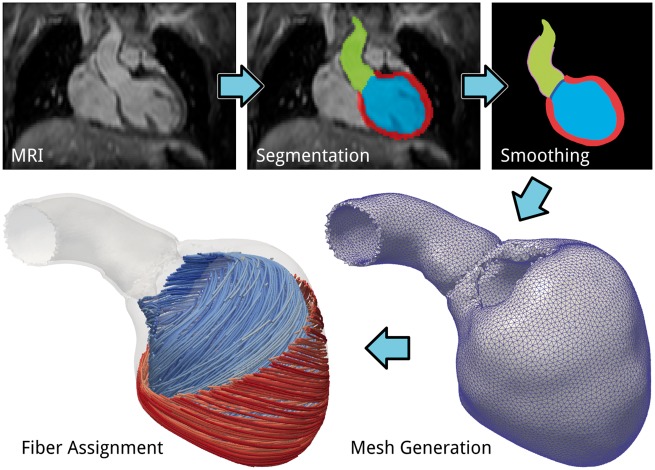
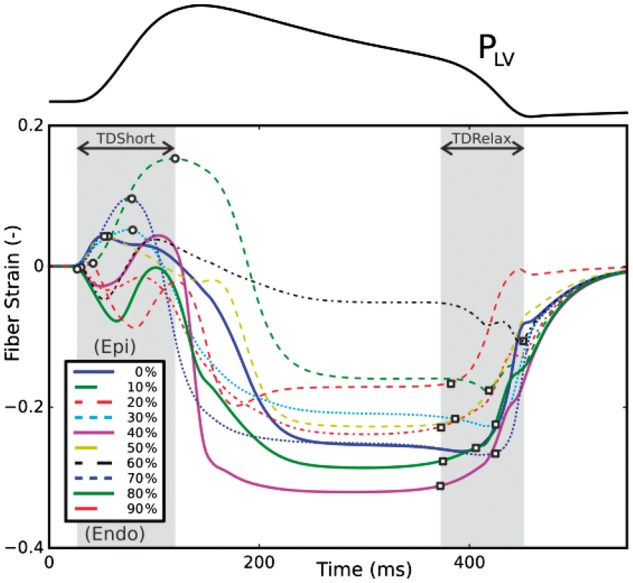
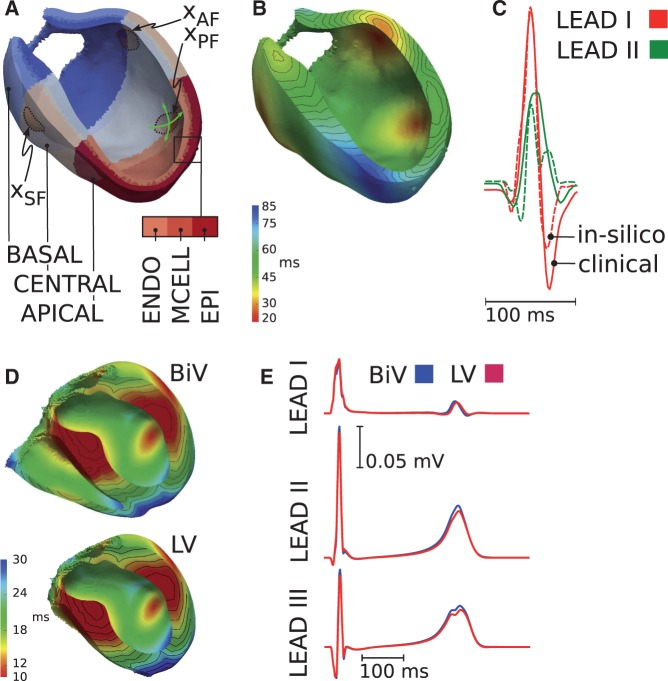
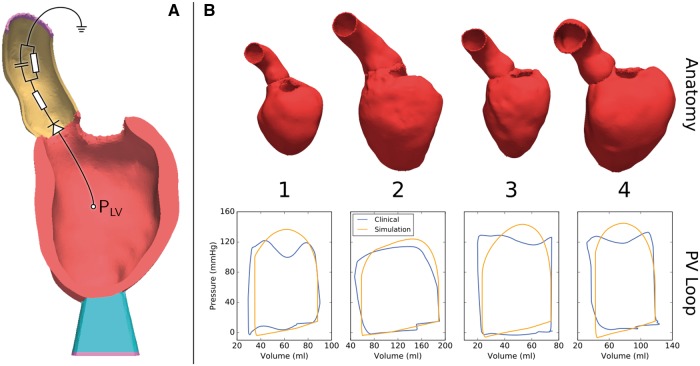
EM models of the LV and aortic root were created for four pediatric patients treated for either aortic coarctation or aortic valve disease. Using MRI, ECG and invasive pressure recordings, anatomy as well as electrophysiological, mechanical and circulatory model components were personalized.
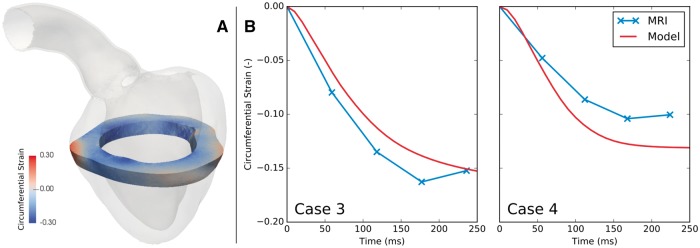
The implemented modeling pipeline was highly automated and allowed model construction and execution of simulations of a patient's heartbeat within 1 day. All models reproduced clinical data with acceptable accuracy.
Using the developed modeling workflow, the use of EM LV models as driver of fluid flow simulations is becoming feasible. While EM models are costly to construct, they constitute an important and nontrivial step towards fully coupled electro-mechano-fluidic (EMF) models and show promise as a tool for predicting the response to interventions which affect afterload conditions.
左心室(LV)和主动脉内血流模型是分析左心室变形与血流模式之间相互作用的重要工具。通常,描述心内膜运动的基于图像的运动学模型被用作血流模拟的输入。虽然此类模型适用于分析血流动力学现状,但在预测对改变后负荷条件的干预措施的反应方面存在局限性。使用具有生物物理详细信息的机电(EM)模型的机械流体模型有潜力克服这一局限性,但构建和计算成本更高。我们报告了我们在开发一种自动化工作流程方面的最新进展,该工作流程用于创建此类可用于计算流体动力学(CFD)的运动学模型,以作为血流模拟的驱动因素。
为四名接受主动脉缩窄或主动脉瓣疾病治疗的儿科患者创建了左心室和主动脉根部的EM模型。利用磁共振成像(MRI)、心电图(ECG)和侵入性压力记录,对解剖结构以及电生理、机械和循环模型组件进行了个性化设置。
所实施的建模流程高度自动化,能够在1天内完成患者心跳模拟的模型构建和执行。所有模型均以可接受的精度再现了临床数据。
使用所开发的建模工作流程,将EM左心室模型用作流体流动模拟的驱动因素变得可行。虽然EM模型构建成本高昂,但它们是迈向完全耦合的机电流体(EMF)模型的重要且关键的一步,并有望成为预测对影响后负荷条件的干预措施反应的工具。