Chaiprasongsuk Anyamanee, Lohakul Jinaphat, Soontrapa Kitipong, Sampattavanich Somponnat, Akarasereenont Pravit, Panich Uraiwan
Department of Pharmacology (A.C., J.L., K.S., S.S., P.A. and U.P.) and Center of Applied Thai Traditional Medicine, Faculty of Medicine (P.A.), Siriraj Hospital, Mahidol University, Bangkok, Thailand.
Department of Pharmacology (A.C., J.L., K.S., S.S., P.A. and U.P.) and Center of Applied Thai Traditional Medicine, Faculty of Medicine (P.A.), Siriraj Hospital, Mahidol University, Bangkok, Thailand
J Pharmacol Exp Ther. 2017 Mar;360(3):388-398. doi: 10.1124/jpet.116.238048. Epub 2016 Dec 23.
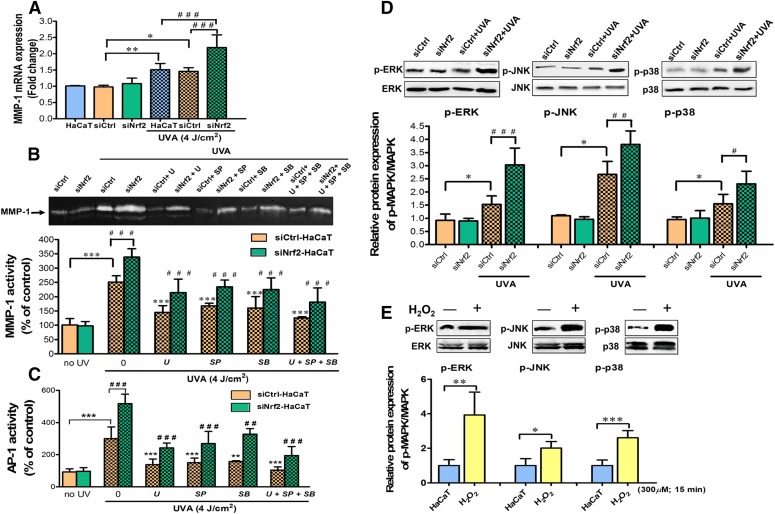
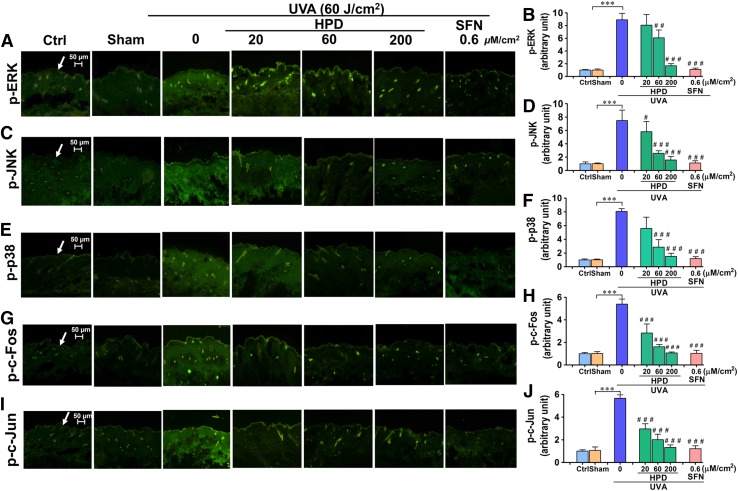
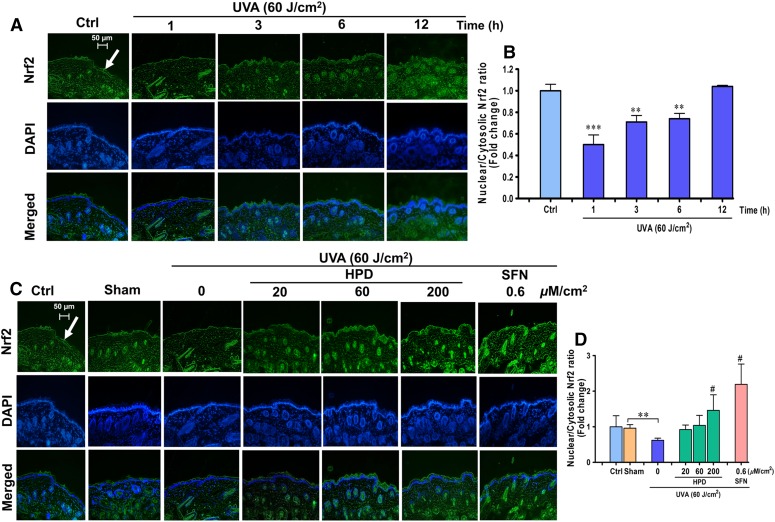
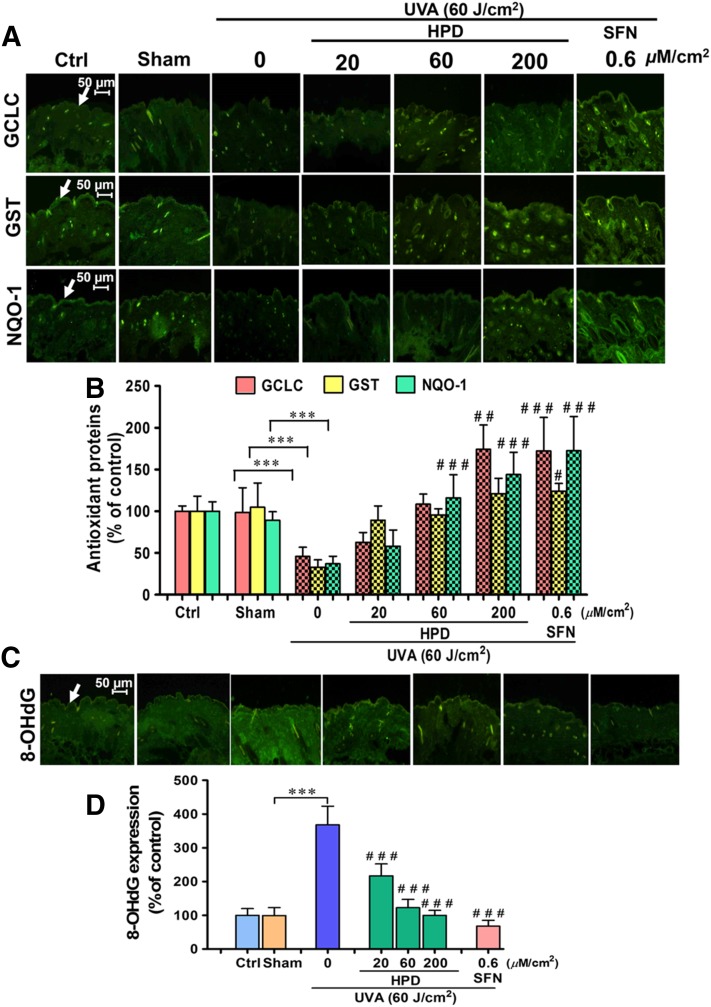
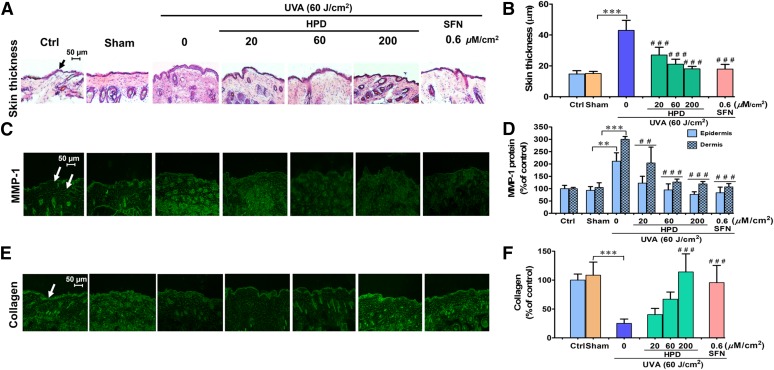
UVA irradiation plays a role in premature aging of the skin through triggering oxidative stress-associated stimulation of matrix metalloproteinase-1 (MMP-1) responsible for collagen degradation, a hallmark of photoaged skin. Compounds that can activate nuclear factor E2-related factor 2 (Nrf2), a transcription factor regulating antioxidant gene expression, should therefore serve as effective antiphotoaging agents. We investigated whether genetic silencing of Nrf2 could relieve UVA-mediated MMP-1 upregulation via activation of mitogen-activated protein kinase (MAPK)/activator protein 1 (AP-1) signaling using human keratinocyte cell line (HaCaT). Antiphotoaging effects of hispidulin (HPD) and sulforaphane (SFN) were assessed on their abilities to activate Nrf2 in controlling MMP-1 and collagen expressions in association with phosphorylation of MAPKs (extracellular signal-regulated kinase, c-Jun N-terminal kinase, and p38), c-Jun, and c-Fos, using the skin of BALB/c mice subjected to repetitive UVA irradiation. Our findings suggested that depletion of Nrf2 promoted both mRNA expression and activity of MMP-1 in the UVA-irradiated HaCaT cells. Treatment of Nrf2 knocked-down HaCaT cells with MAPK inhibitors significantly suppressed UVA-induced MMP-1 and AP-1 activities. Moreover, pretreatment of the mouse skin with HPD and SFN, which could activate Nrf2, provided protective effects against UVA-mediated MMP-1 induction and collagen depletion in correlation with the decreased levels of phosphorylated MAPKs, c-Jun, and c-Fos in the mouse skin. In conclusion, Nrf2 could influence UVA-mediated MMP-1 upregulation through the MAPK/AP-1 signaling cascades. HPD and SFN may therefore represent promising antiphotoaging candidates.
紫外线A(UVA)照射通过引发与氧化应激相关的基质金属蛋白酶-1(MMP-1)刺激,在皮肤过早老化中起作用,MMP-1负责胶原蛋白降解,这是光老化皮肤的一个标志。因此,能够激活核因子E2相关因子2(Nrf2)的化合物,即一种调节抗氧化基因表达的转录因子,应可作为有效的抗光老化剂。我们使用人角质形成细胞系(HaCaT)研究了Nrf2基因沉默是否能通过激活丝裂原活化蛋白激酶(MAPK)/活化蛋白1(AP-1)信号通路来缓解UVA介导的MMP-1上调。使用反复接受UVA照射的BALB/c小鼠皮肤,评估了木犀草素(HPD)和萝卜硫素(SFN)在激活Nrf2以控制MMP-1和胶原蛋白表达方面的抗光老化作用,以及它们与MAPKs(细胞外信号调节激酶、c-Jun氨基末端激酶和p38)、c-Jun和c-Fos磷酸化的相关性。我们的研究结果表明,在UVA照射的HaCaT细胞中,Nrf2的缺失促进了MMP-1的mRNA表达和活性。用MAPK抑制剂处理Nrf2敲低的HaCaT细胞可显著抑制UVA诱导的MMP-1和AP-1活性。此外,用能够激活Nrf2的HPD和SFN预处理小鼠皮肤,可提供针对UVA介导的MMP-1诱导和胶原蛋白消耗的保护作用,这与小鼠皮肤中磷酸化MAPKs、c-Jun和c-Fos水平的降低相关。总之,Nrf2可能通过MAPK/AP-1信号级联影响UVA介导的MMP-1上调。因此,HPD和SFN可能是有前景的抗光老化候选物。