Wu Junqing, Hu Gang, Dong Yuqing, Ma Ruye, Yu Zhijie, Jiang Songfu, Han Yixiang, Yu Kang, Zhang Shenghui
Department of Hematology, Wenzhou Key Laboratory of Hematology, The First Affiliated Hospital of Wenzhou Medical University, Wenzhou, China.
Laboratory of Internal Medicine, The First Affiliated Hospital of Wenzhou Medical University, Wenzhou, China.
J Cell Mol Med. 2017 Jun;21(6):1171-1181. doi: 10.1111/jcmm.13049. Epub 2016 Dec 27.
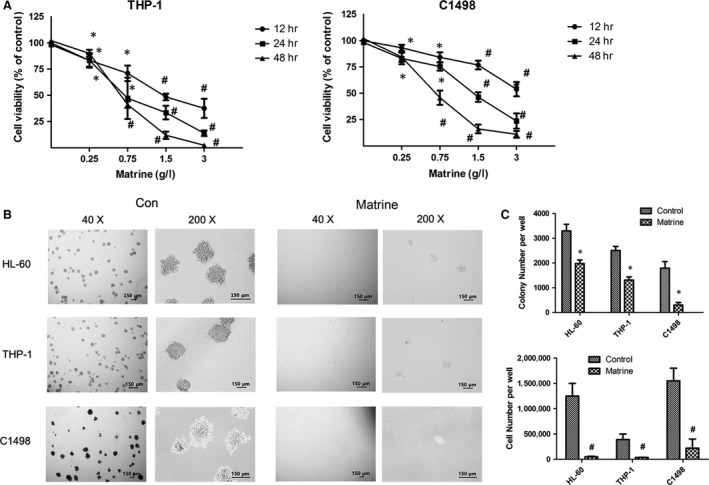
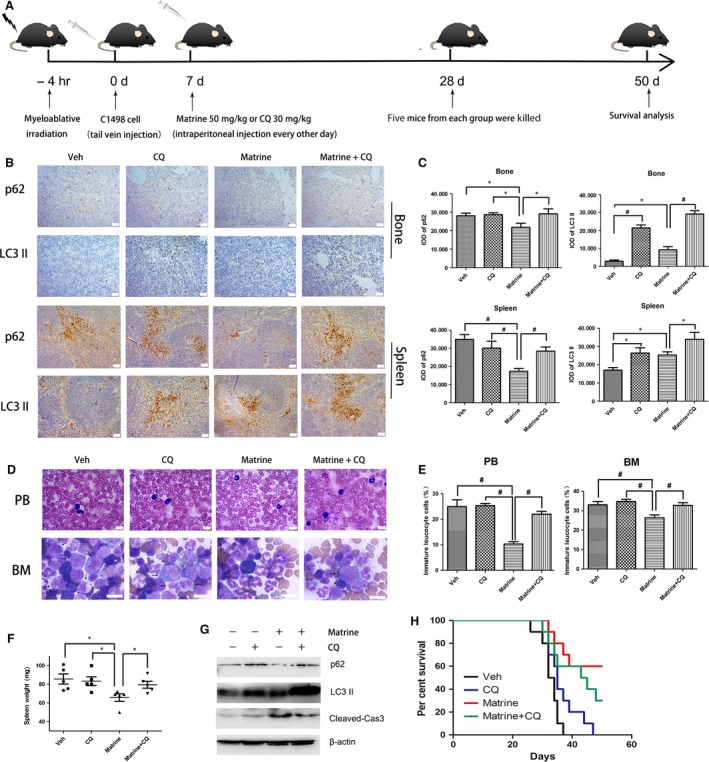
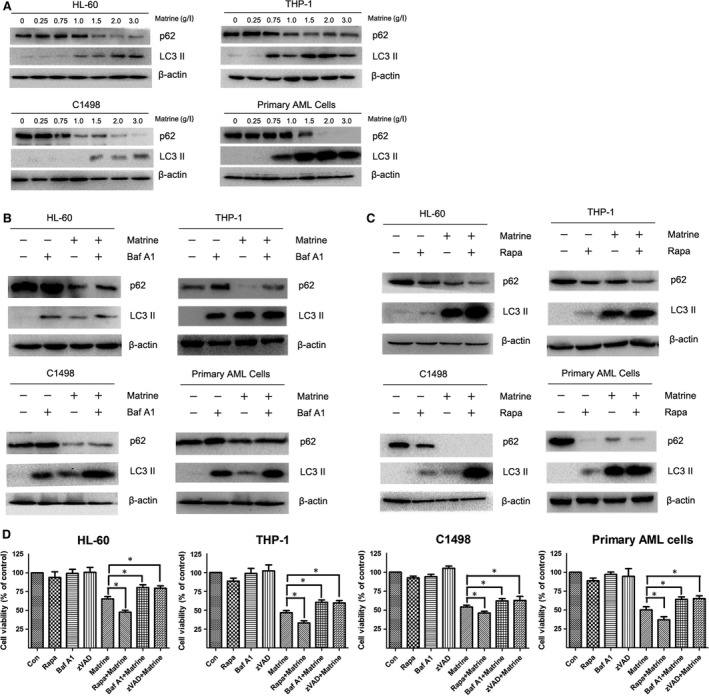
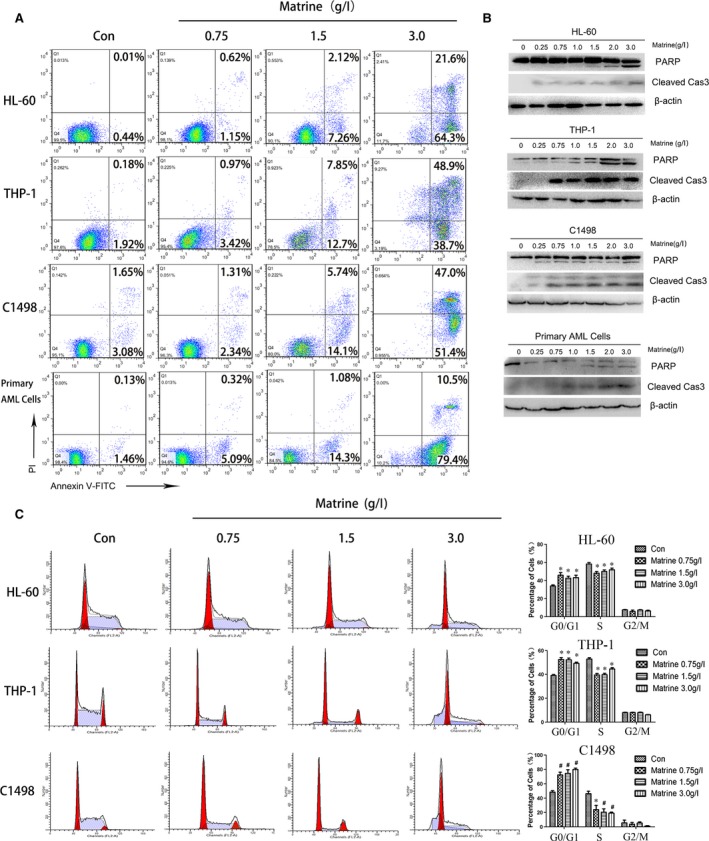
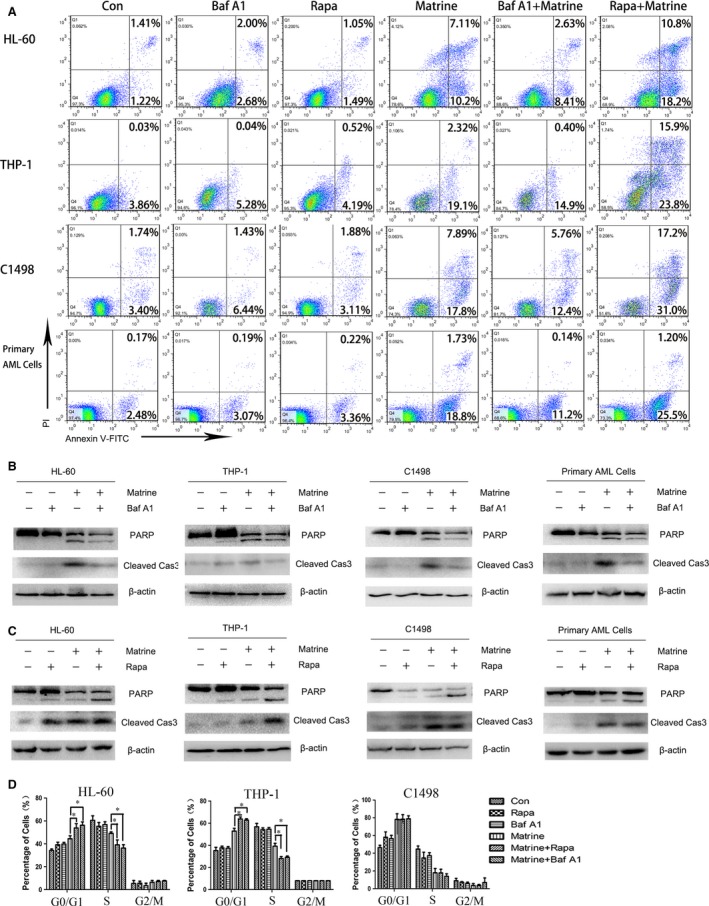
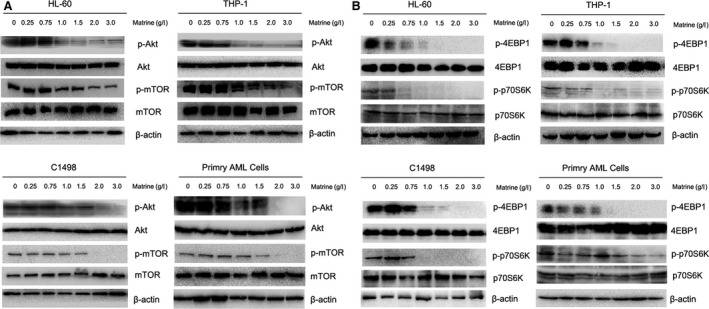
Pharmacological modulation of autophagy has been referred to as a promising therapeutic strategy for cancer. Matrine, a main alkaloid extracted from Sophora flavescens Ait, has antitumour activity against acute myelocytic leukaemia (AML). Whether autophagy is involved in antileukaemia activity of matrine remains unobvious. In this study, we demonstrated that matrine inhibited cell viability and colony formation via inducing apoptosis and autophagy in AML cell lines HL-60, THP-1 and C1498 as well as primary AML cells. Matrine promoted caspase-3 and PARP cleavage dose-dependently. Matrine up-regulated the level of LC3-II and down-regulated the level of SQSTM1/p62 in a dose-dependent way, indicating that autophagy should be implicated in anti-AML effect of matrine. Furthermore, the autophagy inhibitor bafilomycin A1 relieved the cytotoxicity of matrine by blocking the autophagic flux, while the autophagy promoter rapamycin enhanced the cytotoxicity of matrine. Additionally, matrine inhibited the phosphorylation of Akt, mTOR and their downstream substrates p70S6K and 4EBP1, which led to the occurrence of autophagy. In vivo study demonstrated that autophagy was involved in antileukaemia effect of matrine in C57BL/6 mice bearing murine AML cell line C1498, and the survival curves showed that mice did benefit from treatment with matrine. Collectively, our findings indicate that matrine exerts antitumour effect through apoptosis and autophagy, and the latter one might be a potential therapeutic strategy for AML.
自噬的药理学调节已被认为是一种有前景的癌症治疗策略。苦参碱是从苦参中提取的主要生物碱,对急性髓细胞白血病(AML)具有抗肿瘤活性。苦参碱的抗白血病活性是否涉及自噬仍不明确。在本研究中,我们证明苦参碱通过诱导AML细胞系HL-60、THP-1和C1498以及原发性AML细胞的凋亡和自噬来抑制细胞活力和集落形成。苦参碱剂量依赖性地促进caspase-3和PARP的裂解。苦参碱以剂量依赖性方式上调LC3-II水平并下调SQSTM1/p62水平,表明自噬应参与苦参碱的抗AML作用。此外,自噬抑制剂巴弗洛霉素A1通过阻断自噬流减轻了苦参碱的细胞毒性,而自噬促进剂雷帕霉素增强了苦参碱的细胞毒性。此外,苦参碱抑制Akt、mTOR及其下游底物p70S6K和4EBP1的磷酸化,从而导致自噬的发生。体内研究表明自噬参与了苦参碱对携带小鼠AML细胞系C1498的C57BL/6小鼠的抗白血病作用,生存曲线显示小鼠确实从苦参碱治疗中受益。总的来说,我们的研究结果表明苦参碱通过凋亡和自噬发挥抗肿瘤作用,并且后者可能是AML的一种潜在治疗策略。