Plant Leigh D, Marks Jeremy D, Goldstein Steve An
Department of Biochemistry, Brandeis University, Waltham, United States.
Department of Pediatrics, University of Chicago, Chicago, United States.
Elife. 2016 Dec 28;5:e20054. doi: 10.7554/eLife.20054.
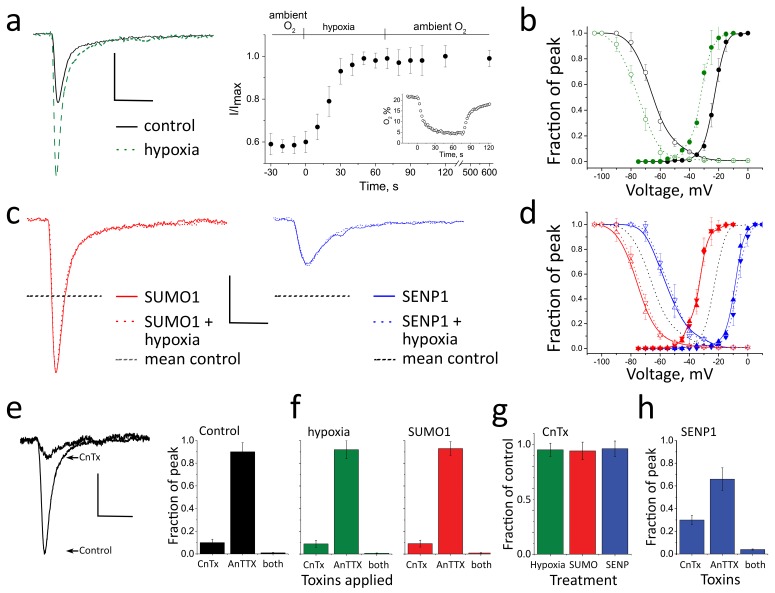
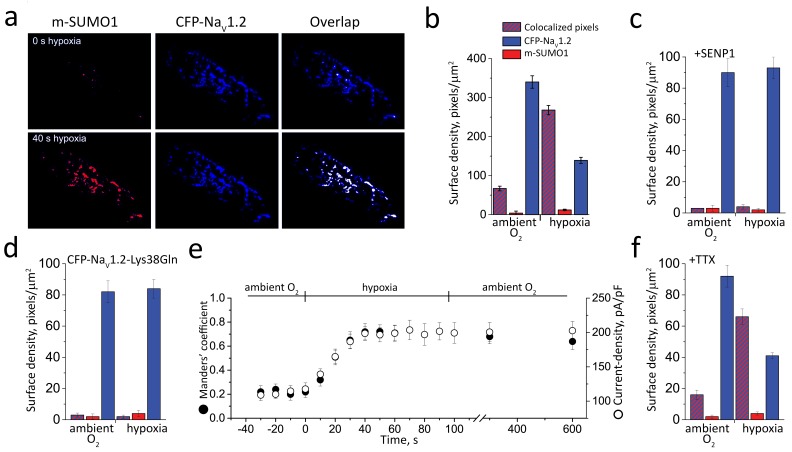
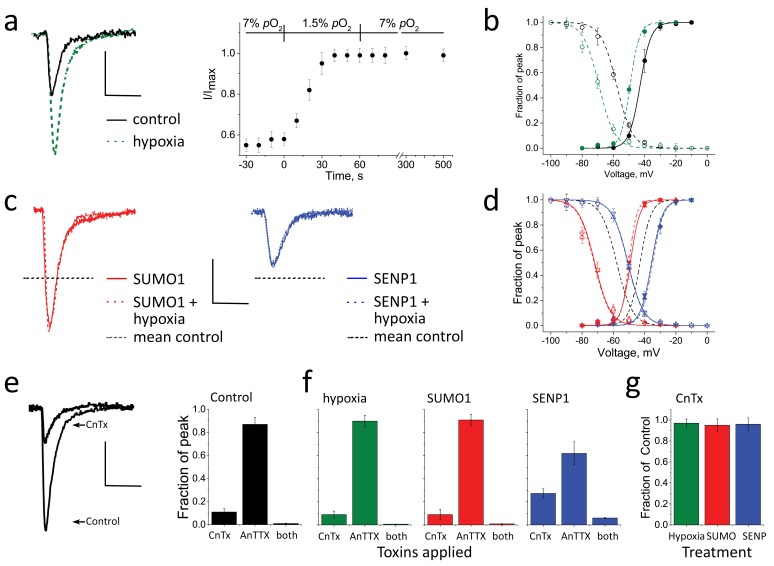
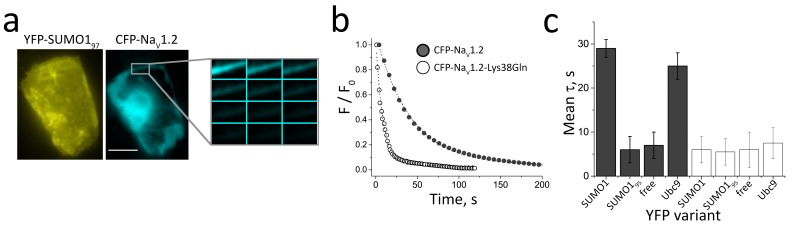
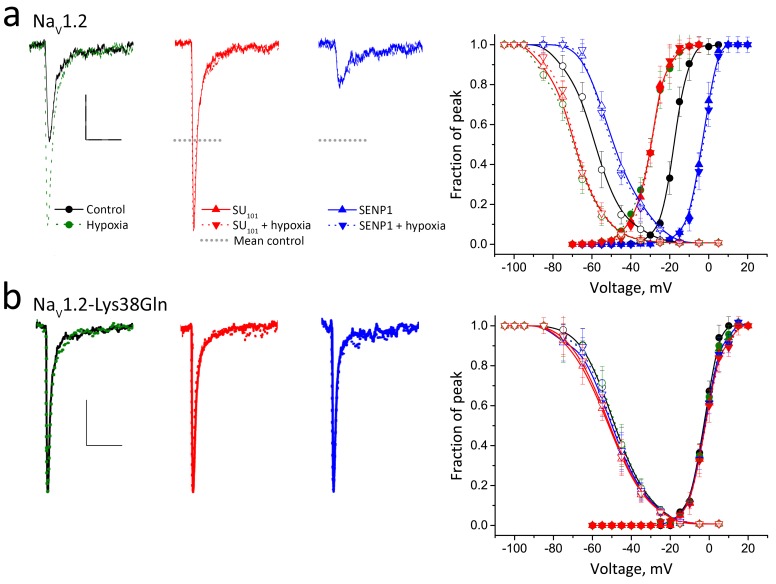
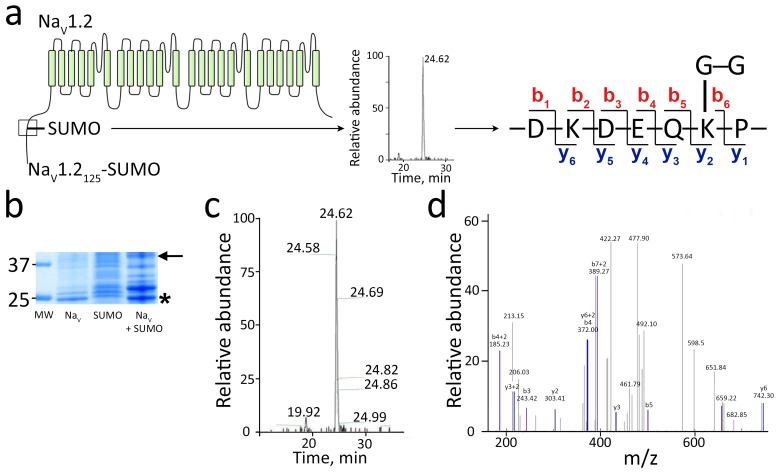
The mechanism for the earliest response of central neurons to hypoxia-an increase in voltage-gated sodium current ()-has been unknown. Here, we show that hypoxia activates the Small Ubiquitin-like Modifier (SUMO) pathway in rat cerebellar granule neurons (CGN) and that SUMOylation of Na1.2 channels increases . The time-course for SUMOylation of single Na1.2 channels at the cell surface and changes in coincide, and both are prevented by mutation of Na1.2-Lys38 or application of a deSUMOylating enzyme. Within 40 s, hypoxia-induced linkage of SUMO1 to the channels is complete, shifting the voltage-dependence of channel activation so that depolarizing steps evoke larger sodium currents. Given the recognized role of in hypoxic brain damage, the SUMO pathway and Na1.2 are identified as potential targets for neuroprotective interventions.
中枢神经元对缺氧的最早反应机制——电压门控钠电流()增加——一直未知。在此,我们表明缺氧激活大鼠小脑颗粒神经元(CGN)中的小泛素样修饰物(SUMO)途径,并且Na1.2通道的SUMO化增加了。细胞表面单个Na1.2通道的SUMO化时间进程与的变化一致,并且两者都可通过Na1.2-Lys38突变或应用去SUMO化酶来阻止。在40秒内,缺氧诱导的SUMO1与通道的连接完成,改变了通道激活的电压依赖性,使得去极化步骤引发更大的钠电流。鉴于在缺氧性脑损伤中的公认作用,SUMO途径和Na1.2被确定为神经保护干预的潜在靶点。