Fleming Irma D, Krezalek Monika A, Belogortseva Natalia, Zaborin Alexander, Defazio Jennifer, Chandrasekar Laxmipradha, Actis Luis A, Zaborina Olga, Alverdy John C
From the Center for Surgical Infection Research and Therapeutics (I.D.F., M.A.K., N.B., A.Z., J.D., L.C., O.Z., J.C.A.), University of Chicago Pritzker School of Medicine, Chicago, Illinois; and Department of Microbiology (L.A.A.), Miami University, Oxford, Ohio.
J Trauma Acute Care Surg. 2017 Mar;82(3):557-565. doi: 10.1097/TA.0000000000001338.
Acinetobacter baumannii has emerged as an increasingly important and successful opportunistic human pathogen due to its ability to withstand harsh environmental conditions, its characteristic virulence factors, and quick adaptability to stress.
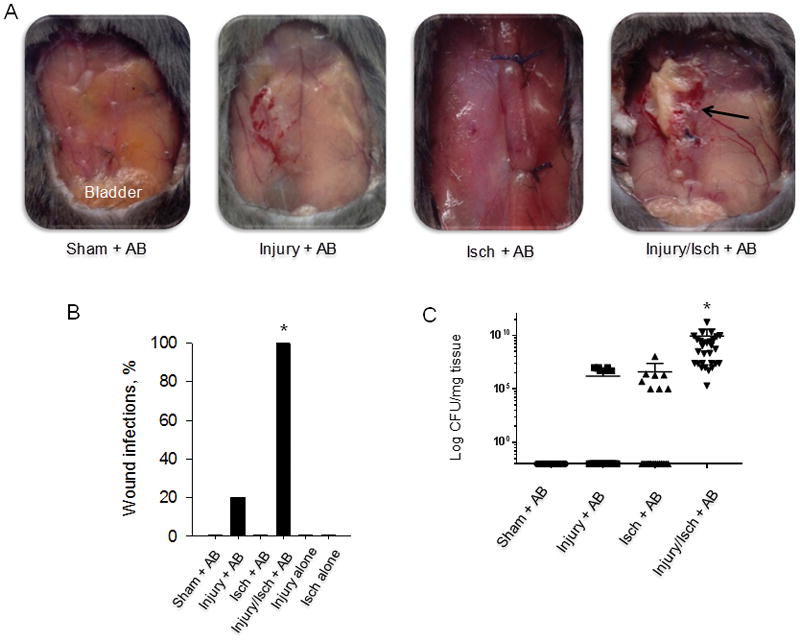
We developed a clinically relevant murine model of A. baumannii traumatic wound infection to determine the effect of local wound environment on A. baumannii virulence. Mice underwent rectus muscle crush injury combined with ischemia created by epigastric vessel ligation, followed by A. baumannii inoculation. Reiterative experiments were performed using (1) a mutant deficient in the production of the siderophore acinetobactin, or (2) iron supplementation of the wound milieu. Mice were euthanized 7 days later, and rectus muscle analyzed for signs of clinical infection, HIF1α accumulation, bacterial abundance, and colony morphotype. To determine the effect of wound milieu on bacterial virulence, Galleria mellonella infection model was used.
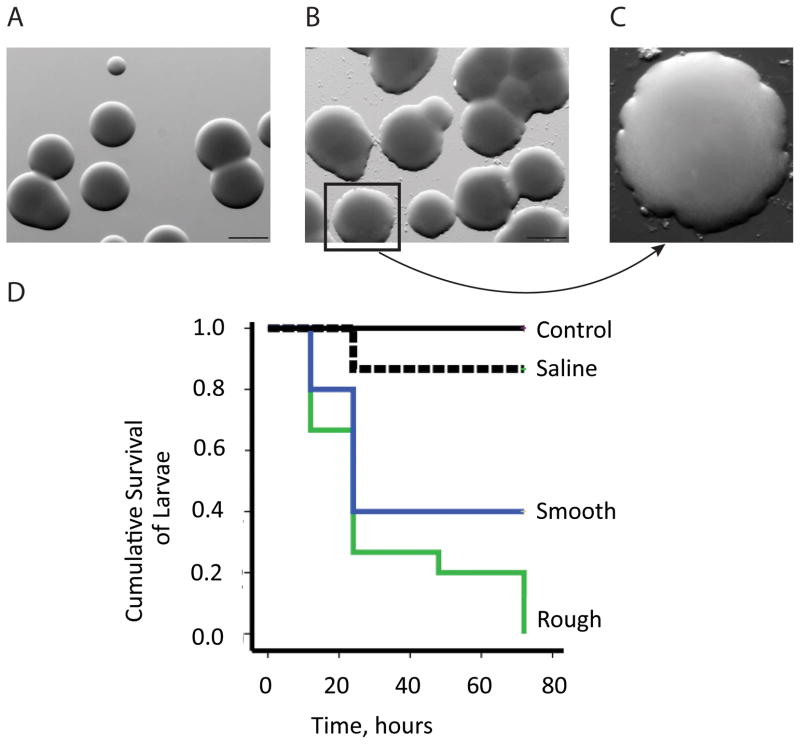
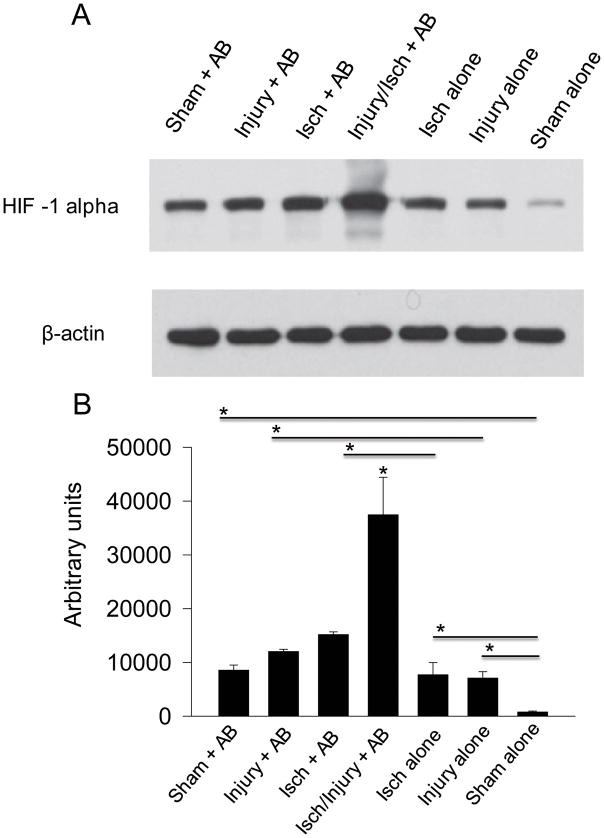
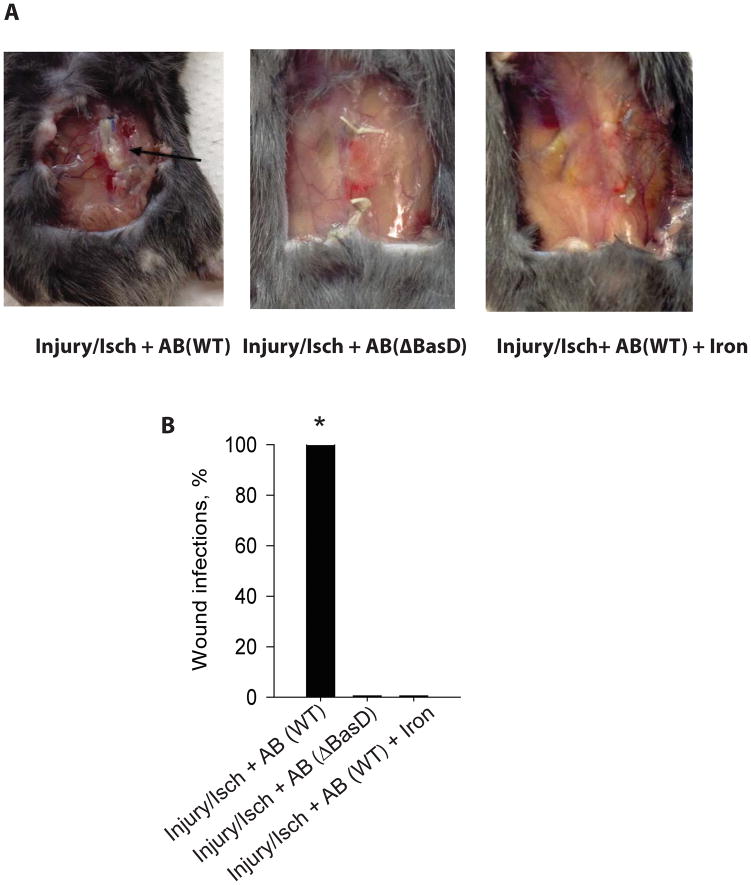
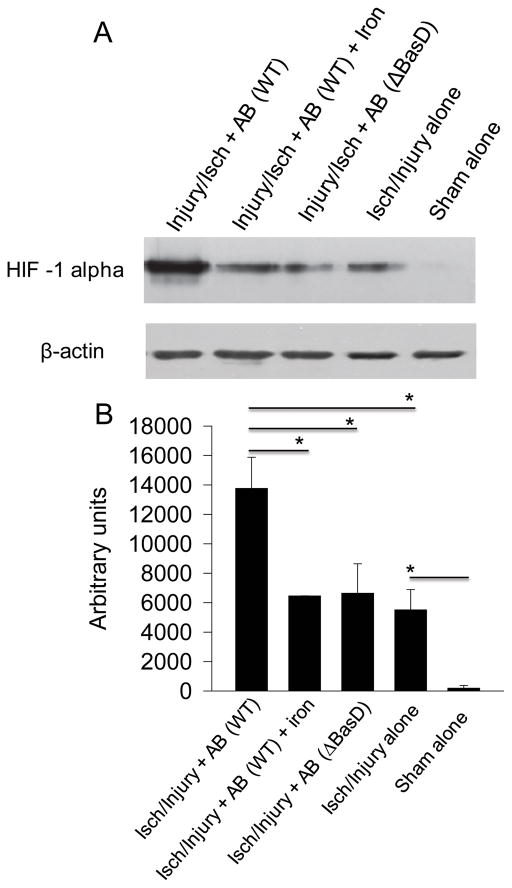
The combination of rectus muscle injury with ischemia and A. baumannii inoculation resulted in 100% incidence of clinical wound infection that was significantly higher compared with other groups (n = 15/group, p < 0.0001). The highest level of wound infection was accompanied by the highest level of A. baumannii colonization (p < 0.0001) and the highest degree of HIF1α accumulation (p < 0.05). A. baumannii strains isolated from injured/ischemic muscle with clinical infection displayed a rough morphotype and a higher degree of virulence as judged by G. mellonella killing assay as compared with smooth morphotype colonies isolated from injured muscle without clinical infection (100% vs. 60%, n = 30 Log-Rank test, p = 0.0422). Iron supplementation prevented wound infection (n = 30, p < 0.0001) and decreased HIF1α (p = 0.039643). Similar results of decrease in wound infection and HIF1α were obtained when A. baumannii wild type was replaced with its derivative mutant [INCREMENT]BasD deficient in acinetobactin production.
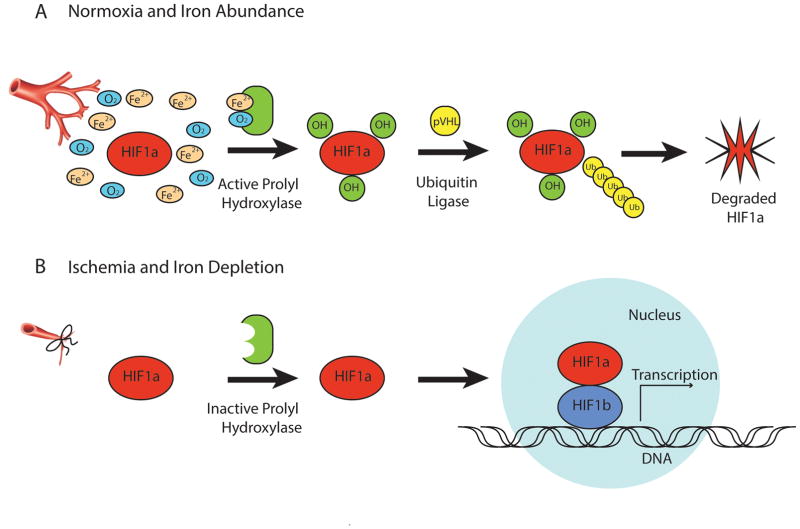
The ability of A. baumannii to cause infections in traumatized wound relies on its ability to scavenge iron and can be prevented by iron supplementation to the wound milieu.
鲍曼不动杆菌已成为一种日益重要且成功的人类机会致病菌,因其能够耐受恶劣环境条件、具有独特的毒力因子以及对压力的快速适应性。
我们建立了一种与临床相关的鲍曼不动杆菌创伤性伤口感染小鼠模型,以确定局部伤口环境对鲍曼不动杆菌毒力的影响。小鼠接受腹直肌挤压伤并结合通过结扎腹壁血管造成的缺血,随后接种鲍曼不动杆菌。使用(1)一种缺乏铁载体不动杆菌素产生的突变体,或(2)对伤口环境进行铁补充进行重复实验。7天后对小鼠实施安乐死,并分析腹直肌的临床感染迹象、缺氧诱导因子1α(HIF1α)积累、细菌丰度和菌落形态型。为了确定伤口环境对细菌毒力的影响,使用了大蜡螟感染模型。
腹直肌损伤合并缺血以及接种鲍曼不动杆菌导致临床伤口感染发生率为100%,与其他组相比显著更高(每组n = 15,p < 0.0001)。最高水平的伤口感染伴随着最高水平的鲍曼不动杆菌定植(p < 0.0001)和最高程度的HIF1α积累(p < 0.05)。与从无临床感染的受伤肌肉中分离出的光滑形态型菌落相比,从伴有临床感染的受伤/缺血肌肉中分离出的鲍曼不动杆菌菌株表现出粗糙形态型和更高的毒力程度,通过大蜡螟杀伤试验判断(100%对60%,n = 30,对数秩检验,p = 0.0422)。铁补充可预防伤口感染(n = 30,p < 0.0001)并降低HIF1α(p = 0.039643)。当用其缺乏不动杆菌素产生的衍生物突变体[增量]BasD取代鲍曼不动杆菌野生型时,获得了类似的伤口感染和HIF1α降低结果。
鲍曼不动杆菌在创伤性伤口中引起感染的能力依赖于其获取铁的能力,并且通过对伤口环境进行铁补充可以预防。