Urman Nicole M, Mirza Amar, Atwood Scott X, Whitson Ramon J, Sarin Kavita Y, Tang Jean Y, Oro Anthony E
Program in Epithelial Biology and Department of Dermatology, Stanford University School of Medicine, Stanford, CA, United States of America.
Department of Developmental and Cell Biology, Chao Family Comprehensive Cancer Center, University of California, Irvine, Irvine, CA, United States of America.
PLoS One. 2016 Dec 28;11(12):e0168031. doi: 10.1371/journal.pone.0168031. eCollection 2016.
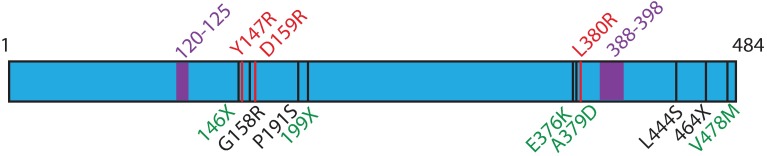
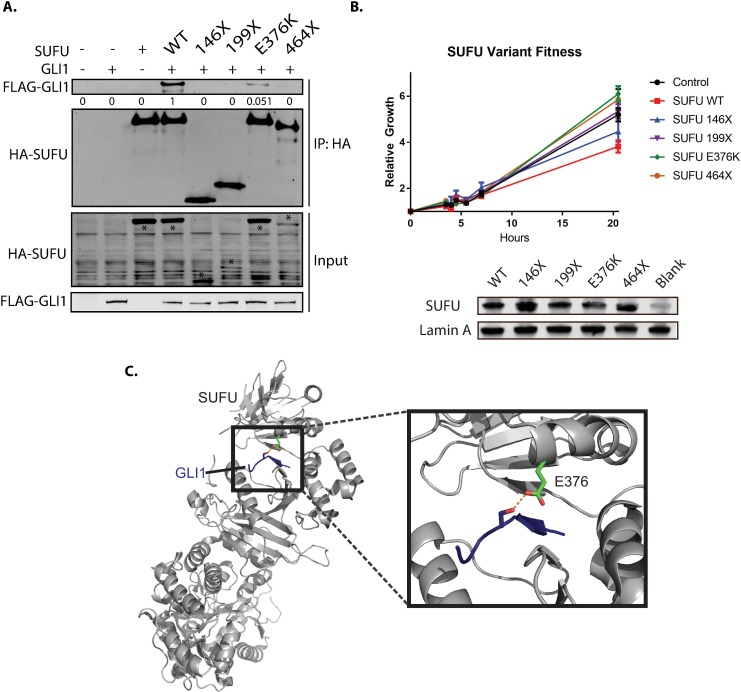
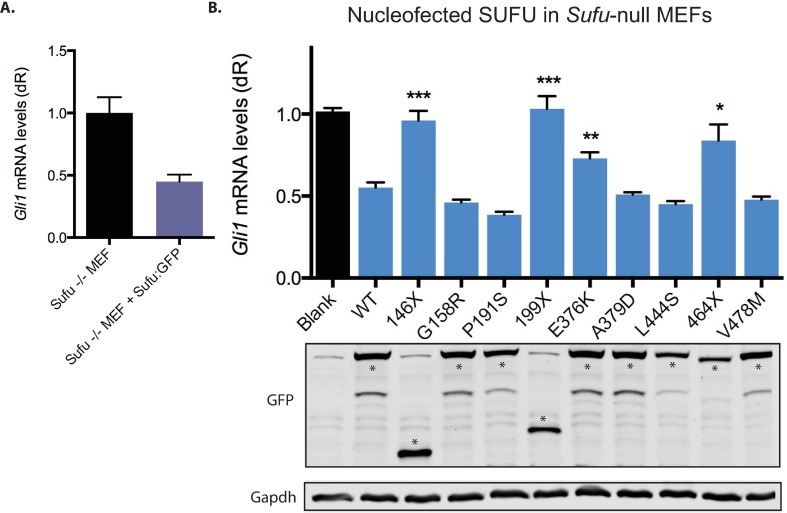
The Hedgehog pathway is a potent regulator of cellular growth and plays a central role in the development of many cancers including basal cell carcinoma (BCC). The majority of BCCs arise from mutations in the Patched receptor resulting in constitutive activation of the Hedgehog pathway. Secondary driver mutations promote BCC oncogenesis and occur frequently due to the high mutational burden resulting from sun exposure of the skin. Here, we uncover novel secondary mutations in Suppressor of Fused (SUFU), the major negative regulator of the Hedgehog pathway. SUFU normally binds to a Hedgehog transcriptional activator, GLI1, in order to prevent it from initiating transcription of Hedgehog target genes. We sequenced tumor-normal pairs from patients with early sporadic BCCs. This resulted in the discovery of nine mutations in SUFU, which were functionally investigated to determine whether they help drive BCC formation. Our results show that four of the SUFU mutations inappropriately activate the Hedgehog pathway, suggesting they may act as driver mutations for BCC development. Indeed, all four of the loss of function SUFU variants were found to disrupt its binding to GLI, leading to constitutive pathway activation. Our results from functional characterization of these mutations shed light on SUFU's role in Hedgehog signaling, tumor progression, and highlight a way in which BCCs can arise.
刺猬信号通路是细胞生长的有效调节因子,在包括基底细胞癌(BCC)在内的许多癌症的发展中起着核心作用。大多数基底细胞癌源于patched受体的突变,导致刺猬信号通路的组成性激活。继发性驱动突变促进基底细胞癌的肿瘤发生,并且由于皮肤阳光暴露导致的高突变负担而频繁发生。在这里,我们发现了刺猬信号通路主要负调节因子融合抑制因子(SUFU)中的新的继发性突变。SUFU通常与刺猬转录激活因子GLI1结合,以防止其启动刺猬靶基因的转录。我们对早期散发性基底细胞癌患者的肿瘤-正常组织配对进行了测序。这导致在SUFU中发现了9个突变,并对其进行了功能研究,以确定它们是否有助于驱动基底细胞癌的形成。我们的结果表明,SUFU的四个突变不适当地激活了刺猬信号通路,表明它们可能作为基底细胞癌发展的驱动突变。事实上,所有四个功能丧失的SUFU变体都被发现破坏了其与GLI的结合,导致信号通路的组成性激活。我们对这些突变的功能表征结果揭示了SUFU在刺猬信号传导、肿瘤进展中的作用,并突出了基底细胞癌发生的一种方式。