Department of Biological Sciences, University at Albany, Albany, New York, USA.
The RNA Institute, University at Albany, Albany, New York, USA.
mBio. 2020 Jul 14;11(4):e01403-20. doi: 10.1128/mBio.01403-20.
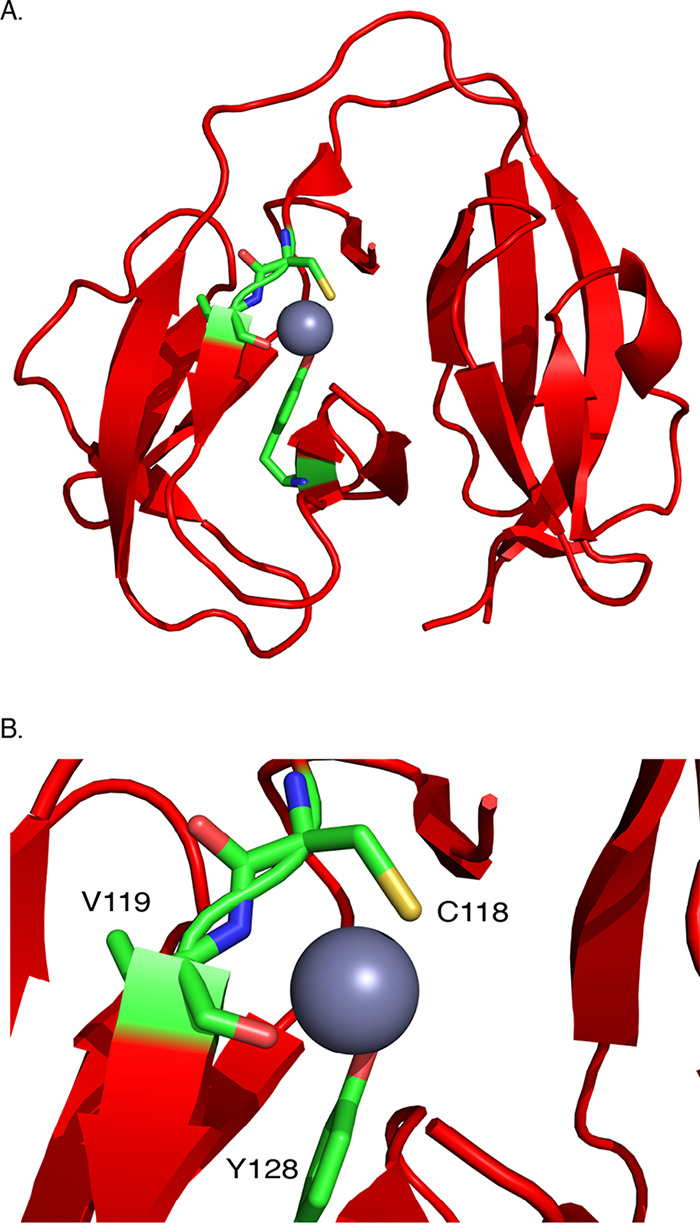
Inteins, as posttranslational regulatory elements, can tune protein function to environmental changes by conditional protein splicing (CPS). Translated as subdomains interrupting host proteins, inteins splice to scarlessly join flanking sequences (exteins). We used DnaB-intein1 (DnaBi1) from a replicative helicase of to build a anamycin ntein plicing eporter (KISR) that links splicing of DnaBi1 to kanamycin resistance. Using expression in heterologous , we observed phenotypic classes of various levels of splicing-dependent resistance (SDR) and related these to the insertion position of DnaBi1 within the kanamycin resistance protein (KanR). The KanR-DnaBi1 construct demonstrating the most stringent SDR was used to probe for CPS of DnaB in the native host environment, We show here that zinc, important during mycobacterial pathogenesis, inhibits DnaB splicing in Using an reporter system, we demonstrated that zinc potently and reversibly inhibited DnaBi1 splicing, as well as splicing of a comparable intein from Finally, in a 1.95 Å crystal structure, we show that zinc inhibits splicing through binding to the very cysteine that initiates the splicing reaction. Together, our results provide compelling support for a model whereby mycobacterial DnaB protein splicing, and thus DNA replication, is responsive to environmental zinc. Inteins are present in a large fraction of prokaryotes and localize within conserved proteins, including the mycobacterial replicative helicase DnaB. In addition to their extensive protein engineering applications, inteins have emerged as environmentally responsive posttranslational regulators of the genes that encode them. While several studies have shown compelling evidence of conditional protein splicing (CPS), examination of splicing in the native host of the intein has proven to be challenging. Here, we demonstrated through a number of measures, including the use of a splicing-dependent sensor capable of monitoring intein activity in the native host, that zinc is a potent and reversible inhibitor of mycobacterial DnaB splicing. This work also expands our knowledge of site selection for intein insertion within nonnative proteins, demonstrating that splicing-dependent host protein activation correlates with proximity to the active site. Additionally, we surmise that splicing regulation by zinc has mycobacteriocidal and CPS application potential.
内肽酶作为翻译后调控元件,可以通过条件性蛋白剪接(CPS)来调节蛋白质功能以适应环境变化。内肽酶作为打断宿主蛋白的亚结构域,可进行无疤痕拼接,将侧翼序列(外肽酶)拼接在一起。我们使用来自复制解旋酶的 DnaB-内肽酶 1(DnaBi1)构建了一种安纳霉素内肽酶报告基因(KISR),该报告基因将 DnaBi1 的剪接与卡那霉素抗性联系起来。通过在异源表达中观察到各种水平的剪接依赖性抗性(SDR)的表型类别,并将其与 DnaBi1 在卡那霉素抗性蛋白(KanR)中的插入位置相关联,我们观察到不同水平的剪接依赖性抗性(SDR)的表型类别。展示了具有最严格 SDR 的 KanR-DnaBi1 构建体用于在天然宿主环境中探测 DnaB 的 CPS。在这里,我们表明锌在分枝杆菌发病机制中很重要,它可以抑制在 使用报告基因系统,我们证明锌可以强烈且可逆地抑制 DnaBi1 的剪接,以及来自 的类似内肽酶的剪接。最后,在 1.95 Å 的晶体结构中,我们表明锌通过与起始剪接反应的半胱氨酸结合来抑制剪接。总之,我们的结果为一个模型提供了有力的支持,即分枝杆菌 DnaB 蛋白剪接,因此 DNA 复制,对环境锌做出响应。内肽酶存在于很大一部分原核生物中,并定位于保守蛋白内,包括分枝杆菌复制解旋酶 DnaB。除了在蛋白质工程中的广泛应用外,内肽酶还作为其编码基因的环境响应后翻译调控因子而出现。尽管有几项研究已经提供了令人信服的证据证明条件性蛋白剪接(CPS),但在肽酶的天然宿主中对剪接的检查已被证明具有挑战性。在这里,我们通过多种措施证明了这一点,包括使用能够在天然宿主中监测内肽酶活性的剪接依赖性传感器,锌是一种有效的可逆分枝杆菌 DnaB 剪接抑制剂。这项工作还扩展了我们对内肽酶在非天然蛋白中插入位置的了解,表明剪接依赖性宿主蛋白激活与靠近活性部位相关。此外,我们推测锌的剪接调节具有分枝杆菌杀菌和 CPS 应用潜力。