Toombs James A, Sytnikova Yuliya A, Chirn Gung-Wei, Ang Ignatius, Lau Nelson C, Blower Michael D
Department of Molecular Biology, Massachusetts General Hospital, Boston, Massachusetts 02114, USA.
Department of Genetics, Harvard Medical School, Boston, Massachusetts 02115, USA.
RNA. 2017 Apr;23(4):504-520. doi: 10.1261/rna.058859.116. Epub 2016 Dec 28.
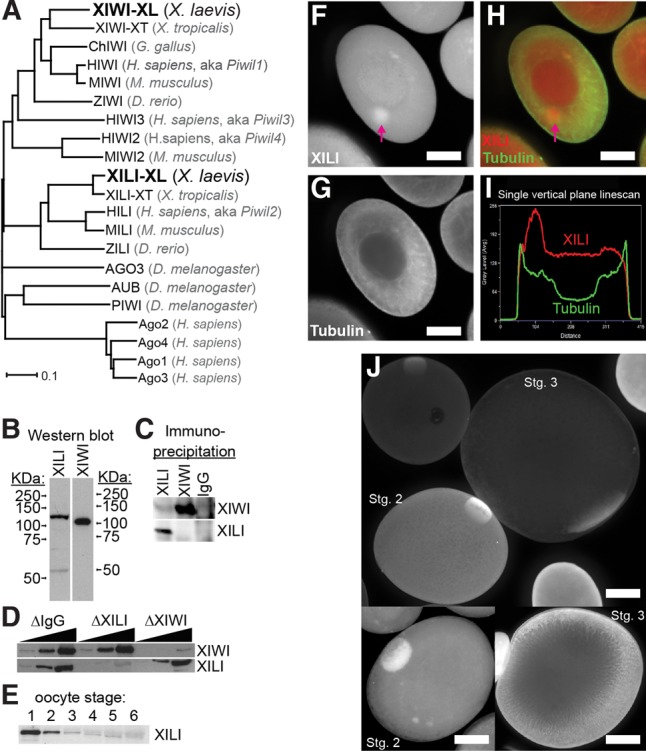
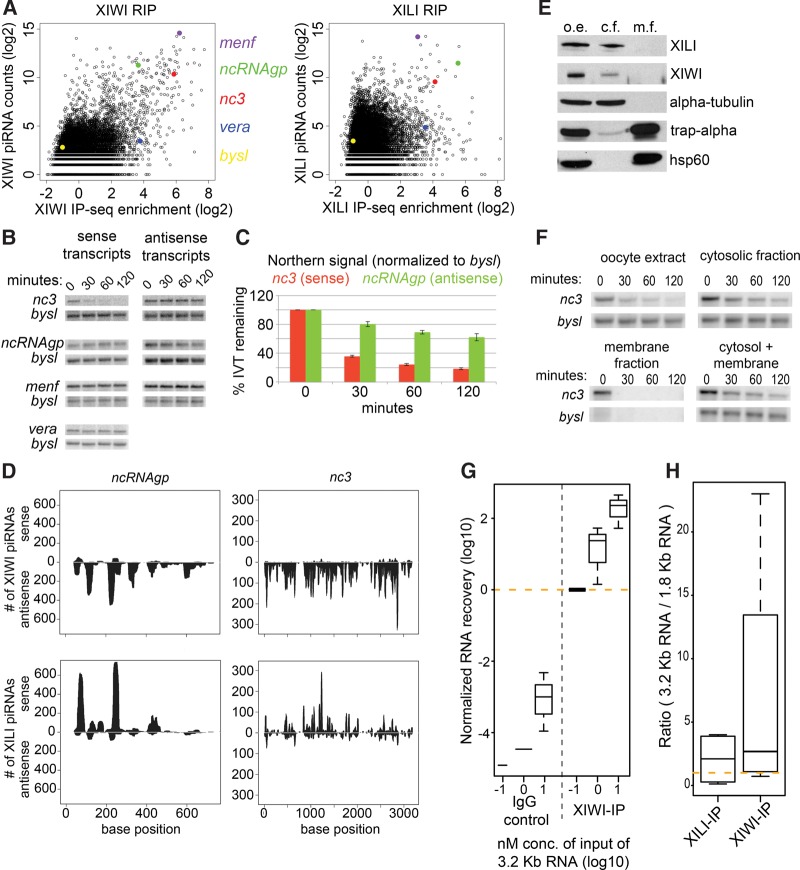
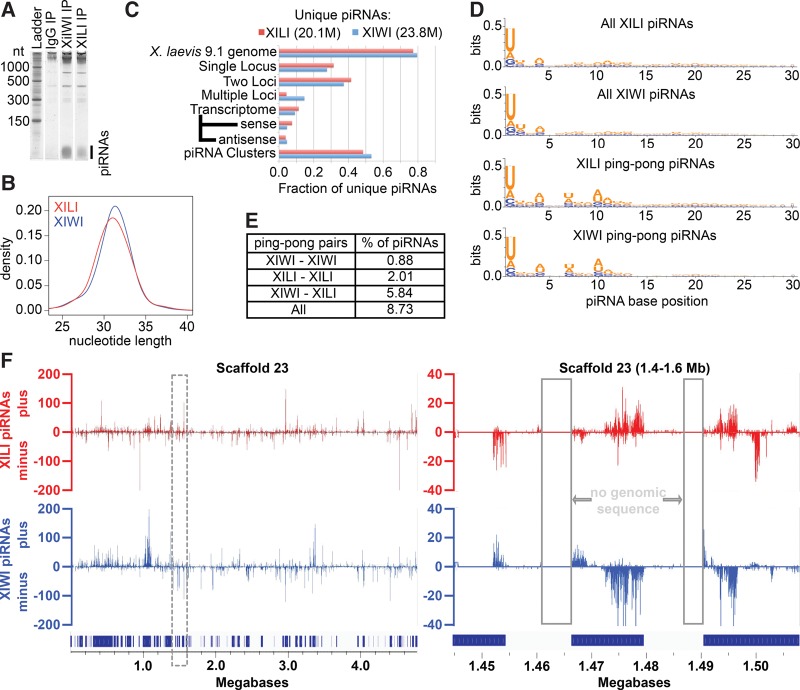
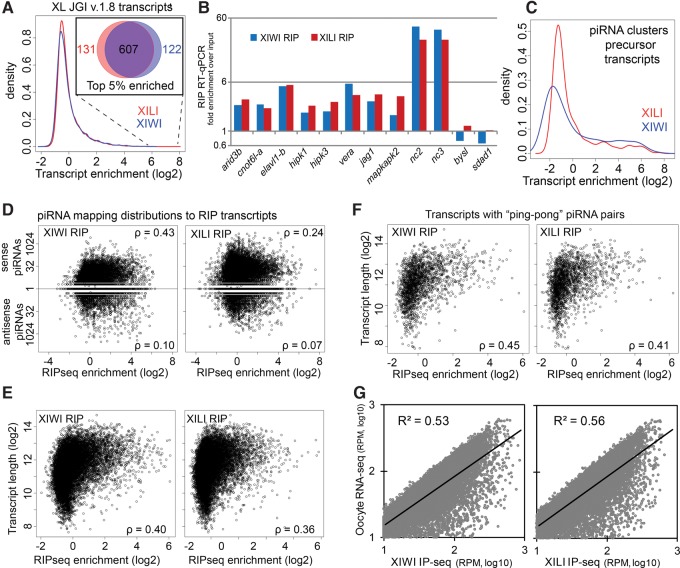
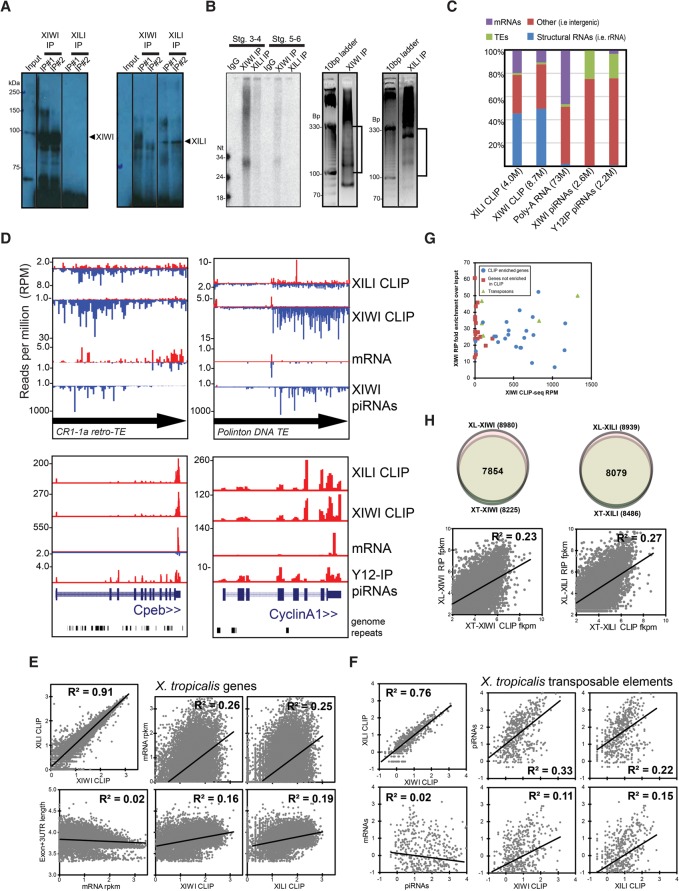
Piwi proteins utilize small RNAs (piRNAs) to recognize target transcripts such as transposable elements (TE). However, extensive piRNA sequence diversity also suggests that Piwi/piRNA complexes interact with many transcripts beyond TEs. To determine Piwi target RNAs, we used ribonucleoprotein-immunoprecipitation (RIP) and cross-linking and immunoprecipitation (CLIP) to identify thousands of transcripts associated with the Piwi proteins XIWI and XILI (Piwi-protein-associated transcripts, PATs) from early stage oocytes of and Most PATs associate with both XIWI and XILI and include transcripts of developmentally important proteins in oogenesis and embryogenesis. Only a minor fraction of PATs in both frog species displayed near perfect matches to piRNAs. Since predicting imperfect pairing between all piRNAs and target RNAs remains intractable, we instead determined that PAT read counts correlate well with the lengths and expression levels of transcripts, features that have also been observed for oocyte mRNAs associated with Piwi proteins. We used an in vitro assay with exogenous RNA to confirm that XIWI associates with RNAs in a length- and concentration-dependent manner. In this assay, noncoding transcripts with many perfectly matched antisense piRNAs were unstable, whereas coding transcripts with matching piRNAs were stable, consistent with emerging evidence that Piwi proteins both promote the turnover of TEs and other RNAs, and may also regulate mRNA localization and translation. Our study suggests that Piwi proteins play multiple roles in germ cells and establishes a tractable vertebrate system to study the role of Piwi proteins in transcript regulation.
Piwi蛋白利用小RNA(piRNA)来识别靶转录本,如转座元件(TE)。然而,广泛的piRNA序列多样性也表明,Piwi/piRNA复合物与TE以外的许多转录本相互作用。为了确定Piwi的靶RNA,我们使用核糖核蛋白免疫沉淀(RIP)和交联免疫沉淀(CLIP),从非洲爪蟾和西方爪蟾早期卵母细胞中鉴定出数千种与Piwi蛋白XIWI和XILI相关的转录本(Piwi蛋白相关转录本,PAT)。大多数PAT与XIWI和XILI都相关,包括卵子发生和胚胎发生中具有重要发育功能的蛋白质的转录本。在这两种蛙类中,只有一小部分PAT与piRNA显示出近乎完美的匹配。由于预测所有piRNA与靶RNA之间的不完全配对仍然很困难,我们转而确定PAT的读数与转录本的长度和表达水平密切相关,这些特征在与Piwi蛋白相关的卵母细胞mRNA中也有观察到。我们使用外源RNA进行体外试验,以证实XIWI以长度和浓度依赖的方式与RNA结合。在该试验中,具有许多完全匹配反义piRNA的非编码转录本不稳定,而具有匹配piRNA的编码转录本稳定,这与新出现的证据一致,即Piwi蛋白既促进TE和其他RNA的周转,也可能调节mRNA的定位和翻译。我们的研究表明,Piwi蛋白在生殖细胞中发挥多种作用,并建立了一个易于处理的脊椎动物系统来研究Piwi蛋白在转录调控中的作用。