Vourekas Anastassios, Alexiou Panagiotis, Vrettos Nicholas, Maragkakis Manolis, Mourelatos Zissimos
Department of Pathology and Laboratory Medicine, Division of Neuropathology, Institute for Translational Medicine and Therapeutics, Perelman School of Medicine; PENN Genome Frontiers Institute, University of Pennsylvania, Philadelphia, Pennsylvania 19104, USA.
Nature. 2016 Mar 17;531(7594):390-394. doi: 10.1038/nature17150. Epub 2016 Mar 7.
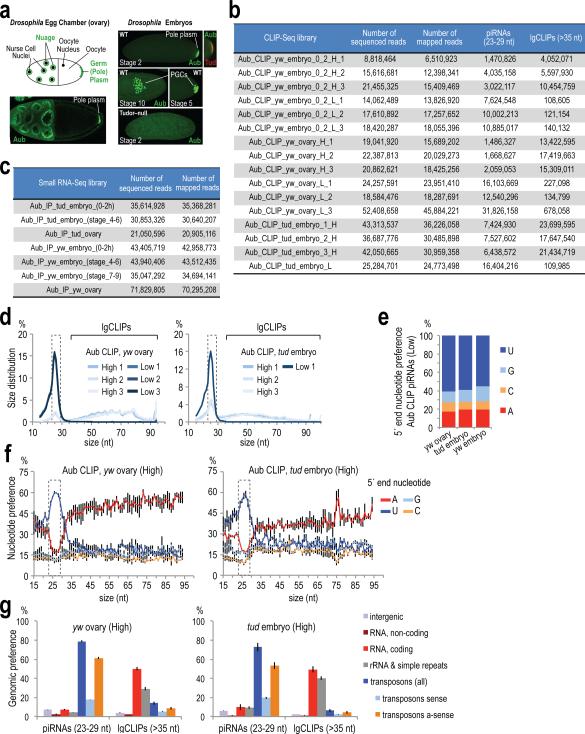
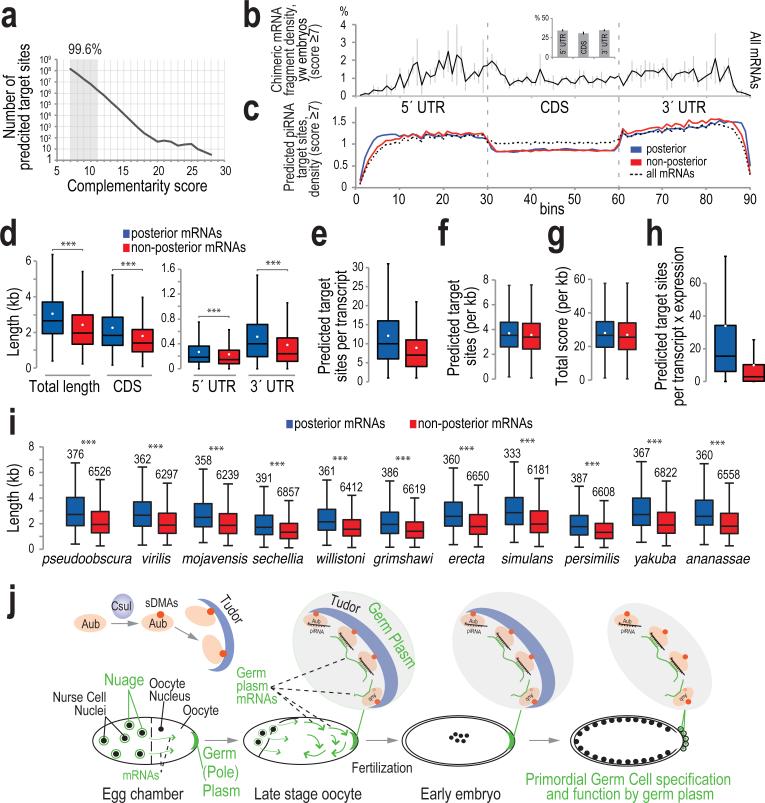
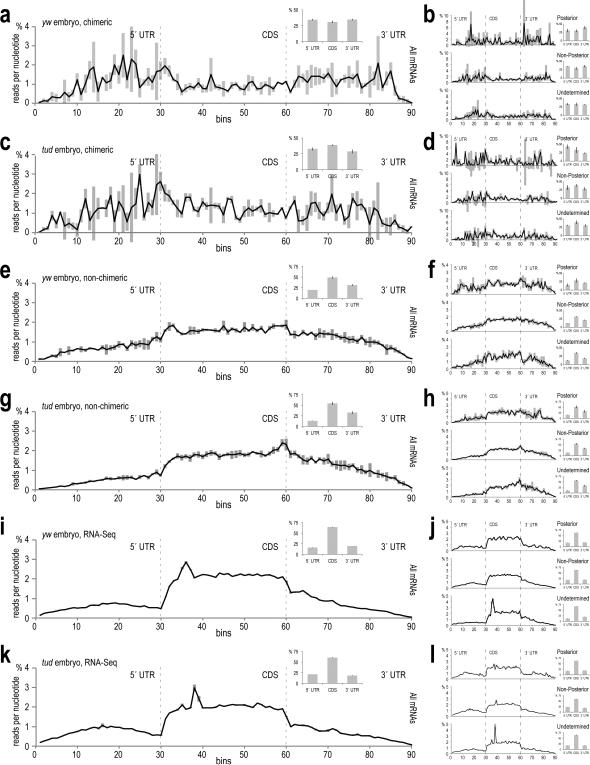
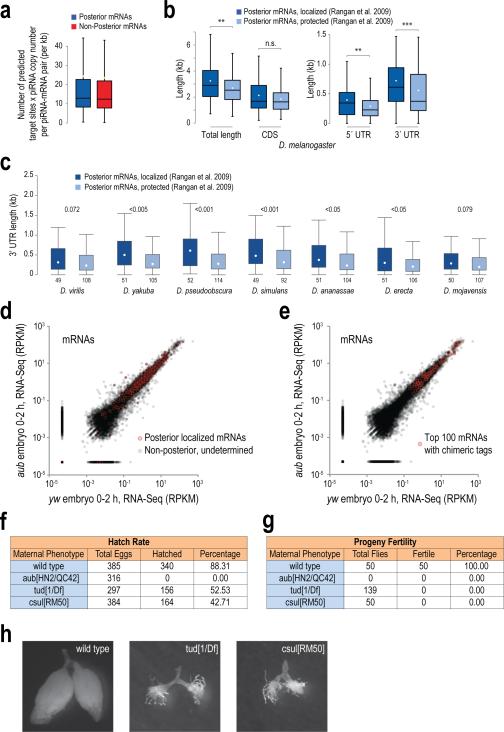
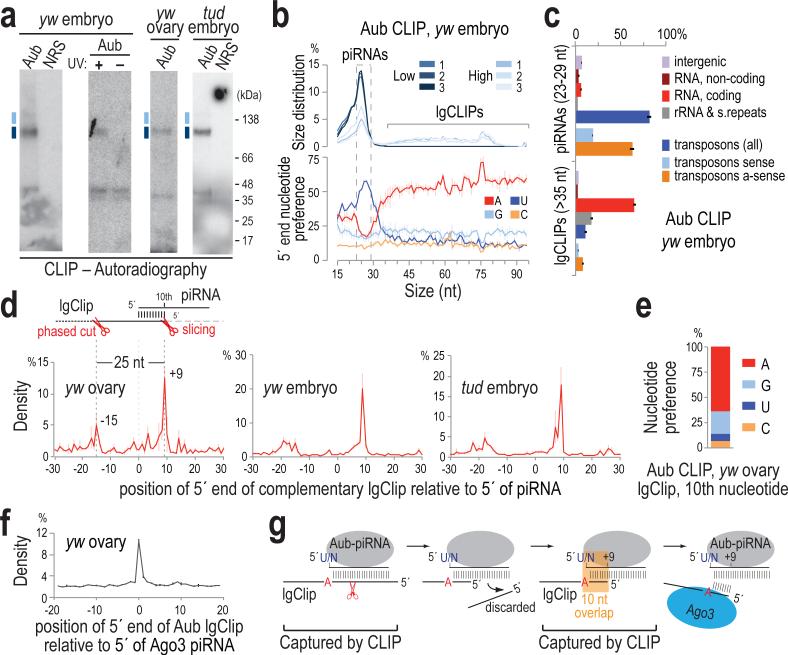
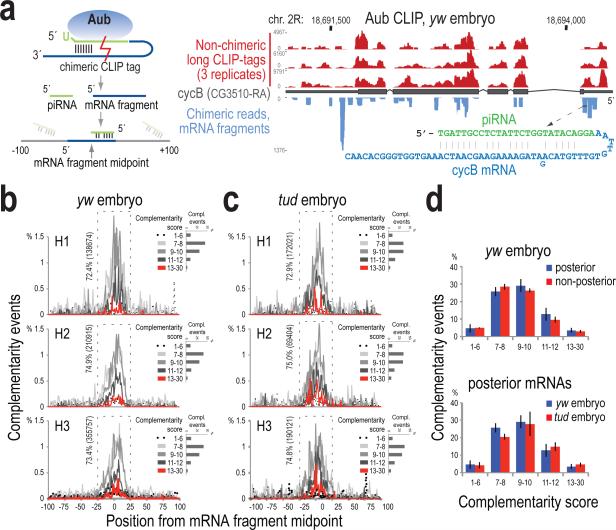
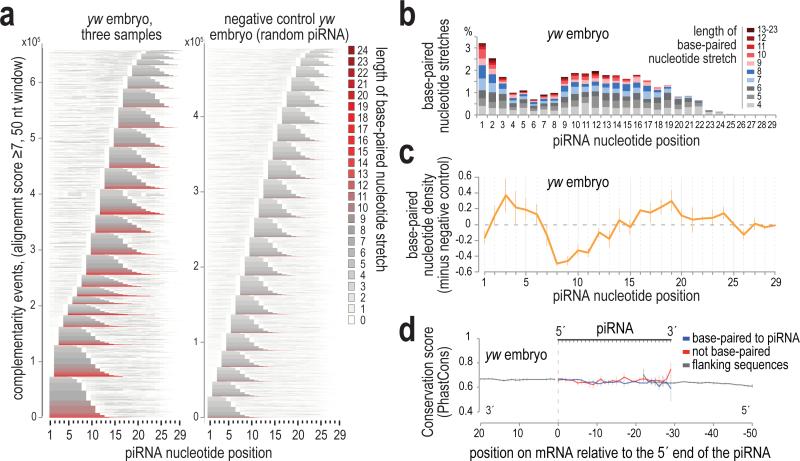
The conserved Piwi family of proteins and piwi-interacting RNAs (piRNAs) have a central role in genomic stability, which is inextricably linked to germ-cell formation, by forming Piwi ribonucleoproteins (piRNPs) that silence transposable elements. In Drosophila melanogaster and other animals, primordial germ-cell specification in the developing embryo is driven by maternal messenger RNAs and proteins that assemble into specialized messenger ribonucleoproteins (mRNPs) localized in the germ (pole) plasm at the posterior of the oocyte. Maternal piRNPs, especially those loaded on the Piwi protein Aubergine (Aub), are transmitted to the germ plasm to initiate transposon silencing in the offspring germ line. The transport of mRNAs to the oocyte by midoogenesis is an active, microtubule-dependent process; mRNAs necessary for primordial germ-cell formation are enriched in the germ plasm at late oogenesis via a diffusion and entrapment mechanism, the molecular identity of which remains unknown. Aub is a central component of germ granule RNPs, which house mRNAs in the germ plasm, and interactions between Aub and Tudor are essential for the formation of germ granules. Here we show that Aub-loaded piRNAs use partial base-pairing characteristics of Argonaute RNPs to bind mRNAs randomly in Drosophila, acting as an adhesive trap that captures mRNAs in the germ plasm, in a Tudor-dependent manner. Notably, germ plasm mRNAs in drosophilids are generally longer and more abundant than other mRNAs, suggesting that they provide more target sites for piRNAs to promote their preferential tethering in germ granules. Thus, complexes containing Tudor, Aub piRNPs and mRNAs couple piRNA inheritance with germline specification. Our findings reveal an unexpected function for piRNP complexes in mRNA trapping that may be generally relevant to the function of animal germ granules.
保守的Piwi蛋白家族和与Piwi相互作用的RNA(piRNA)在基因组稳定性中起着核心作用,而基因组稳定性与生殖细胞形成有着千丝万缕的联系,它们通过形成沉默转座元件的Piwi核糖核蛋白(piRNP)来实现这一作用。在黑腹果蝇和其他动物中,发育中胚胎的原始生殖细胞特化是由母体信使RNA和蛋白质驱动的,这些信使RNA和蛋白质组装成位于卵母细胞后部生殖(极)质中的特殊信使核糖核蛋白(mRNP)。母体piRNP,尤其是那些装载在Piwi蛋白茄子(Aub)上的piRNP,被传递到生殖质中,以启动后代生殖系中的转座子沉默。在卵子发生中期,mRNA向卵母细胞的运输是一个活跃的、依赖微管的过程;原始生殖细胞形成所需的mRNA在卵子发生后期通过一种扩散和截留机制富集在生殖质中,其分子特性尚不清楚。Aub是生殖颗粒RNP的核心成分,生殖颗粒RNP在生殖质中储存mRNA,Aub和Tudor之间的相互作用对于生殖颗粒的形成至关重要。在这里,我们表明,装载Aub的piRNA利用AGO核糖核蛋白的部分碱基配对特性,在果蝇中随机结合mRNA,以依赖Tudor的方式充当捕获生殖质中mRNA的黏附陷阱。值得注意的是,果蝇中的生殖质mRNA通常比其他mRNA更长、更丰富,这表明它们为piRNA提供了更多的靶位点,以促进它们在生殖颗粒中的优先束缚。因此,包含Tudor、Aub piRNP和mRNA的复合物将piRNA遗传与生殖系特化联系起来。我们的发现揭示了piRNP复合物在mRNA捕获中的意外功能,这可能与动物生殖颗粒的功能普遍相关。