• 文献检索
  • 文档翻译
  • 深度研究
  • 学术资讯
  • Suppr Zotero 插件Zotero 插件
  • 邀请有礼
  • 套餐&价格
  • 历史记录
应用&插件
Suppr Zotero 插件Zotero 插件浏览器插件Mac 客户端Windows 客户端微信小程序
定价
高级版会员购买积分包购买API积分包
服务
文献检索文档翻译深度研究API 文档MCP 服务
关于我们
关于 Suppr公司介绍联系我们用户协议隐私条款
关注我们

Suppr 超能文献

核心技术专利:CN118964589B侵权必究
粤ICP备2023148730 号-1Suppr @ 2026

文献检索

告别复杂PubMed语法,用中文像聊天一样搜索,搜遍4000万医学文献。AI智能推荐,让科研检索更轻松。

立即免费搜索

文件翻译

保留排版,准确专业,支持PDF/Word/PPT等文件格式,支持 12+语言互译。

免费翻译文档

深度研究

AI帮你快速写综述,25分钟生成高质量综述,智能提取关键信息,辅助科研写作。

立即免费体验

将数据缺乏的物种纳入进化历史丧失分析中。

Integrating data-deficient species in analyses of evolutionary history loss.

作者信息

Veron Simon, Penone Caterina, Clergeau Philippe, Costa Gabriel C, Oliveira Brunno F, São-Pedro Vinícius A, Pavoine Sandrine

机构信息

Centre d'Ecologie et des Sciences de la Conservation (CESCO UMR7204) Sorbonne Universités, MNHN, CNRS, UPMC CP51, 55-61 rue Buffon 75005 Paris France.

Institute of Plant Sciences Bern Switzerland.

出版信息

Ecol Evol. 2016 Nov 1;6(23):8502-8514. doi: 10.1002/ece3.2390. eCollection 2016 Dec.

DOI:10.1002/ece3.2390
PMID:28031802
原文链接:https://pmc.ncbi.nlm.nih.gov/articles/PMC5167052/
Abstract

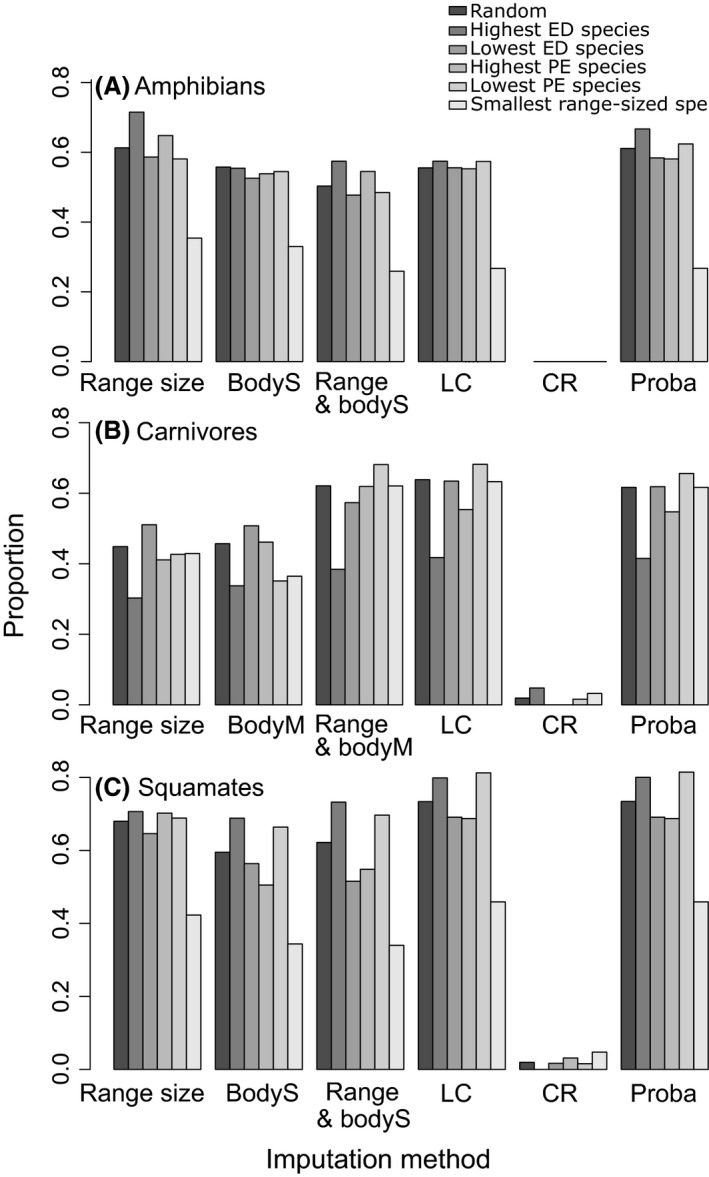
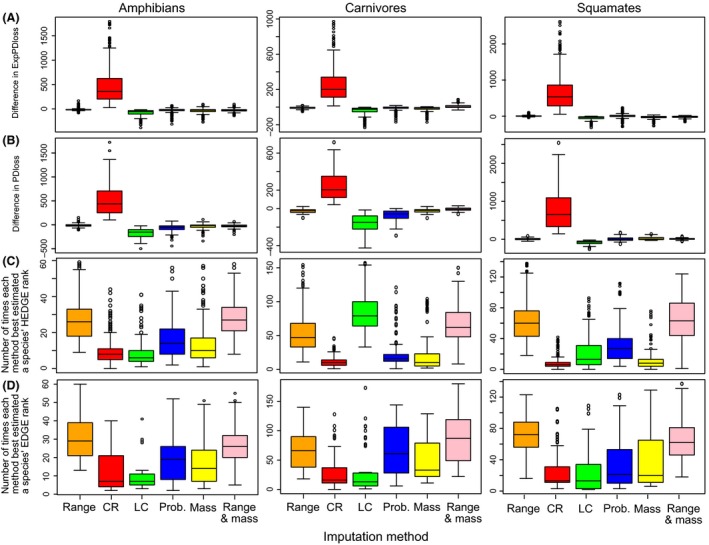
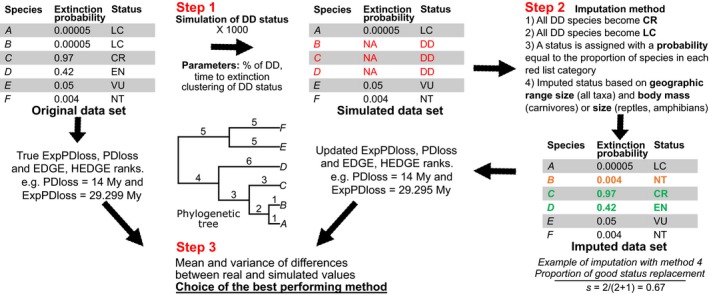
There is an increasing interest in measuring loss of phylogenetic diversity and evolutionary distinctiveness which together depict the evolutionary history of conservation interest. Those losses are assessed through the evolutionary relationships between species and species threat status or extinction probabilities. Yet, available information is not always sufficient to quantify the threat status of species that are then classified as data deficient. Data-deficient species are a crucial issue as they cause incomplete assessments of the loss of phylogenetic diversity and evolutionary distinctiveness. We aimed to explore the potential bias caused by data-deficient species in estimating four widely used indices: HEDGE, EDGE, PDloss, and Expected PDloss. Second, we tested four different widely applicable and multitaxa imputation methods and their potential to minimize the bias for those four indices. Two methods are based on a best- vs. worst-case extinction scenarios, one is based on the frequency distribution of threat status within a taxonomic group and one is based on correlates of extinction risks. We showed that data-deficient species led to important bias in predictions of evolutionary history loss (especially high underestimation when they were removed). This issue was particularly important when data-deficient species tended to be clustered in the tree of life. The imputation method based on correlates of extinction risks, especially geographic range size, had the best performance and enabled us to improve risk assessments. Solving threat status of DD species can fundamentally change our understanding of loss of phylogenetic diversity. We found that this loss could be substantially higher than previously found in amphibians, squamate reptiles, and carnivores. We also identified species that are of high priority for the conservation of evolutionary distinctiveness.

摘要

衡量系统发育多样性丧失和进化独特性的兴趣与日俱增,这两者共同描绘了具有保护意义的进化历史。这些丧失是通过物种之间的进化关系以及物种的威胁状态或灭绝概率来评估的。然而,现有的信息并不总是足以量化那些随后被归类为数据缺乏的物种的威胁状态。数据缺乏的物种是一个关键问题,因为它们导致对系统发育多样性丧失和进化独特性的评估不完整。我们旨在探讨数据缺乏的物种在估计四个广泛使用的指数(HEDGE、EDGE、PDloss和预期PDloss)时所造成的潜在偏差。其次,我们测试了四种不同的广泛适用且多分类群的插补方法及其将这四个指数的偏差最小化的潜力。两种方法基于最佳与最坏情况的灭绝情景,一种基于分类群内威胁状态的频率分布,另一种基于灭绝风险的相关因素。我们表明,数据缺乏的物种在进化历史丧失的预测中导致了重大偏差(尤其是在去除它们时出现高度低估)。当数据缺乏的物种倾向于聚集在生命之树中时,这个问题尤为重要。基于灭绝风险相关因素(特别是地理范围大小)的插补方法表现最佳,并使我们能够改进风险评估。解决数据缺乏物种的威胁状态可以从根本上改变我们对系统发育多样性丧失的理解。我们发现,这种丧失可能比之前在两栖动物、有鳞目爬行动物和食肉动物中发现的要高得多。我们还确定了对于保护进化独特性具有高度优先性的物种。
https://cdn.ncbi.nlm.nih.gov/pmc/blobs/ab95/5167052/b09c07ebac2b/ECE3-6-8502-g003.jpg
https://cdn.ncbi.nlm.nih.gov/pmc/blobs/ab95/5167052/2859c147feb9/ECE3-6-8502-g001.jpg
https://cdn.ncbi.nlm.nih.gov/pmc/blobs/ab95/5167052/8b2c650e6d45/ECE3-6-8502-g002.jpg
https://cdn.ncbi.nlm.nih.gov/pmc/blobs/ab95/5167052/b09c07ebac2b/ECE3-6-8502-g003.jpg
https://cdn.ncbi.nlm.nih.gov/pmc/blobs/ab95/5167052/2859c147feb9/ECE3-6-8502-g001.jpg
https://cdn.ncbi.nlm.nih.gov/pmc/blobs/ab95/5167052/8b2c650e6d45/ECE3-6-8502-g002.jpg
https://cdn.ncbi.nlm.nih.gov/pmc/blobs/ab95/5167052/b09c07ebac2b/ECE3-6-8502-g003.jpg

相似文献

1
Integrating data-deficient species in analyses of evolutionary history loss.将数据缺乏的物种纳入进化历史丧失分析中。
Ecol Evol. 2016 Nov 1;6(23):8502-8514. doi: 10.1002/ece3.2390. eCollection 2016 Dec.
2
Threatened species and the potential loss of phylogenetic diversity: conservation scenarios based on estimated extinction probabilities and phylogenetic risk analysis.受威胁物种与系统发育多样性的潜在丧失:基于估计灭绝概率和系统发育风险分析的保护情景
Conserv Biol. 2008 Dec;22(6):1461-70. doi: 10.1111/j.1523-1739.2008.01068.x. Epub 2008 Sep 15.
3
Predicting loss of evolutionary history: Where are we?预测进化史的丧失:我们在哪里?
Biol Rev Camb Philos Soc. 2017 Feb;92(1):271-291. doi: 10.1111/brv.12228. Epub 2015 Oct 14.
4
Integrating biogeography, threat and evolutionary data to explore extinction crisis in the taxonomic group of cycads.整合生物地理学、威胁因素和进化数据,以探究苏铁类分类群中的灭绝危机。
Ecol Evol. 2017 Mar 21;7(8):2735-2746. doi: 10.1002/ece3.2660. eCollection 2017 Apr.
5
Loss and conservation of evolutionary history in the Mediterranean Basin.地中海盆地进化史的丧失与保护
BMC Ecol. 2016 Oct 7;16(1):43. doi: 10.1186/s12898-016-0099-3.
6
Phylogenetic and Trait-Based Prediction of Extinction Risk for Data-Deficient Amphibians.基于系统发育和特征的数据缺乏型两栖动物灭绝风险预测
Curr Biol. 2019 May 6;29(9):1557-1563.e3. doi: 10.1016/j.cub.2019.04.005.
7
Tetrapods on the EDGE: Overcoming data limitations to identify phylogenetic conservation priorities.四足动物在边缘:克服数据限制以确定系统发育保护优先级。
PLoS One. 2018 Apr 11;13(4):e0194680. doi: 10.1371/journal.pone.0194680. eCollection 2018.
8
Phylogenetic and spatial distribution of evolutionary diversification, isolation, and threat in turtles and crocodilians (non-avian archosauromorphs).龟鳖目和鳄形目动物(非鸟兽脚亚目)的进化多样性、隔离和威胁的系统发育和空间分布。
BMC Evol Biol. 2020 Jul 10;20(1):81. doi: 10.1186/s12862-020-01642-3.
9
Ranking Mammal Species for Conservation and the Loss of Both Phylogenetic and Trait Diversity.对哺乳动物物种进行保护排名以及系统发育和性状多样性的丧失
PLoS One. 2015 Dec 2;10(12):e0141435. doi: 10.1371/journal.pone.0141435. eCollection 2015.
10
An assessment of methods to combine evolutionary history and conservation: A case study in the Brazilian campo rupestre.结合进化历史与保护的方法评估:以巴西rupestre草原为例
Appl Plant Sci. 2024 May 29;12(3):e11587. doi: 10.1002/aps3.11587. eCollection 2024 May-Jun.

引用本文的文献

1
Global conservation status of the jawed vertebrate Tree of Life.有颌脊椎动物生命之树的全球保护状况。
Nat Commun. 2024 Feb 29;15(1):1101. doi: 10.1038/s41467-024-45119-z.
2
The EDGE2 protocol: Advancing the prioritisation of Evolutionarily Distinct and Globally Endangered species for practical conservation action.EDGE2 协议:推进具有独特进化地位和全球濒危物种的优先级排序,以采取实际保护行动。
PLoS Biol. 2023 Feb 28;21(2):e3001991. doi: 10.1371/journal.pbio.3001991. eCollection 2023 Feb.
3
Revisiting species and areas of interest for conserving global mammalian phylogenetic diversity.

本文引用的文献

1
Predicting loss of evolutionary history: Where are we?预测进化史的丧失:我们在哪里?
Biol Rev Camb Philos Soc. 2017 Feb;92(1):271-291. doi: 10.1111/brv.12228. Epub 2015 Oct 14.
2
The importance and benefits of species.物种的重要性和益处。
Curr Biol. 2015 May 18;25(10):R431-8. doi: 10.1016/j.cub.2015.03.041.
3
Geographic range size and extinction risk assessment in nomadic species.游牧物种的地理分布范围大小与灭绝风险评估
重新审视全球哺乳动物系统发育多样性保护的物种和重点区域。
Nat Commun. 2021 Jun 17;12(1):3694. doi: 10.1038/s41467-021-23861-y.
4
Global priorities for conservation of reptilian phylogenetic diversity in the face of human impacts.面对人类活动的影响,保护爬行动物系统发育多样性的全球优先事项。
Nat Commun. 2020 May 26;11(1):2616. doi: 10.1038/s41467-020-16410-6.
5
Projected losses of global mammal and bird ecological strategies.全球哺乳动物和鸟类生态策略的预估损失。
Nat Commun. 2019 May 23;10(1):2279. doi: 10.1038/s41467-019-10284-z.
6
Predicting future invaders and future invasions.预测未来的入侵物种和未来的入侵事件。
Proc Natl Acad Sci U S A. 2019 Apr 16;116(16):7905-7910. doi: 10.1073/pnas.1803456116. Epub 2019 Mar 29.
7
Factors driving the global decline of cycad diversity.导致苏铁多样性全球下降的因素。
AoB Plants. 2017 May 29;9(4):plx022. doi: 10.1093/aobpla/plx022. eCollection 2017 Jul.
Conserv Biol. 2015 Jun;29(3):865-76. doi: 10.1111/cobi.12440. Epub 2015 Jan 9.
4
Why and how might genetic and phylogenetic diversity be reflected in the identification of key biodiversity areas?为什么以及遗传和系统发育多样性如何可能在关键生物多样性地区的识别中得到体现?
Philos Trans R Soc Lond B Biol Sci. 2015 Feb 19;370(1662):20140019. doi: 10.1098/rstb.2014.0019.
5
Towards a general framework for predicting threat status of data-deficient species from phylogenetic, spatial and environmental information.迈向一个从系统发育、空间和环境信息预测数据缺乏物种威胁状态的通用框架。
Philos Trans R Soc Lond B Biol Sci. 2015 Feb 19;370(1662):20140016. doi: 10.1098/rstb.2014.0016.
6
Phylogeny, extinction and conservation: embracing uncertainties in a time of urgency.系统发育、灭绝与保护:在紧迫时刻接纳不确定性。
Philos Trans R Soc Lond B Biol Sci. 2015 Feb 19;370(1662):20140002. doi: 10.1098/rstb.2014.0002.
7
Biodiversity: Life--a status report.生物多样性:生命——一份现状报告。
Nature. 2014 Dec 11;516(7530):158-61. doi: 10.1038/516158a.
8
Predicting the conservation status of data-deficient species.预测数据缺乏物种的保护状况。
Conserv Biol. 2015 Feb;29(1):250-9. doi: 10.1111/cobi.12372. Epub 2014 Aug 13.
9
Filling the gap in functional trait databases: use of ecological hypotheses to replace missing data.填补功能性状数据库中的空白:利用生态假设来替代缺失数据。
Ecol Evol. 2014 Apr;4(7):944-58. doi: 10.1002/ece3.989. Epub 2014 Feb 25.
10
Global distribution and conservation of evolutionary distinctness in birds.鸟类进化独特性的全球分布和保护。
Curr Biol. 2014 May 5;24(9):919-30. doi: 10.1016/j.cub.2014.03.011. Epub 2014 Apr 10.