Latorre Eva, Layunta Elena, Grasa Laura, Castro Marta, Pardo Julián, Gomollón Fernando, Alcalde Ana I, Mesonero José E
Departamento Farmacología y Fisiología, Facultad de Veterinaria, Instituto de Investigación Sanitaria de Aragón (IIS), Universidad de Zaragoza, Zaragoza. Spain.
RNA-Mediated Mechanisms of Disease, Institute of Biomedical and Clinical Sciences, University of Exeter Medical School. Exeter. United Kingdom.
PLoS One. 2016 Dec 29;11(12):e0169303. doi: 10.1371/journal.pone.0169303. eCollection 2016.
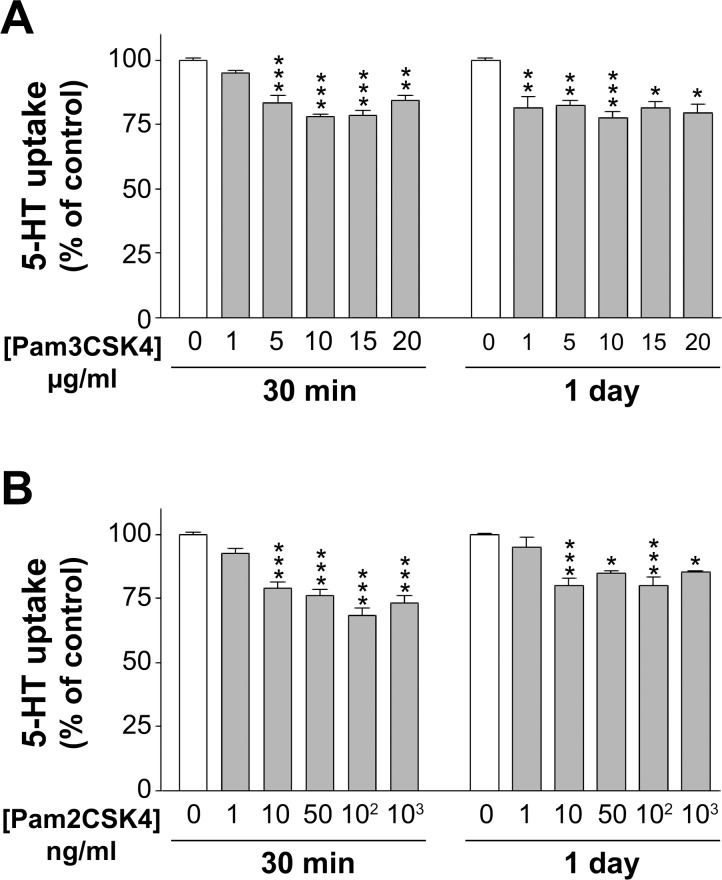
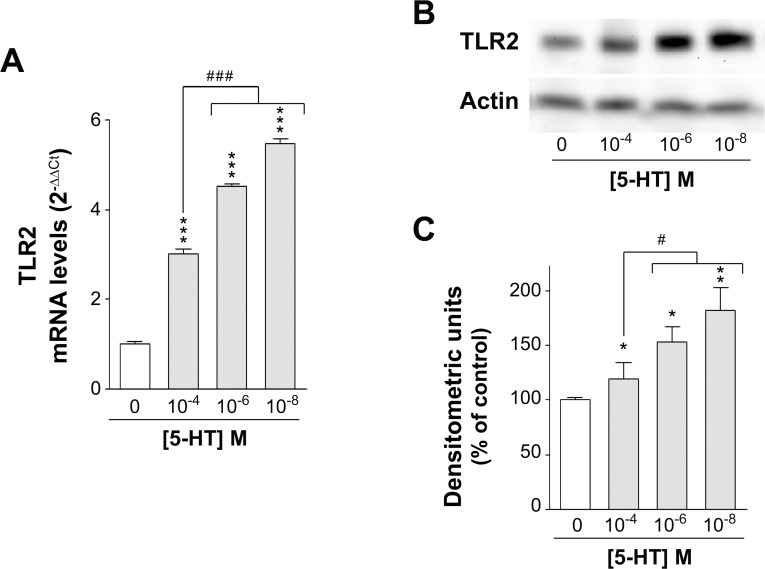
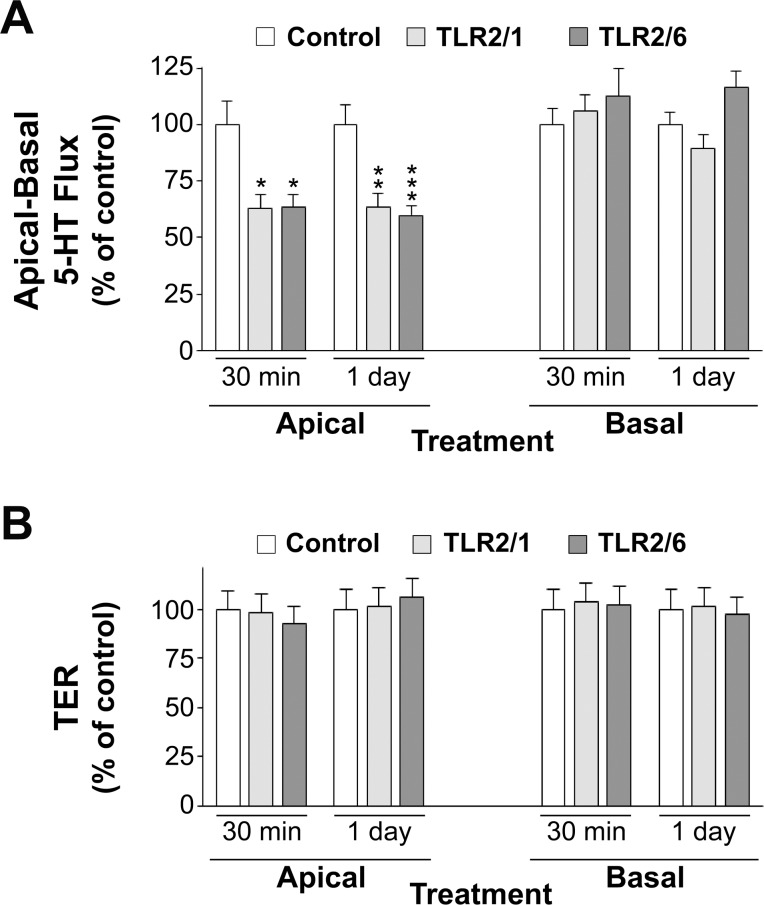
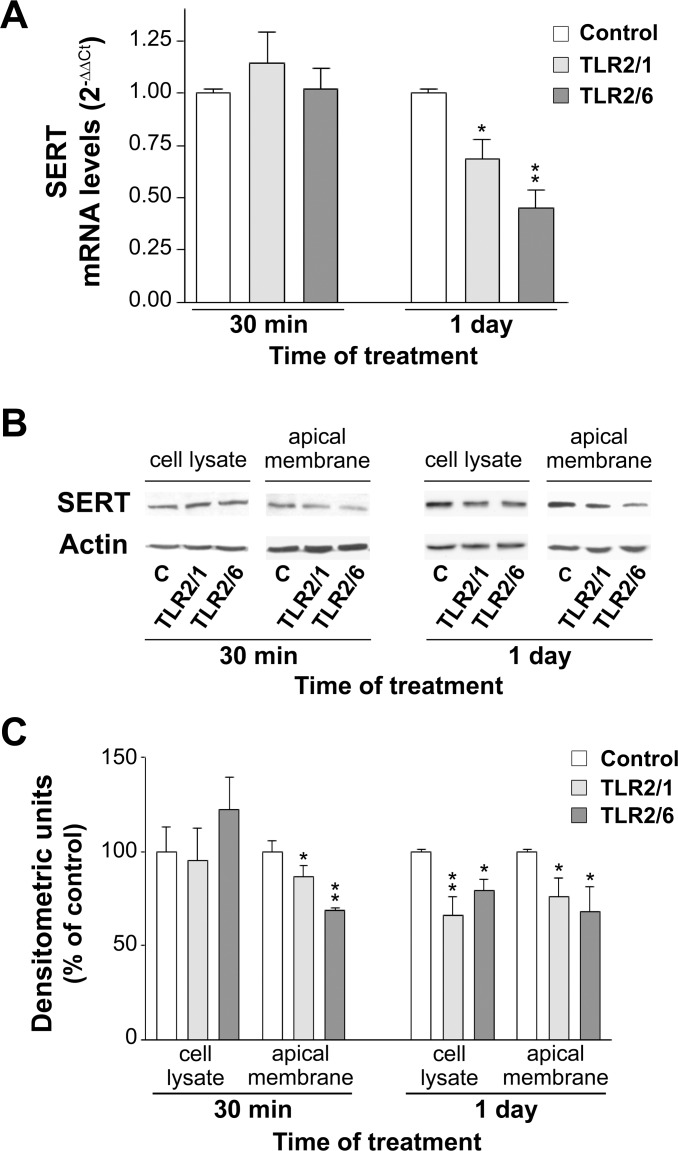
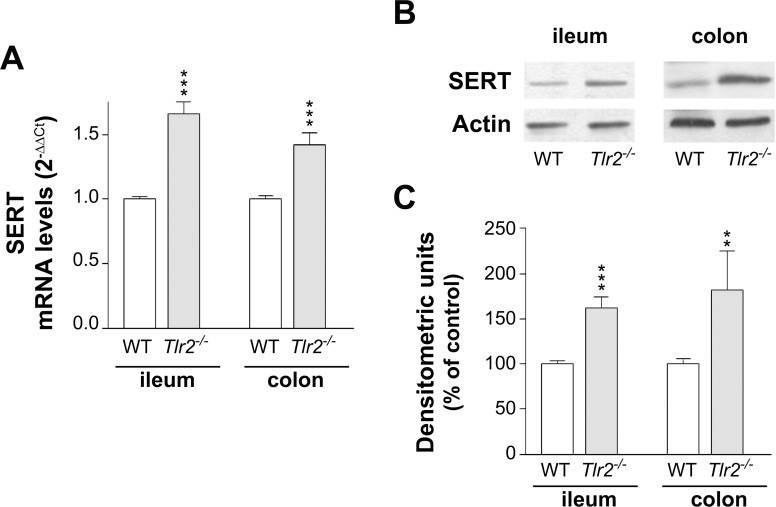
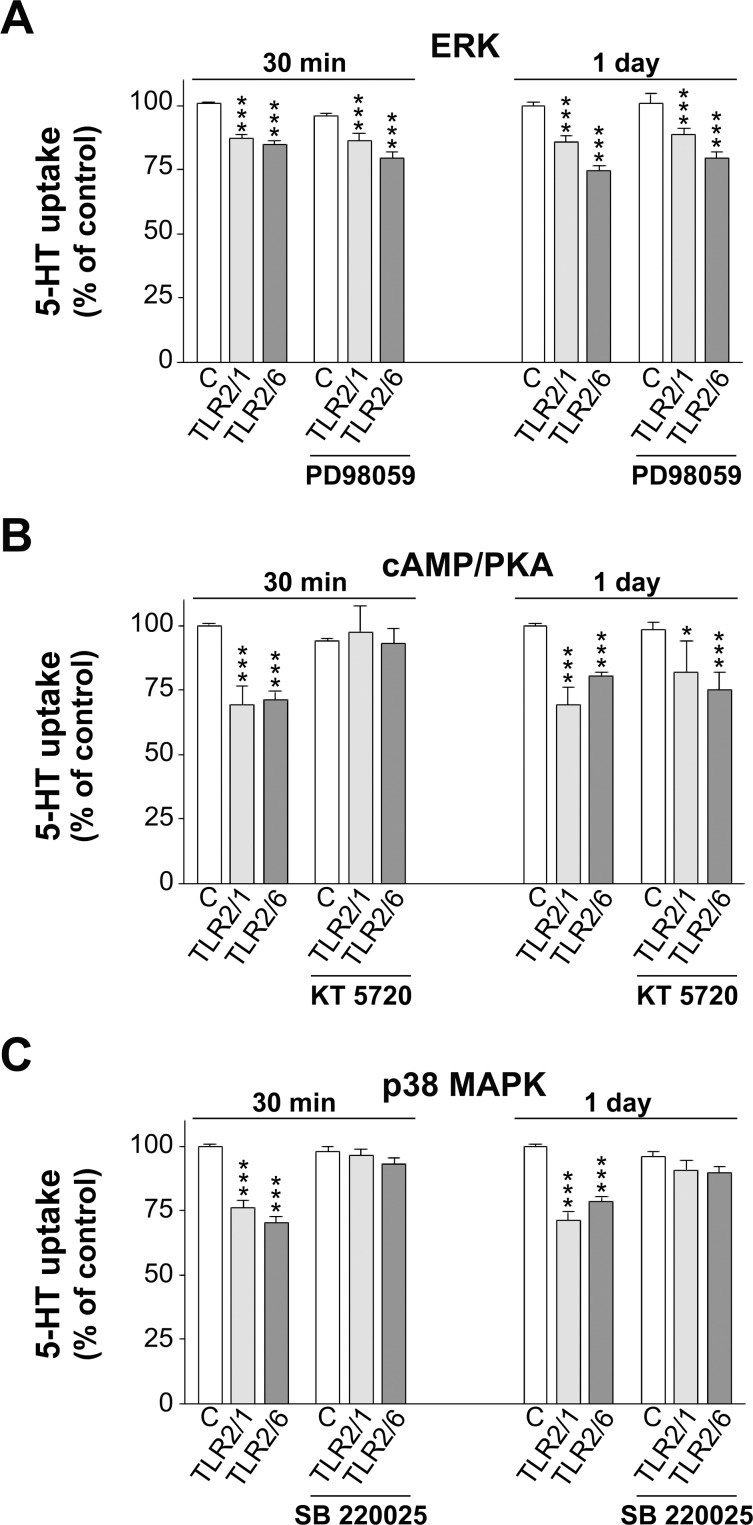
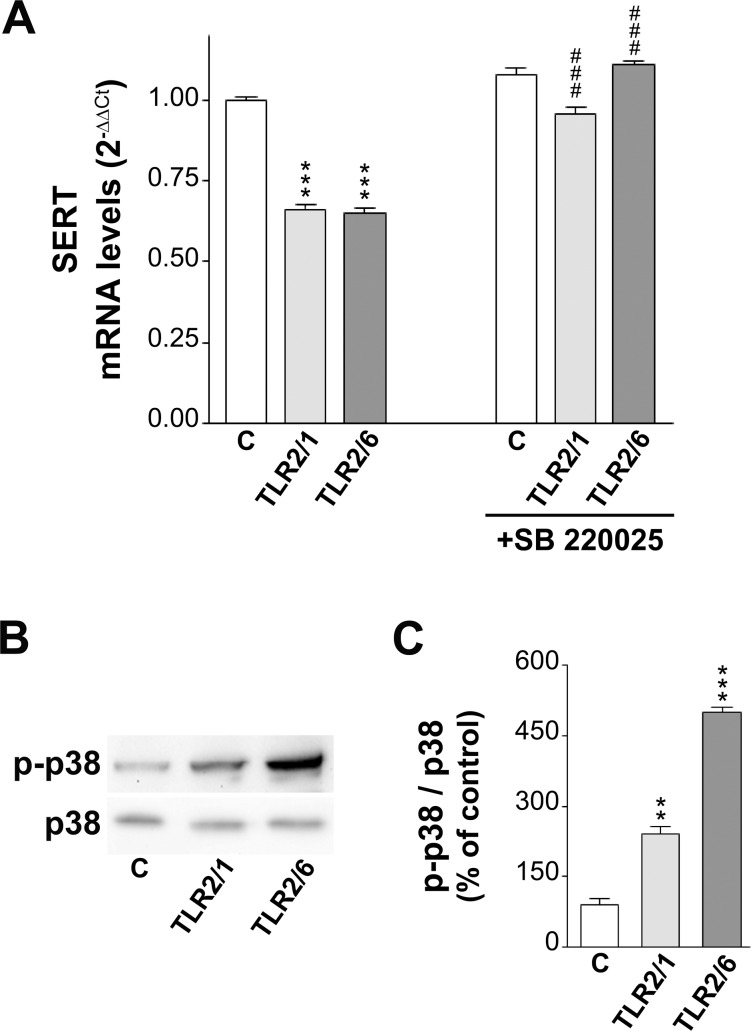
TLR2 is a microbiota recognition receptor that has been described to contribute to intestinal homeostasis and to ameliorate inflammatory intestinal injury. In this context, serotonin (5-HT) has shown to be an essential intestinal physiological neuromodulator that is also involved in intestinal inflammatory diseases. Since the interaction between TLR2 activation and the intestinal serotoninergic system remains non-investigated, our main aim was to analyze the effect of TLR2 on intestinal serotonin transporter (SERT) activity and expression and the intracellular pathways involved. Caco-2/TC7 cells were used to analyze SERT and TLR2 molecular expression and SERT activity by measuring 5-HT uptake. The results showed that apical TLR2 activation inhibits SERT activity in Caco-2/TC7 cells mainly by reducing SERT protein level either in the plasma membrane, after short-term TLR2 activation or in both the plasma membrane and cell lysate, after long-term activation. cAMP/PKA pathway appears to mediate short-term inhibitory effect of TLR2 on SERT; however, p38 MAPK pathway has been shown to be involved in both short- and long-term TLR2 effect. Reciprocally, 5-HT long-term treatment yielded TLR2 down regulation in Caco-2/TC7 cells. Finally, results from in vivo showed an augmented intestinal SERT expression in mice Tlr2-/-, thus confirming our inhibitory effect of TLR2 on intestinal SERT in vitro. The present work infers that TLR2 may act in intestinal pathophysiology, not only by its inherent innate immune role, but also by regulating the intestinal serotoninergic system.
Toll样受体2(TLR2)是一种微生物识别受体,已被证实有助于肠道稳态并减轻肠道炎症损伤。在这种情况下,血清素(5-羟色胺,5-HT)已被证明是一种重要的肠道生理神经调节剂,也参与肠道炎症性疾病。由于TLR2激活与肠道5-羟色胺能系统之间的相互作用尚未得到研究,我们的主要目的是分析TLR2对肠道5-羟色胺转运体(SERT)活性和表达以及相关细胞内信号通路的影响。利用Caco-2/TC7细胞,通过测量5-羟色胺摄取来分析SERT和TLR2的分子表达以及SERT活性。结果表明,顶端TLR2激活主要通过降低SERT蛋白水平来抑制Caco-2/TC7细胞中的SERT活性,短期TLR2激活后,SERT蛋白水平在质膜中降低;长期激活后,质膜和细胞裂解物中的SERT蛋白水平均降低。环磷酸腺苷/蛋白激酶A(cAMP/PKA)信号通路似乎介导了TLR2对SERT的短期抑制作用;然而,p38丝裂原活化蛋白激酶(p38 MAPK)信号通路已被证明参与了TLR2的短期和长期作用。相反,5-羟色胺长期处理导致Caco-2/TC7细胞中TLR2下调。最后,体内实验结果显示,Tlr2基因敲除小鼠的肠道SERT表达增加,从而证实了我们在体外实验中观察到的TLR2对肠道SERT的抑制作用。本研究推断,TLR2可能在肠道病理生理学中发挥作用,不仅通过其固有的先天性免疫作用,还通过调节肠道5-羟色胺能系统。