Cheng Quan, Ma Xiaoqiang, Cao Hui, Chen Zigui, Wan Xin, Chen Rui, Peng Renjun, Huang Jun, Jiang Bing
Department of Neurosurgery, Xiangya Hospital, Central South University, Changsha, Hunan 410078, P.R. China.
Department of Neurosurgery, Traditional Chinese Medical Hospital of Xinjiang Uygur Autonomous Region, Urumqi, Xinjiang 830000, P.R. China.
Mol Med Rep. 2017 Feb;15(2):597-604. doi: 10.3892/mmr.2016.6078. Epub 2016 Dec 27.
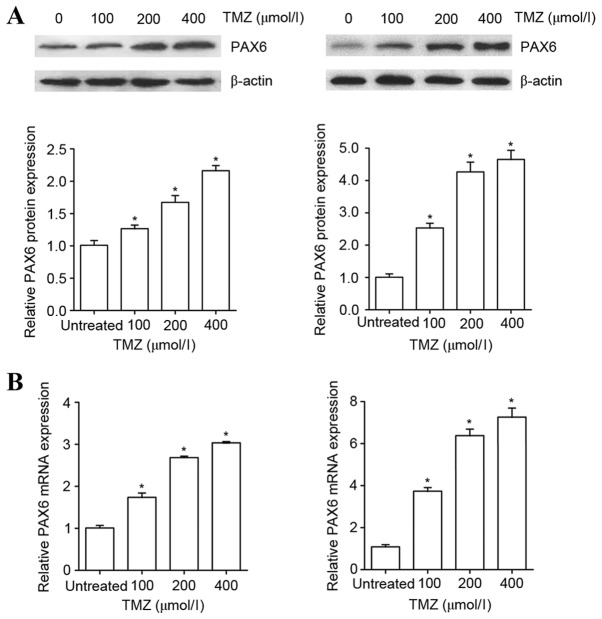
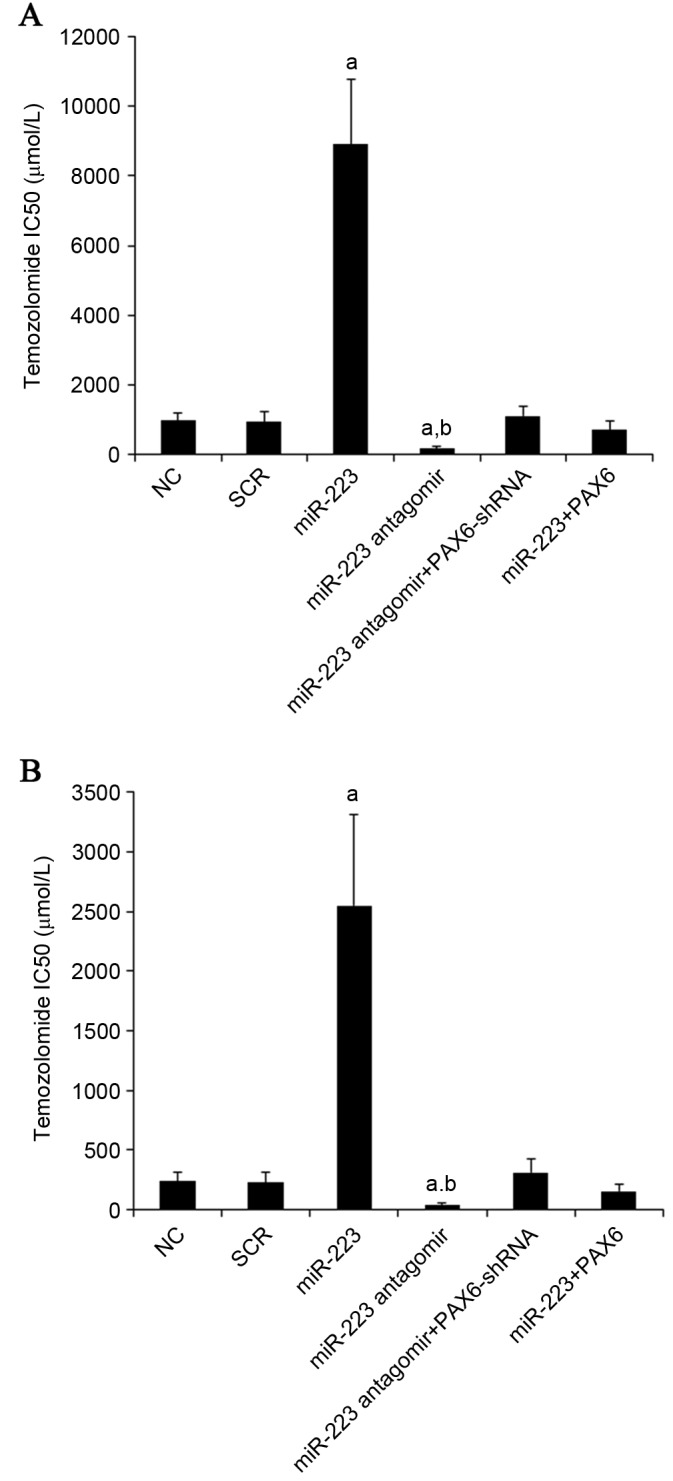
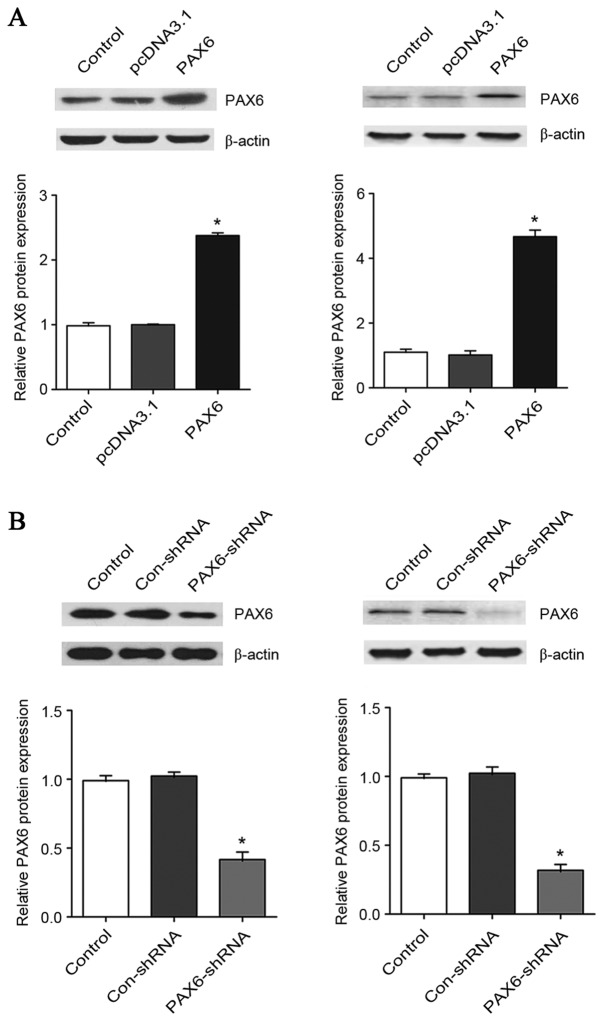
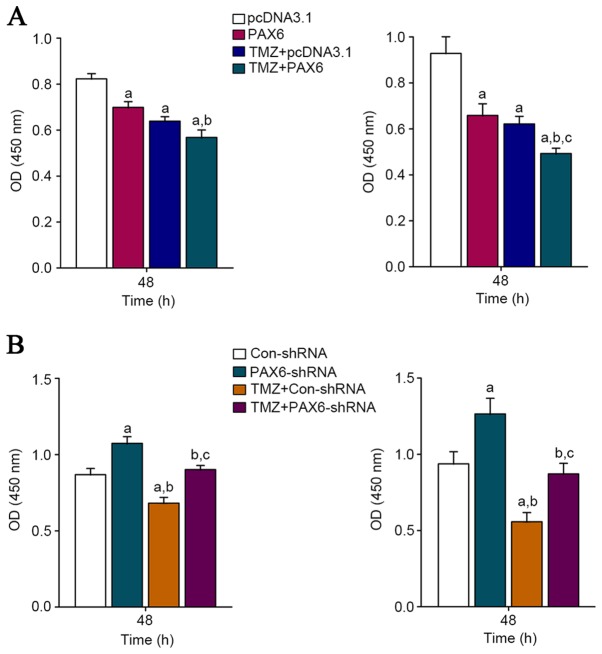
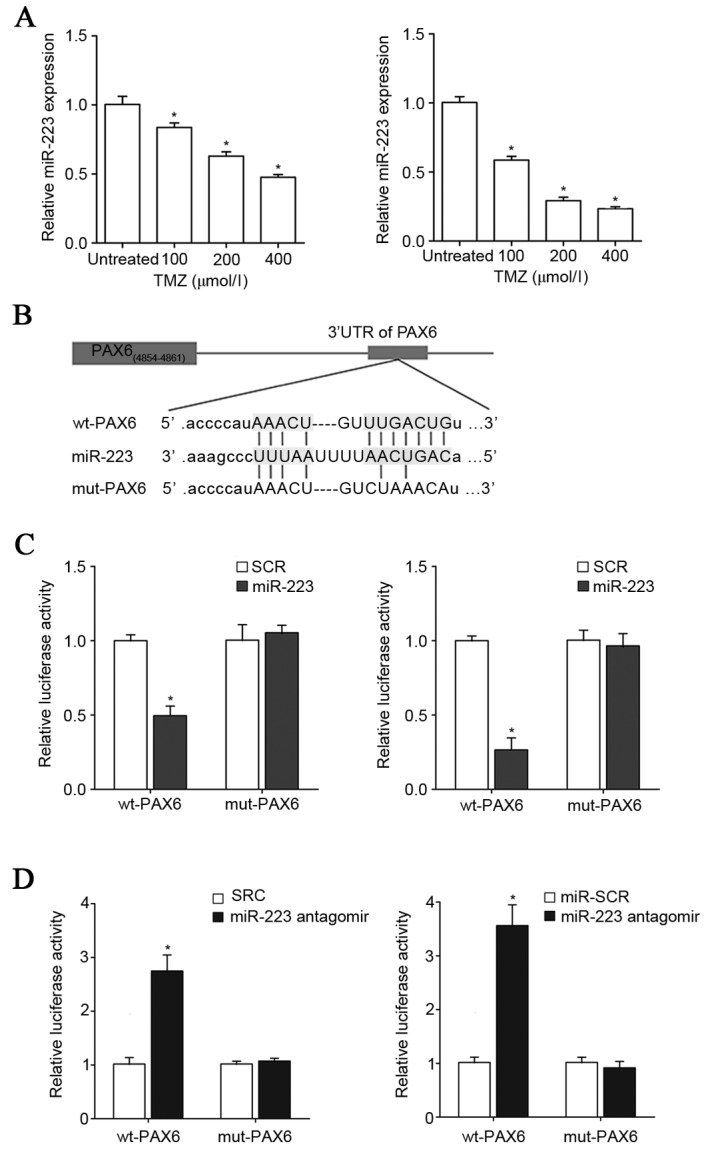
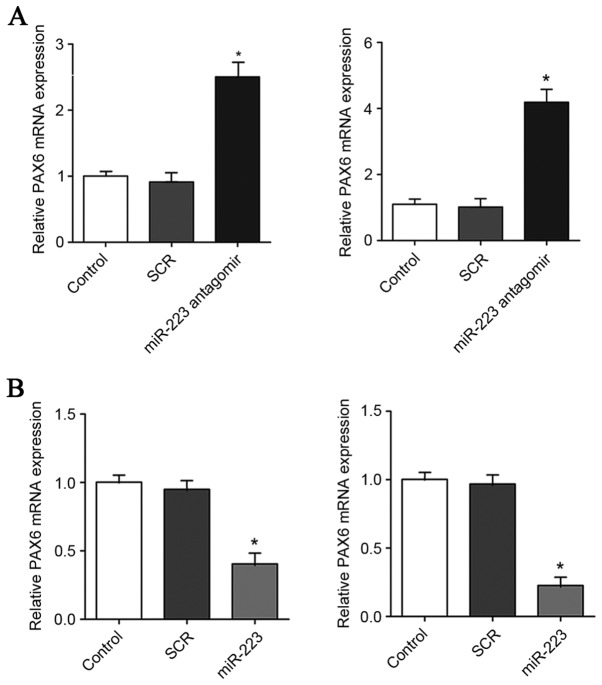
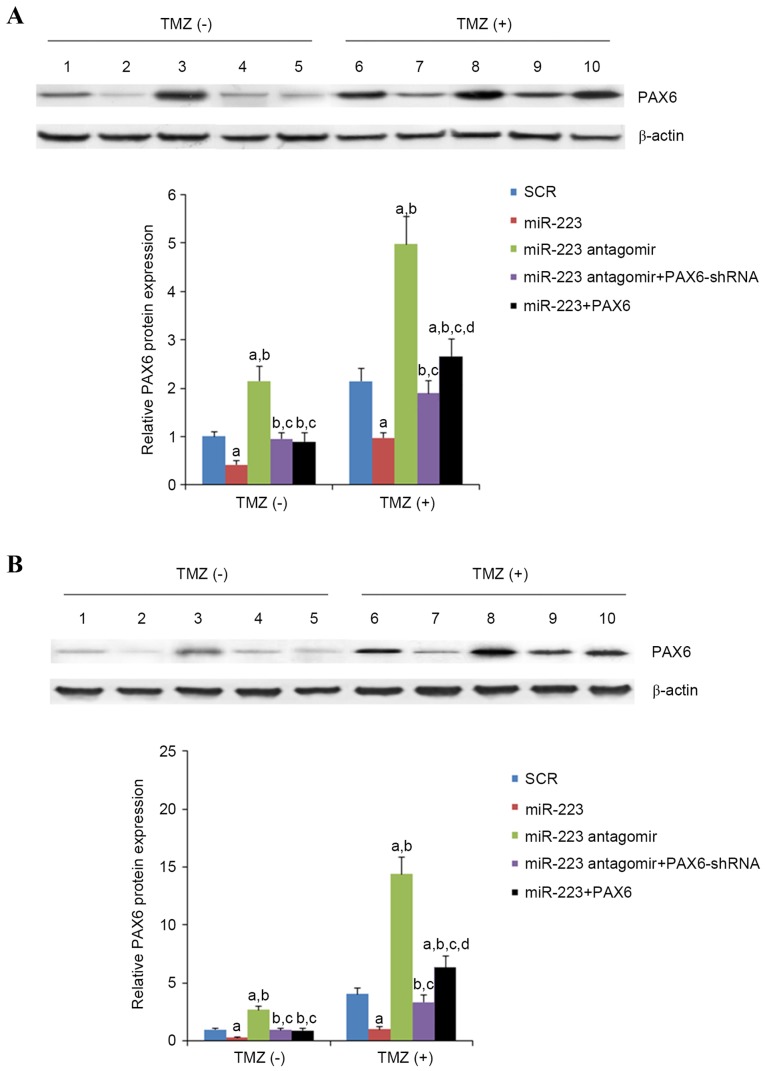
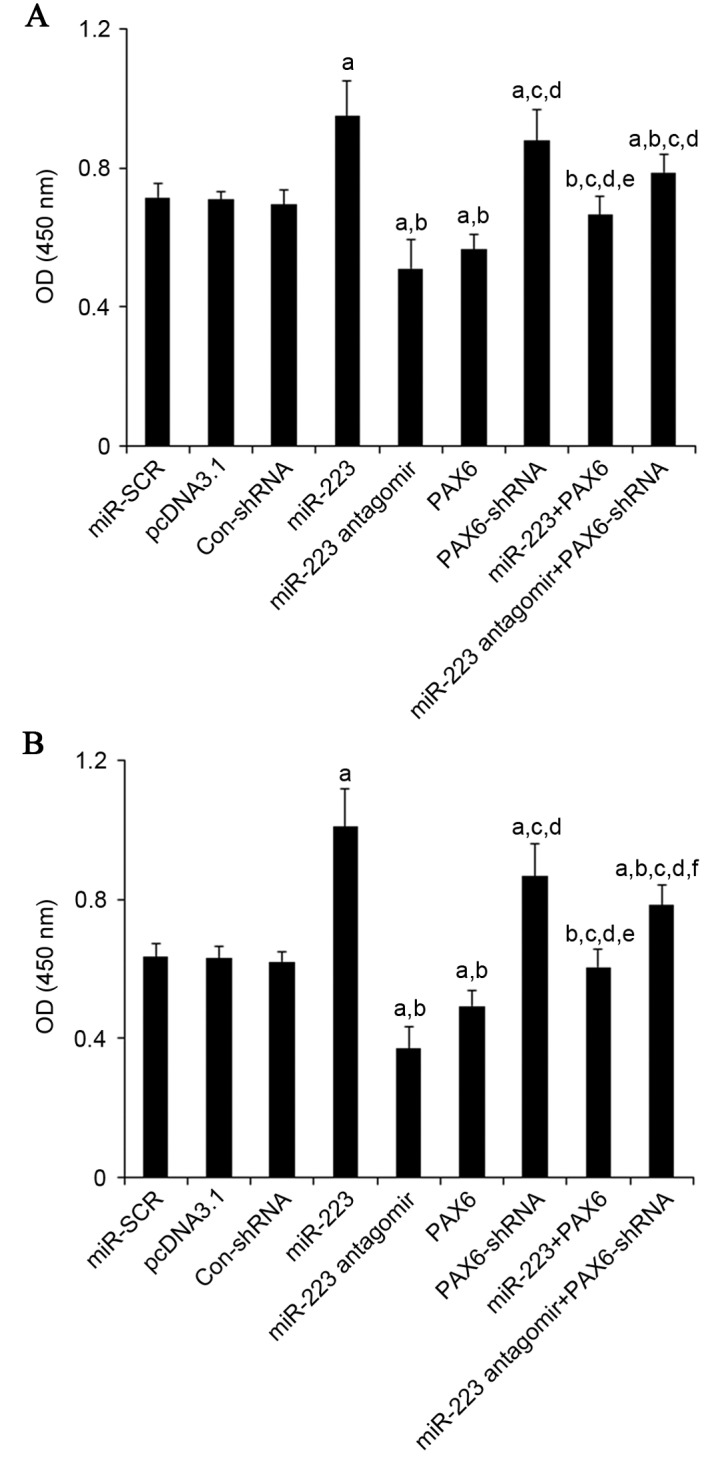
Glioblastoma (GBM) is the predominant and most fatal type of brain tumor in adults. The prognosis of GBM remains poor despite advances in surgery, chemotherapy and radiotherapy. It is common that patients with GBM exhibit innate or acquired resistance to temozolomide (TMZ), a standard chemotherapeutic agent for GBM, and a previous report demonstrated that miRNA‑233 (miR‑223) promotes the growth and invasion of GBM cells by targeting tumor suppressor paired box 6 (PAX6). The present study explored the effect of TMZ on miR‑223/PAX6 signaling in addition to the effect of miR‑223/PAX6 signaling on TMZ chemoresistance in human GBM cells. Luciferase reporter assays confirmed that miR‑223 directly targets PAX6 through binding to its 3'‑untranslated region. TMZ reduced the expression level of miR‑223 in a concentration‑dependent manner in U251 and U118 GBM cells, which led to increased expression of PAX6. miR‑223 and/or PAX6 were overexpressed and knocked down in U251 and U118 cells, and the half maximal inhibitory concentration (IC50) of TMZ and cell proliferation under TMZ treatment were used as measures of TMZ chemoresistance. The results demonstrated that overexpression of miR-223 in GBM cells markedly decreased TMZ-induced inhibition of cell proliferation and increased TMZ IC50, which could be abolished by overexpression of PAX6. On the other hand, knocking down miR‑223 in GBM cells with antagomir significantly enhanced the inhibitory effect of TMZ on GBM cell proliferation and decreased the TMZ IC50, which could be abolished by knockdown of PAX6. In conclusion, the present study demonstrated that TMZ inhibits GBM cell proliferation by inhibiting the expression of miR‑223, which leads to increased expression of tumor suppressor PAX6. Overexpression of miR‑223 increases TMZ chemoresistance, while inhibition of miR‑223 with antagomir markedly decreases TMZ chemoresistance in GBM cells. The present study provided novel insight into the molecular mechanisms underlying the pharmacological effects, in addition to the chemoresistance, of TMZ for GBM.
胶质母细胞瘤(GBM)是成人中最常见且最致命的脑肿瘤类型。尽管在手术、化疗和放疗方面取得了进展,但GBM的预后仍然很差。GBM患者对替莫唑胺(TMZ)(一种GBM的标准化疗药物)表现出先天性或获得性耐药是很常见的,并且先前的一份报告表明,miRNA-233(miR-223)通过靶向肿瘤抑制因子配对盒6(PAX6)促进GBM细胞的生长和侵袭。本研究除了探讨miR-223/PAX6信号通路对人GBM细胞中TMZ化疗耐药性的影响外,还研究了TMZ对miR-223/PAX6信号通路的作用。荧光素酶报告基因检测证实,miR-223通过与其3'非翻译区结合直接靶向PAX6。TMZ在U251和U118 GBM细胞中以浓度依赖性方式降低miR-223的表达水平,这导致PAX6表达增加。在U251和U118细胞中过表达和敲低miR-223和/或PAX6,并将TMZ的半数最大抑制浓度(IC50)和TMZ处理下的细胞增殖作为TMZ化疗耐药性的指标。结果表明,GBM细胞中miR-223的过表达显著降低了TMZ诱导的细胞增殖抑制作用,并增加了TMZ的IC50,而PAX6的过表达可消除这种作用。另一方面,用拮抗剂敲低GBM细胞中的miR-223可显著增强TMZ对GBM细胞增殖的抑制作用,并降低TMZ的IC50,而PAX6的敲低可消除这种作用。总之,本研究表明,TMZ通过抑制miR-223的表达来抑制GBM细胞增殖,这导致肿瘤抑制因子PAX6的表达增加。miR-223的过表达增加了TMZ的化疗耐药性,而用拮抗剂抑制miR-223则显著降低了GBM细胞中TMZ的化疗耐药性。本研究为TMZ对GBM的药理作用及化疗耐药性的分子机制提供了新见解。