Kreer Christoph, Kuepper Janina M, Zehner Matthias, Quast Thomas, Kolanus Waldemar, Schumak Beatrix, Burgdorf Sven
Life and Medical Sciences (LIMES) Institute, University of Bonn, 53115 Bonn, Germany.
Institute for Medical Microbiology, Immunology and Parasitology (IMMIP), University Hospital Bonn, 53105 Bonn, Germany.
Oncotarget. 2017 Jan 24;8(4):6857-6872. doi: 10.18632/oncotarget.14314.
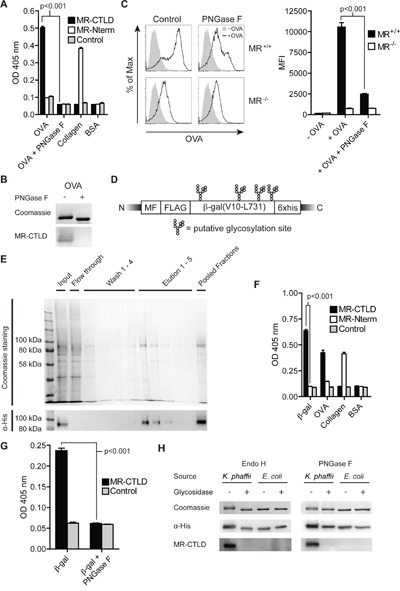
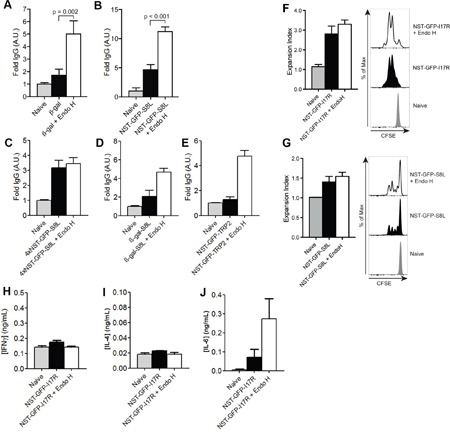
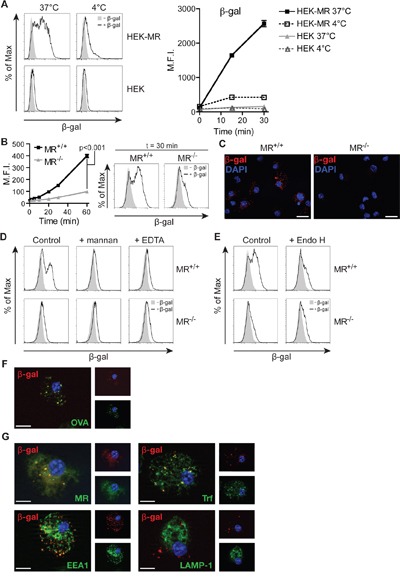
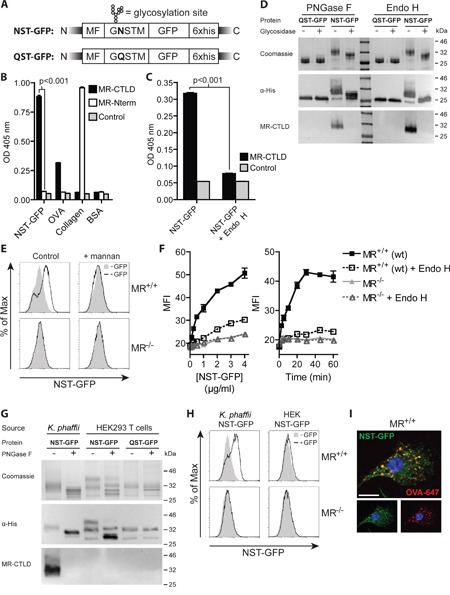
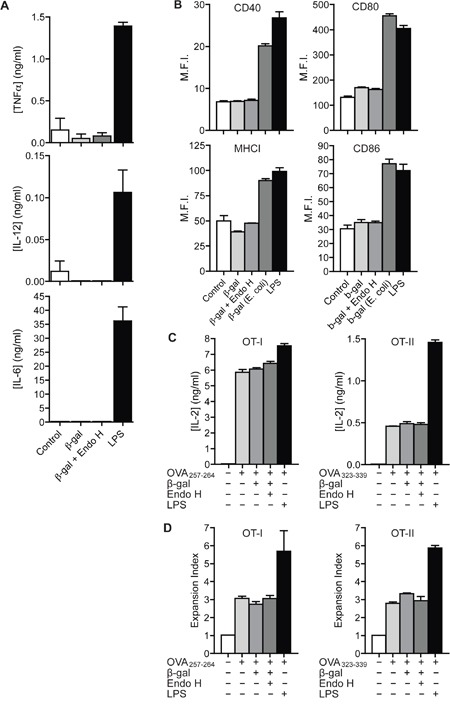
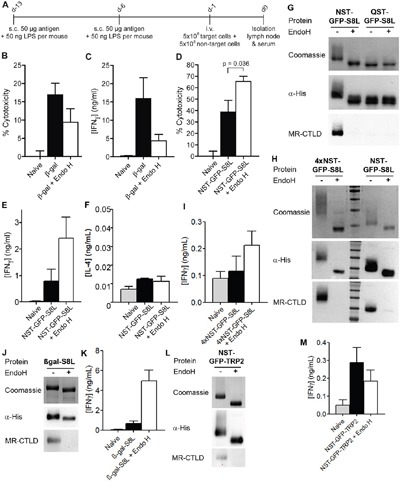
N-glycosylation is generally accepted to enhance the immunogenicity of antigens because of two main reasons. First, the attachment of glycans enables recognition by endocytic receptors like the mannose receptor (MR) and hence increased uptake by dendritic cells (DCs). Second, foreign glycans are postulated to be immunostimulatory and their recognition could induce DC activation. However, a direct comparison between the immunogenicity of N-glycosylated vs. de-glycosylated proteins in vivo and a direct effect of N-glycosylated antigens on the intrinsic capacity of DCs to activate T cells have not been assessed so far.To analyze whether enforced N-glycosylation is a suited strategy to enhance the immunogenicity of non-glycosylated antigens for vaccination studies, we targeted non-glycoproteins towards the MR by introduction of artificial N-glycosylation using the methylotrophic yeast Komagataella phaffii (previously termed Pichia pastoris). We could demonstrate that the introduction of a single N-X-S/T motif was sufficient for efficient MR-binding and internalization. However, addition of N-glycosylated proteins neither influenced DC maturation nor their general capacity to activate T cells, pointing out that enforced N-glycosylation does not increase the immunogenicity of the antigen per se. Additionally, increased antigen-specific cytotoxic T cell responses in vivo after injection of N-glycosylated compared to de-glycosylated proteins were observed but this effect strongly depended on the epitope tested. A beneficial effect of N-glycosylation on antibody production could not be detected, which might be due to MR-cross-linking on DCs and to concomitant differences in IL-6 production by CD4+ T cells.These observations point out that the effect of N-glycosylation on antigen immunogenicity can vary between different antigens and therefore might have important implications for the development of vaccines using K. phaffii.
N-糖基化通常被认为会增强抗原的免疫原性,主要有两个原因。其一,聚糖的附着能够被内吞受体如甘露糖受体(MR)识别,从而增加树突状细胞(DC)的摄取。其二,外来聚糖被假定具有免疫刺激作用,对它们的识别可诱导DC活化。然而,迄今为止,尚未评估N-糖基化蛋白与去糖基化蛋白在体内免疫原性的直接比较,以及N-糖基化抗原对DC激活T细胞内在能力的直接影响。为了分析强制N-糖基化是否是一种适用于疫苗研究中增强非糖基化抗原免疫原性的策略,我们通过使用甲基营养酵母毕赤酵母(先前称为巴斯德毕赤酵母)引入人工N-糖基化,将非糖蛋白靶向至MR。我们能够证明,引入单个N-X-S/T基序足以实现高效的MR结合和内化。然而,添加N-糖基化蛋白既不影响DC成熟,也不影响其激活T细胞的总体能力,这表明强制N-糖基化本身并不会增加抗原的免疫原性。此外,与去糖基化蛋白相比,注射N-糖基化蛋白后在体内观察到抗原特异性细胞毒性T细胞反应增加,但这种效应强烈依赖于所测试的表位。未检测到N-糖基化对抗体产生的有益作用,这可能是由于DC上的MR交联以及CD4+ T细胞产生IL-6的伴随差异。这些观察结果表明,N-糖基化对抗原免疫原性的影响在不同抗原之间可能有所不同,因此可能对使用毕赤酵母开发疫苗具有重要意义。