Dickie Ian A, Cooper Jerry A, Bufford Jennifer L, Hulme Philip E, Bates Scott T
Bio-Protection Research Centre, Lincoln University, Box 85084, Lincoln 7647, New Zealand
Landcare Research, PO Box 69040, Lincoln 7640, New Zealand.
AoB Plants. 2016 Dec 30;9(1). doi: 10.1093/aobpla/plw084.
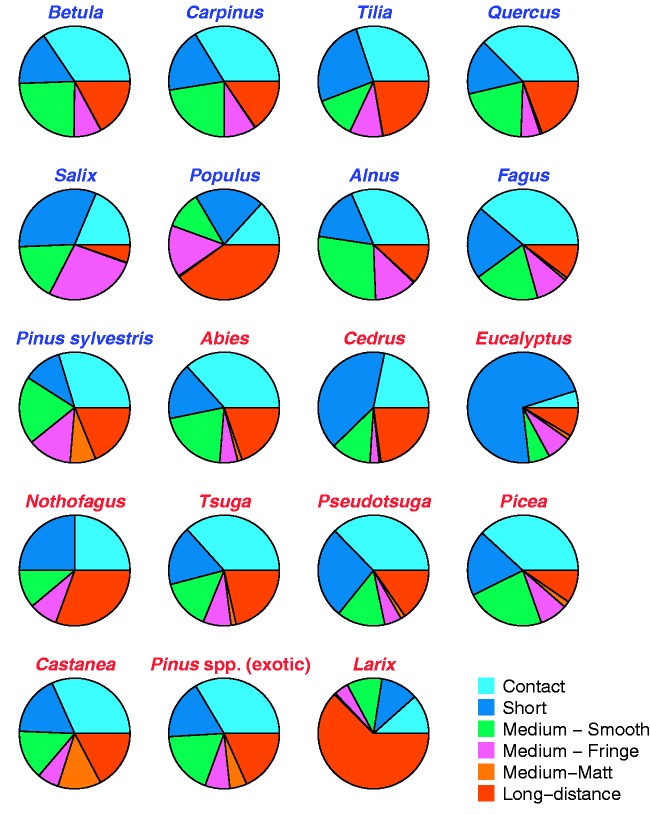
The introduction of alien plants into a new range can result in the loss of co-evolved symbiotic organisms, such as mycorrhizal fungi, that are essential for normal plant physiological functions. Prior studies of mycorrhizal associations in alien plants have tended to focus on individual plant species on a case-by-case basis. This approach limits broad scale understanding of functional shifts and changes in interaction network structure that may occur following introduction. Here we use two extensive datasets of plant-fungal interactions derived from fungal sporocarp observations and recorded plant hosts in two island archipelago nations: New Zealand (NZ) and the United Kingdom (UK). We found that the NZ dataset shows a lower functional diversity of fungal hyphal foraging strategies in mycorrhiza of alien as compared with native trees. Across species this resulted in fungal foraging strategies associated with alien trees being much more variable in functional composition compared with native trees, which had a strikingly similar functional composition. The UK data showed no functional difference in fungal associates of alien and native plant genera. Notwithstanding this, both the NZ and UK data showed a substantial difference in interaction network structure of alien trees compared with native trees. In both cases, fungal associates of native trees showed strong modularity, while fungal associates of alien trees generally integrated into a single large module. The results suggest a lower functional diversity (in one dataset) and a simplification of network structure (in both) as a result of introduction, potentially driven by either limited symbiont co-introductions or disruption of habitat as a driver of specificity due to nursery conditions, planting, or plant edaphic-niche expansion. Recognizing these shifts in function and network structure has important implications for plant invasions and facilitation of secondary invasions via shared mutualist populations.
将外来植物引入新的分布范围可能会导致共同进化的共生生物丧失,比如菌根真菌,而这些生物对于植物正常的生理功能至关重要。此前对外来植物菌根共生关系的研究往往逐案聚焦于单个植物物种。这种方法限制了我们对引入后可能发生的功能转变和相互作用网络结构变化的广泛理解。在这里,我们使用了两个广泛的植物 - 真菌相互作用数据集,这些数据集来自于两个群岛国家(新西兰(NZ)和英国(UK))的真菌子实体观察和记录的植物宿主。我们发现,与本土树木相比,新西兰的数据显示外来树木菌根中真菌菌丝觅食策略的功能多样性较低。跨物种来看,这导致与外来树木相关的真菌觅食策略在功能组成上比本土树木更加多变,本土树木的功能组成则惊人地相似。英国的数据显示外来和本土植物属的真菌共生体在功能上没有差异。尽管如此,新西兰和英国的数据都显示外来树木与本土树木在相互作用网络结构上存在显著差异。在这两种情况下,本土树木的真菌共生体表现出很强的模块性,而外来树木的真菌共生体通常整合为一个单一的大模块。结果表明,引入导致了功能多样性降低(在一个数据集中)和网络结构简化(在两个数据集中),这可能是由于共生体共同引入有限,或者由于苗圃条件、种植或植物土壤生态位扩展导致栖息地破坏从而影响了特异性。认识到这些功能和网络结构的变化对于植物入侵以及通过共享互利种群促进二次入侵具有重要意义。