MacIntyre Chandini Raina, Zhang Yi, Chughtai Abrar Ahmad, Seale Holly, Zhang Daitao, Chu Yanhui, Zhang Haiyan, Rahman Bayzidur, Wang Quanyi
School of Public Health and Community Medicine UNSW Medicine University of New South Wales, Sydney, New South Wales, Australia.
College of Public Service & Community Solutions, Arizona State University, Phoenix, Arizona, USA.
BMJ Open. 2016 Dec 30;6(12):e012330. doi: 10.1136/bmjopen-2016-012330.
Medical masks are commonly used by sick individuals with influenza-like illness (ILI) to prevent spread of infections to others, but clinical efficacy data are absent.
Determine whether medical mask use by sick individuals with ILI protects well contacts from related respiratory infections.
6 major hospitals in 2 districts of Beijing, China.
Cluster randomised controlled trial.
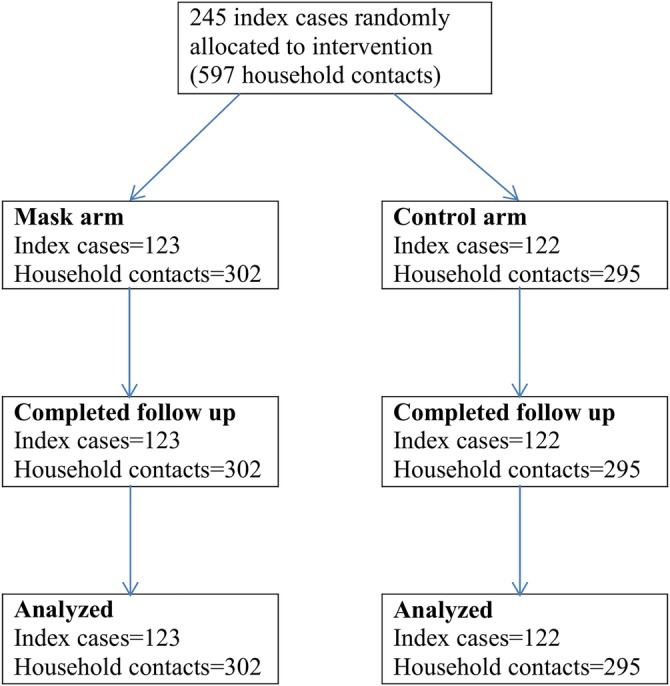
245 index cases with ILI.
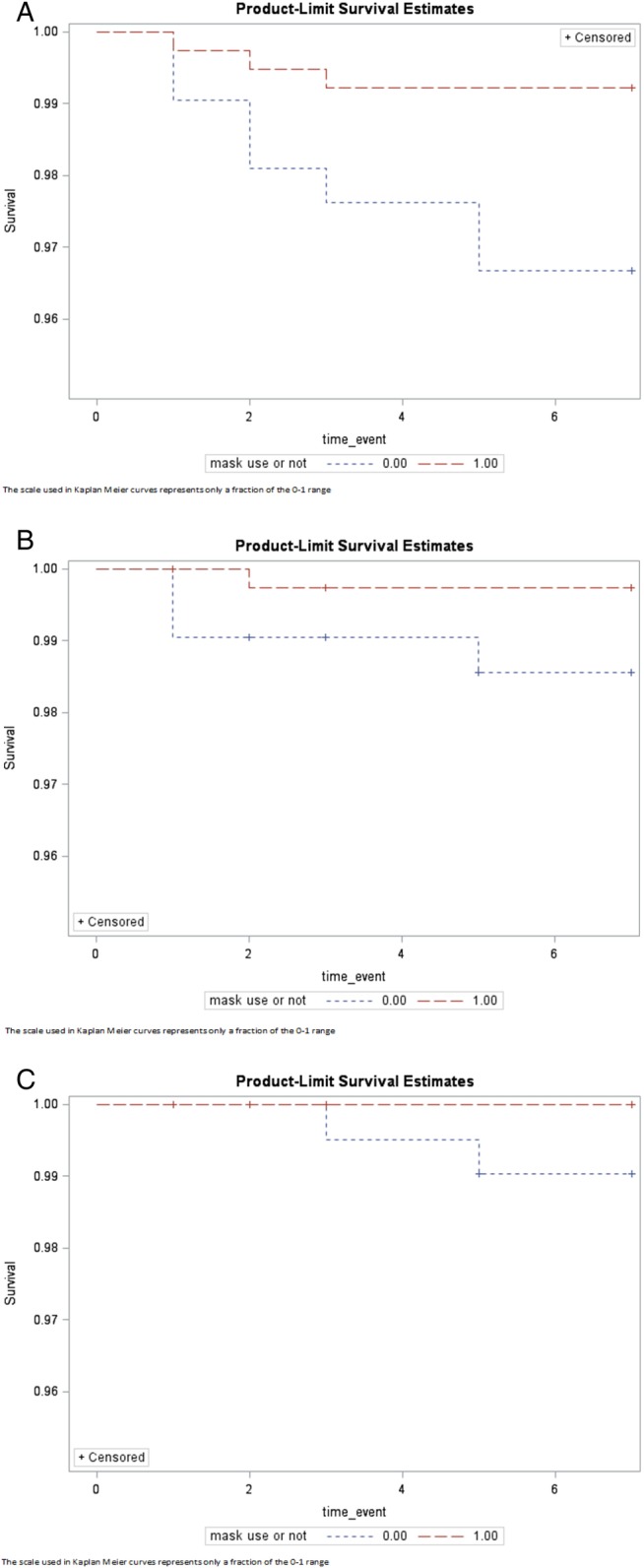
Index cases with ILI were randomly allocated to medical mask (n=123) and control arms (n=122). Since 43 index cases in the control arm also used a mask during the study period, an as-treated post hoc analysis was performed by comparing outcomes among household members of index cases who used a mask (mask group) with household members of index cases who did not use a mask (no-mask group).
Primary outcomes measured in household members were clinical respiratory illness, ILI and laboratory-confirmed viral respiratory infection.
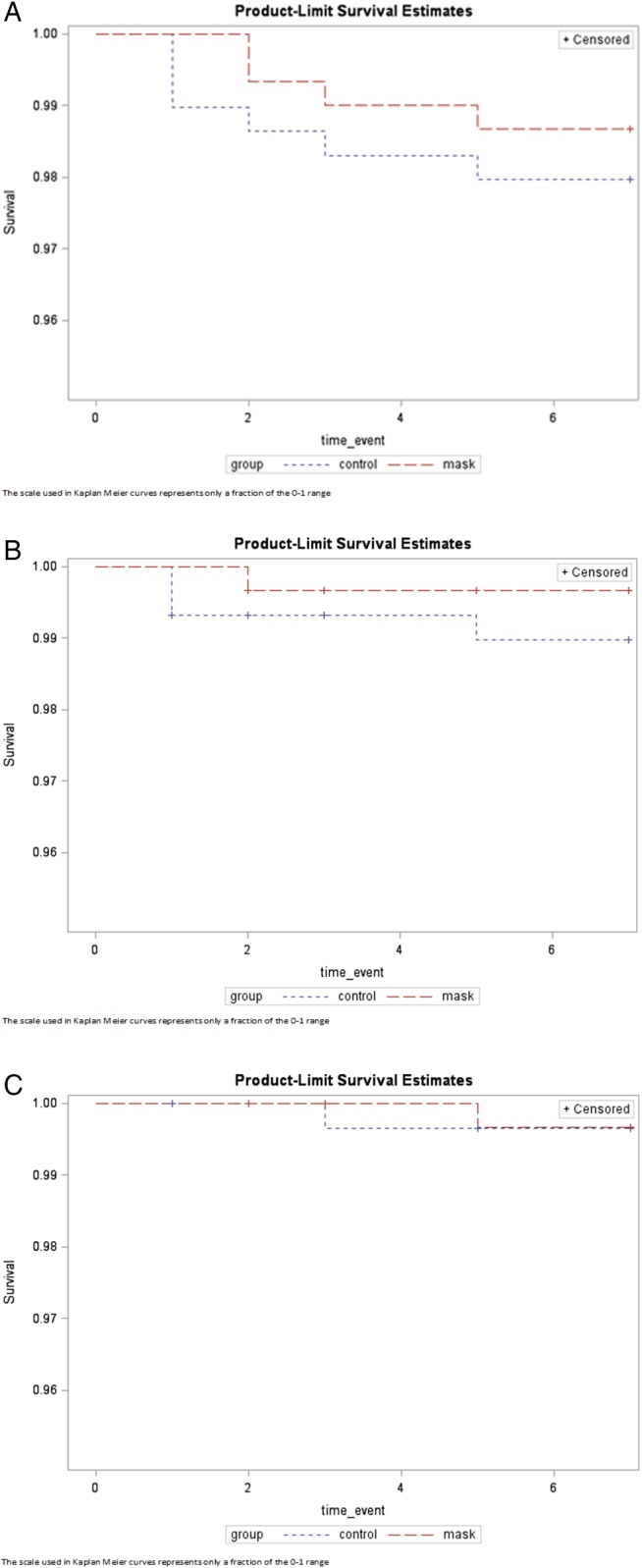
In an intention-to-treat analysis, rates of clinical respiratory illness (relative risk (RR) 0.61, 95% CI 0.18 to 2.13), ILI (RR 0.32, 95% CI 0.03 to 3.13) and laboratory-confirmed viral infections (RR 0.97, 95% CI 0.06 to 15.54) were consistently lower in the mask arm compared with control, although not statistically significant. A post hoc comparison between the mask versus no-mask groups showed a protective effect against clinical respiratory illness, but not against ILI and laboratory-confirmed viral respiratory infections.
The study indicates a potential benefit of medical masks for source control, but is limited by small sample size and low secondary attack rates. Larger trials are needed to confirm efficacy of medical masks as source control.
ACTRN12613000852752; Results.
患有流感样疾病(ILI)的患者通常使用医用口罩以防止感染传播给他人,但缺乏临床疗效数据。
确定患有ILI的患者佩戴医用口罩是否能保护密切接触者免受相关呼吸道感染。
中国北京两个区的6家大型医院。
整群随机对照试验。
245例ILI索引病例。
ILI索引病例被随机分配至医用口罩组(n = 123)和对照组(n = 122)。由于对照组中有43例索引病例在研究期间也使用了口罩,因此通过比较使用口罩的索引病例的家庭成员(口罩组)和未使用口罩的索引病例的家庭成员(无口罩组)的结局进行事后治疗分析。
在家庭成员中测量的主要结局为临床呼吸道疾病、ILI和实验室确诊的病毒性呼吸道感染。
在意向性分析中,口罩组的临床呼吸道疾病(相对风险(RR)0.61,95%置信区间0.18至2.13)、ILI(RR 0.32,95%置信区间0.03至3.13)和实验室确诊的病毒感染(RR 0.97,95%置信区间0.06至15.54)发生率与对照组相比始终较低,尽管无统计学意义。口罩组与无口罩组之间的事后比较显示对临床呼吸道疾病有保护作用,但对ILI和实验室确诊的病毒性呼吸道感染无保护作用。
该研究表明医用口罩在源头控制方面有潜在益处,但受样本量小和二代发病率低的限制。需要更大规模的试验来证实医用口罩作为源头控制措施的有效性。
ACTRN12613000852752;结果。