Han Tianyu, Guo Meng, Zhang Tingting, Gan Mingxi, Xie Caifeng, Wang Jian-Bin
Institute of Translational Medicine, Nanchang University, Nanchang City, Jiangxi 330031, China.
School of Life Sciences, Nanchang University, Nanchang City, Jiangxi 330031, China.
Oncotarget. 2017 Apr 25;8(17):28063-28073. doi: 10.18632/oncotarget.14188.
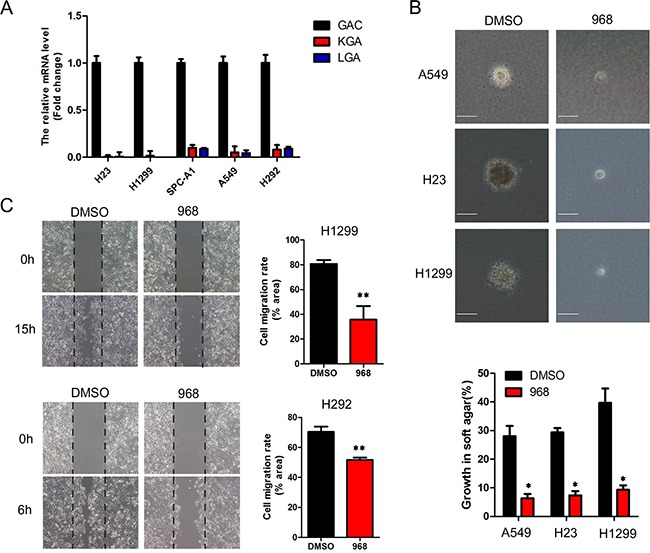
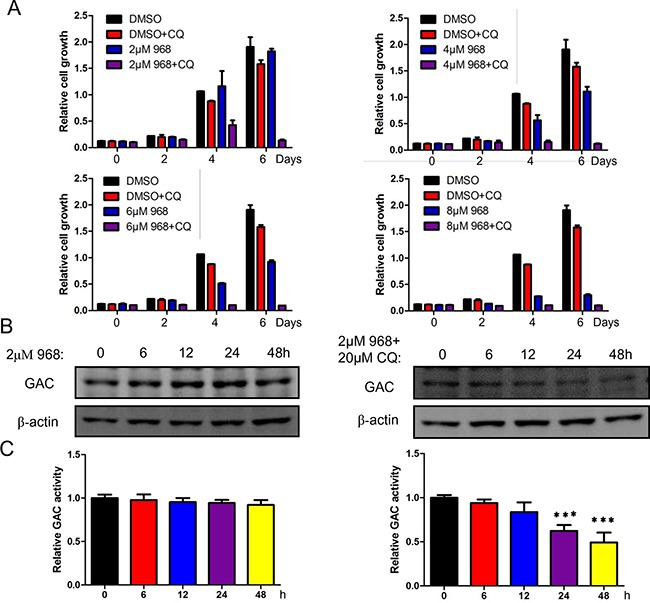
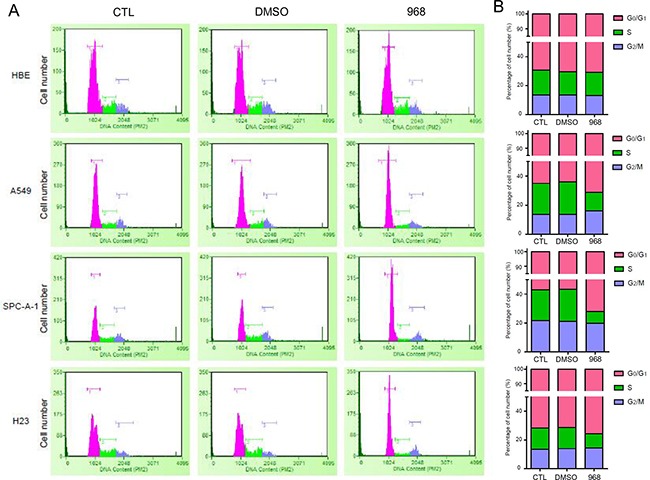
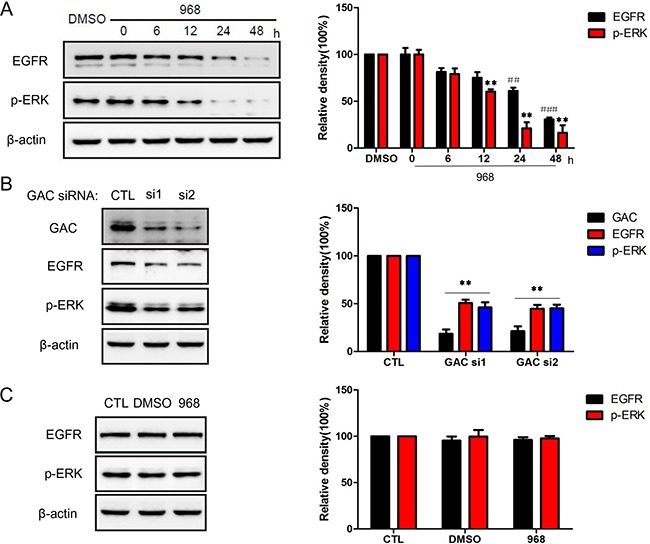
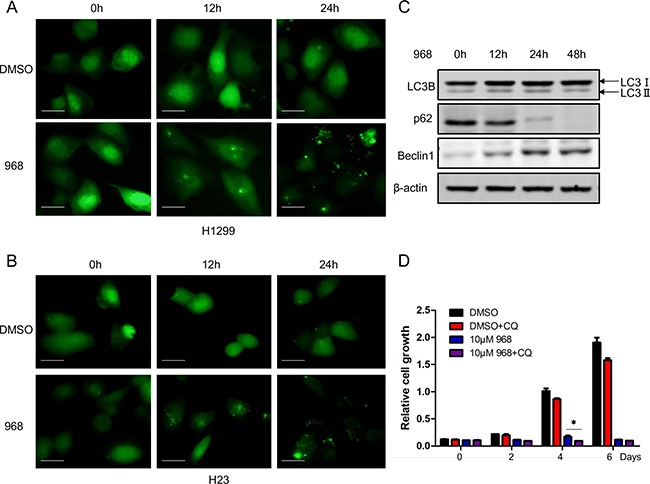
Metabolic reprogramming is critical for cancer cell proliferation. Glutaminolysis which provides cancer cells with bioenergetics and intermediates for macromolecular synthesis have been intensively studied in recent years. Glutaminase C (GAC) is the first and rate-limiting enzyme in glutaminolysis and plays important roles in cancer initiation and progression. We previously screened a small molecule named 968, a specific inhibitor of GAC, to block the proliferation of human breast cancer cells. In this study, we found that 968 effectively inhibited NSCLC cell proliferation and migration and arrested G0/G1 phase of cell cycle. Furthermore, we demonstrated that 968 inhibited the EGFR/ERK pathway via decreasing the expression of EGFR and phospho-ERK. Apart from this, we discovered that 968 treatment induced autophagy to protect cells against apoptosis and the combination of 968 with autophagy inhibitor Chloroquine (CQ) had synergistic effects on the growth of NSCLC cells. Thus, our study pointed out a new therapeutic strategy for NSCLC treatment by combination of 968 with CQ.
代谢重编程对癌细胞增殖至关重要。近年来,谷氨酰胺分解为癌细胞提供生物能量和大分子合成中间体的过程得到了深入研究。谷氨酰胺酶C(GAC)是谷氨酰胺分解的首个限速酶,在癌症的发生和发展中起重要作用。我们之前筛选出一种名为968的小分子,它是GAC的特异性抑制剂,可阻断人乳腺癌细胞的增殖。在本研究中,我们发现968能有效抑制非小细胞肺癌(NSCLC)细胞的增殖和迁移,并使细胞周期停滞于G0/G1期。此外,我们证明968通过降低表皮生长因子受体(EGFR)和磷酸化细胞外信号调节激酶(phospho-ERK)的表达来抑制EGFR/ERK信号通路。除此之外,我们发现968处理可诱导自噬以保护细胞免受凋亡,并且968与自噬抑制剂氯喹(CQ)联合使用对NSCLC细胞的生长具有协同作用。因此,我们的研究指出了一种通过968与CQ联合使用来治疗NSCLC的新策略。