Dave Bhuvanesh, Gonzalez Daniel D, Liu Zhi-Bin, Li Xiaoxian, Wong Helen, Granados Sergio, Ezzedine Nadeer E, Sieglaff Douglas H, Ensor Joe E, Miller Kathy D, Radovich Milan, KarinaEtrovic Agda, Gross Steven S, Elemento Olivier, Mills Gordon B, Gilcrease Michael Z, Chang Jenny C
Affiliations of authors: Houston Methodist Cancer Center, Houston, TX (BD, DDG, ZBL, HW, SG, DHS, JEE, JCC); Division of Basic Science Research, Department of Systems Biology (NEE, AKE, GBM), and Division of Pathology/Lab Medicine, Department of Pathology (MZG), The University of Texas MD Anderson Cancer Center, Houston, TX; Department of Breast Surgery, Shanghai Cancer Center and Cancer Institute of Fudan University, Shanghai, China (ZBL); Department of Pathology and Laboratory Medicine, Emory University, Atlanta, GA (XL); Department of Physiology and Biophysics, Institute for Computational Biomedicine, Weill Cornell Medical College, New York, NY (OE); Joan and Sanford I. Weill Medical School of Cornell University, New York, NY (SSG); Department of Medicine, Indiana University Medical School, Indianapolis, IN (KDM); Departments of Surgery and Medical and Molecular Genetics, IU Center for Computational Biology and Bioinformatics, Indianapolis, IN (MR).
J Natl Cancer Inst. 2016 Dec 31;109(6). doi: 10.1093/jnci/djw292. Print 2017 Jun.
Metaplastic breast cancer is one of the most therapeutically challenging forms of breast cancer because of its highly heterogeneous and chemoresistant nature. We have previously demonstrated that ribosomal protein L39 (RPL39) and its gain-of-function mutation A14V have oncogenic activity in triple-negative breast cancer and this activity may be mediated through inducible nitric oxide synthase (iNOS). The function of RPL39 and A14V in other breast cancer subtypes is currently unknown. The objective of this study was to determine the role and mechanism of action of RPL39 in metaplastic breast cancer.
Both competitive allele-specific and droplet digital polymerase chain reaction were used to determine the RPL39 A14V mutation rate in metaplastic breast cancer patient samples. The impact of RPL39 and iNOS expression on patient overall survival was estimated using the Kaplan-Meier method. Co-immunoprecipitation and immunoblot analyses were used for mechanistic evaluation of RPL39.
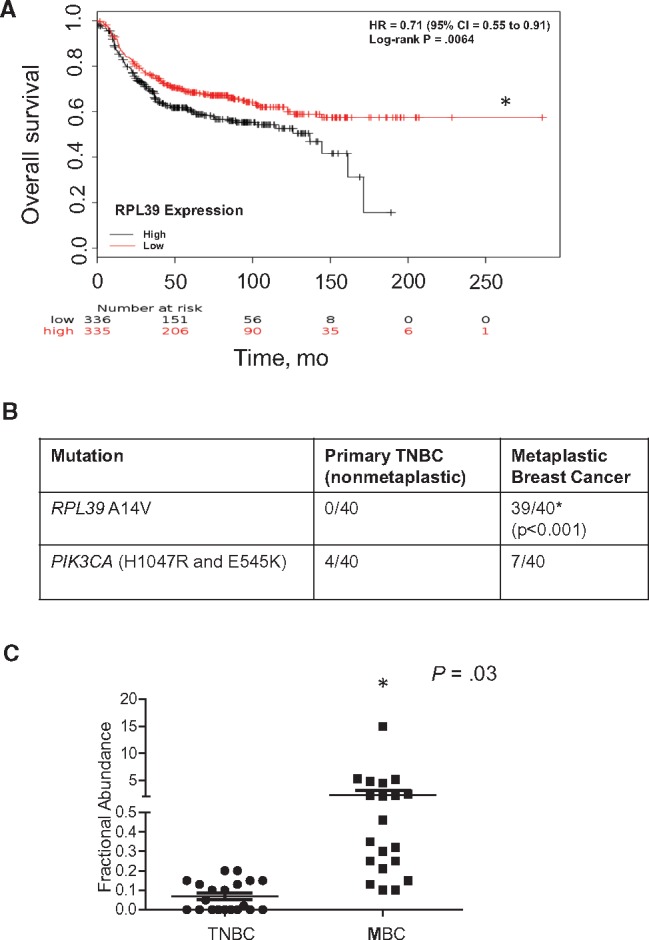
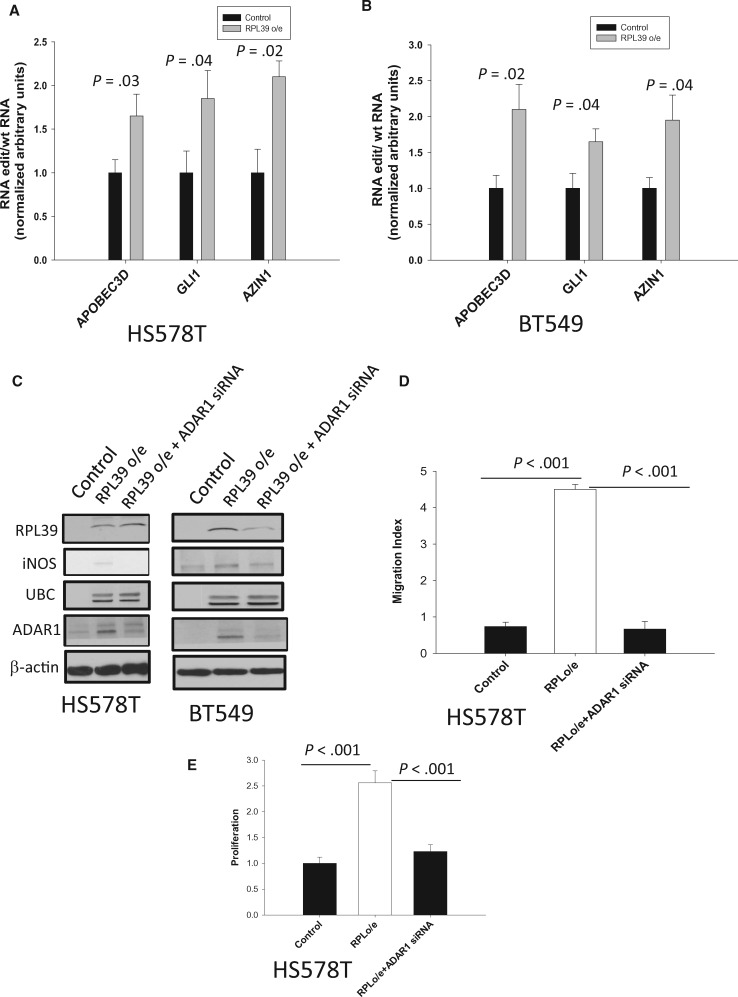
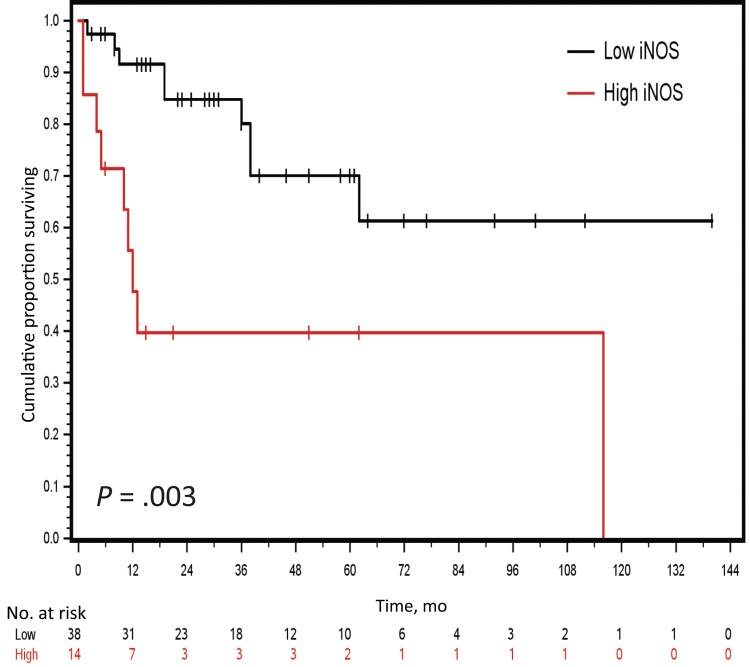
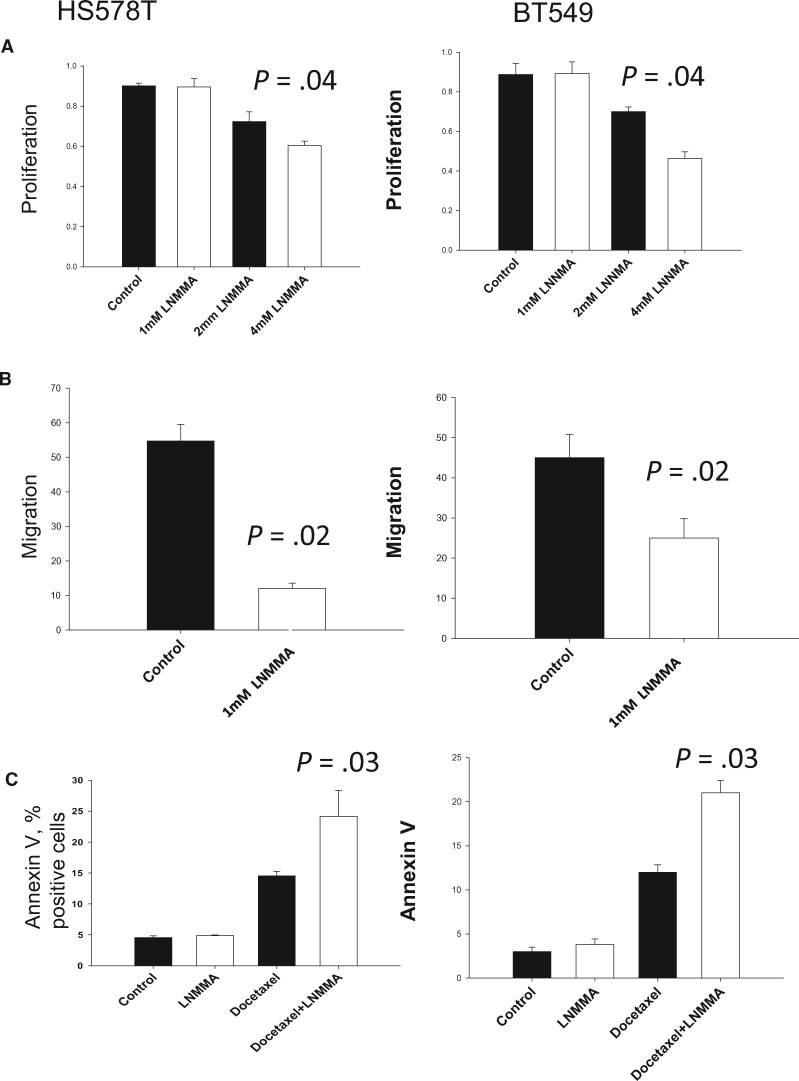
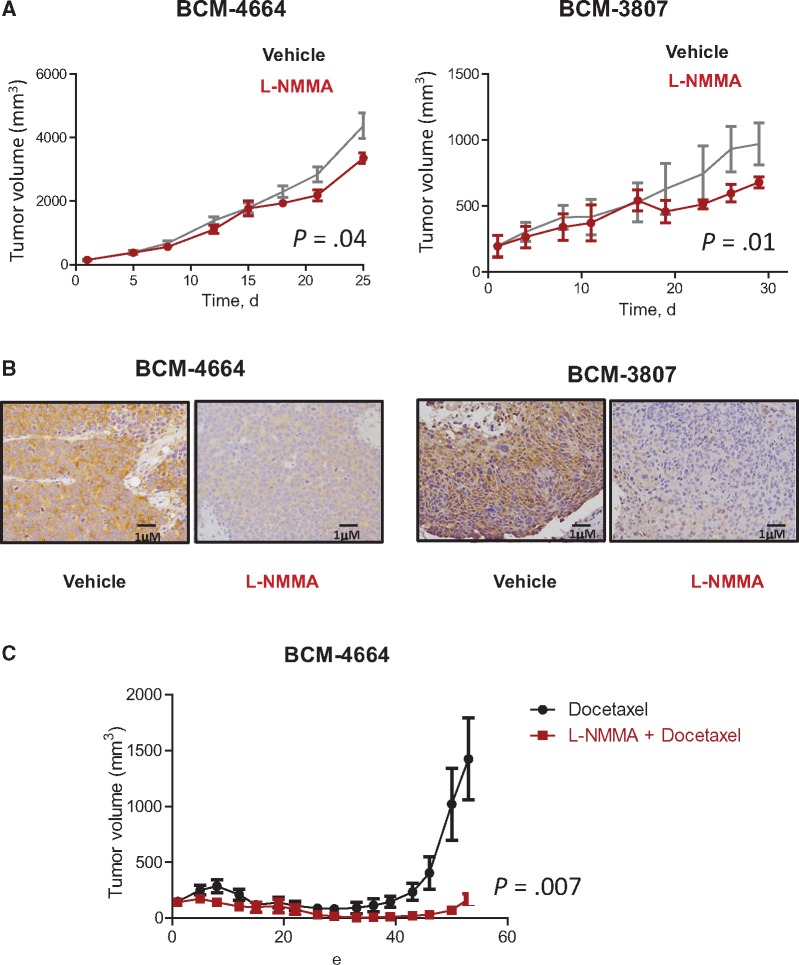
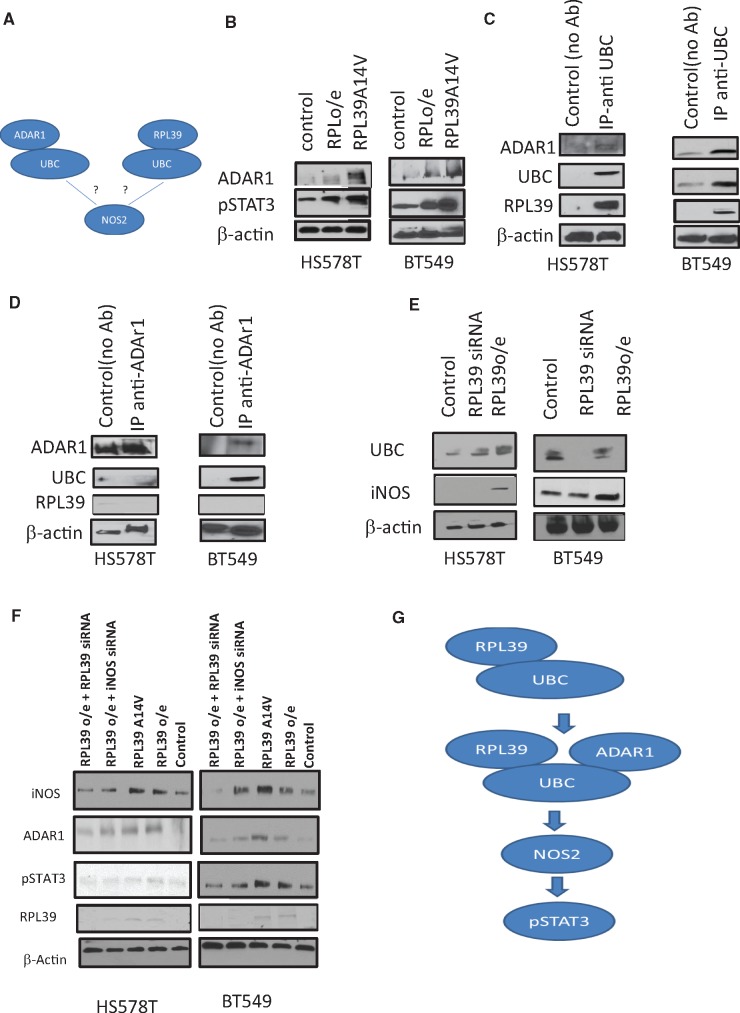
The RPL39 A14V mutation rate was 97.5% (39/40 tumor samples). High RPL39 (hazard ratio = 0.71, 95% confidence interval = 0.55 to 0.91, P = 006) and iNOS expression (P = 003) were associated with reduced patient overall survival. iNOS inhibition with the pan-NOS inhibitor N-methyl-L-arginine acetate decreased in vitro proliferation and migration, in vivo tumor growth in both BCM-4664 and BCM-3807 patient-derived xenograft models (P = 04 and P = 02, respectively), and in vitro and in vivo chemoresistance. Mechanistically, RPL39 mediated its cancer-promoting actions through iNOS signaling, which was driven by the RNA editing enzyme adenosine deaminase acting on RNA 1.
NOS inhibitors and RNA editing modulators may offer novel treatment options for metaplastic breast cancer.
化生性乳腺癌是最具治疗挑战性的乳腺癌形式之一,因其具有高度异质性和化疗耐药性。我们之前已经证明核糖体蛋白L39(RPL39)及其功能获得性突变A14V在三阴性乳腺癌中具有致癌活性,且这种活性可能通过诱导型一氧化氮合酶(iNOS)介导。目前尚不清楚RPL39和A14V在其他乳腺癌亚型中的功能。本研究的目的是确定RPL39在化生性乳腺癌中的作用及作用机制。
采用竞争性等位基因特异性和液滴数字聚合酶链反应来确定化生性乳腺癌患者样本中RPL39 A14V突变率。使用Kaplan-Meier方法评估RPL39和iNOS表达对患者总生存期的影响。采用免疫共沉淀和免疫印迹分析对RPL39进行机制评估。
RPL39 A14V突变率为97.5%(40个肿瘤样本中的39个)。高RPL39表达(风险比=0.71,95%置信区间=0.55至0.91,P=0.006)和iNOS表达(P=0.003)与患者总生存期缩短相关。使用泛一氧化氮合酶抑制剂N-甲基-L-精氨酸醋酸盐抑制iNOS可降低体外增殖和迁移能力,在BCM-4664和BCM-3807患者来源的异种移植模型中均降低体内肿瘤生长(分别为P=0.04和P=0.02),以及体外和体内化疗耐药性。从机制上讲,RPL39通过iNOS信号传导介导其促癌作用,该信号传导由作用于RNA 1的RNA编辑酶腺苷脱氨酶驱动。
一氧化氮合酶抑制剂和RNA编辑调节剂可能为化生性乳腺癌提供新的治疗选择。